


Depending on the lender’s rules, homeowners may finance countertops, fabrication, removal, installation, and related work under one project request.
Renovate is a loan-connecting service, not a lender. We try to connect consumers with third-party lenders or lending partners and contractors. The lender reviews any application and decides whether to approve it and what terms to provide. All credit types may submit a request, but a request does not guarantee a connection, offer, or approval.
A slab price is only part of the budget. Your complete estimate may include:
A kitchen remodeling contractor can help define the scope of work. Projects involving a sink or supply-line change may also require plumbing work, while cooktop or outlet changes may require electrical work.
The lender decides which expenses it will finance. Get an itemized contractor estimate before deciding how much to request.
Current national cost guides place average countertop installation or replacement costs near $3,000. Many projects range from about $1,400 to $5,250, while a 30- to 40-square-foot replacement may reach approximately $6,000, depending on the material and project scope.
A quote may be priced per square foot installed, by slab or material quantity, as a complete project total, or with fabrication, removal, cutouts, and other work listed separately.
| Countertop Material | Estimated Installed Cost per Square Foot | Maintenance Considerations | Important Planning Notes |
| Laminate | $20–$80 | Avoid standing water at seams and direct heat | Seams and edge choices affect the finished result |
| Butcher Block | $50–$150 | Protect wood around water; maintenance varies by finish | Species, grain, and thickness influence price |
| Solid Surface | $50–$150 | Some surface damage may be repairable | Integrated sinks and less noticeable seams may be available |
| Porcelain | $50–$120 | Routine cleaning is simple; protect edges from hard impacts | Large-format slabs differ from traditional tile and require specialized fabrication |
| Quartz | $50–$200 | Routine cleaning is simple; use protection for hot cookware | Engineered surface available in many patterns |
| Granite | $50–$150 | Care and sealing needs vary by stone and finish | Natural variation, seams, and slab yield affect cost |
| Marble | $50–$200 | Acidic spills can etch the surface | Veining and fabrication can influence price |
| Quartzite | $65–$200 | Follow stone-specific cleaning and sealing guidance | Natural stone, not engineered quartz |
| Concrete | $50–$150 | Finish and sealing needs vary | Customization, weight, and fabrication can add cost |
If countertops are one part of a larger renovation, Renovate’s guide to kitchen remodeling costs can help put that expense in context.
Price, appearance, upkeep, and how you use the kitchen can all shape the right choice.
Laminate comes in many colors and patterns and is usually one of the lower-cost options. It is easy to clean, but keep seams dry and use a trivet or heat-safe pad for hot cookware.
Butcher block brings real wood into the space and works well on islands, prep areas, or full countertop runs. Care around sinks matters, and maintenance depends on the wood and finish.
Solid surface has a smooth, uniform look and can be joined with less noticeable seams. Some solid-surface systems also allow integrated sinks, and minor surface damage may be repairable.
Quartz is an engineered surface made with mineral content and binders. It is available in many colors and patterns and is fairly easy to maintain, though hot cookware should not sit directly on it.
Granite is natural stone, so each slab has its own coloring and pattern. Slab yield, seams, fabrication, and the selected stone and finish can affect the installed price and care requirements.
Marble and quartzite are different natural stones. Marble can etch when exposed to acids, while quartzite has its own care needs and should not be confused with engineered quartz. The Natural Stone Institute recommends following care guidance for the specific stone.
Concrete, tile, large-format porcelain, recycled surfaces, and stainless steel are also worth considering. If the countertop is part of a larger kitchen update, these kitchen remodel ideas can help you think through cabinets, flooring, backsplashes, and layout changes.
Countertop quotes can vary even for smaller kitchens. Material quantity, fabrication, installation, and the space's condition all play a part.
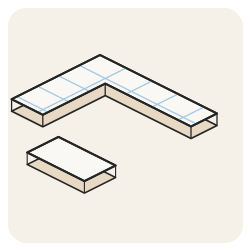
More surface means more material. Islands, breakfast bars, and extra work areas can add square footage, so contractors measure the countertops rather than relying on kitchen floor size.
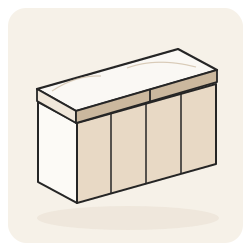
Long runs, awkward angles, pattern matching, and veining can create waste. Some layouts may require an additional slab.
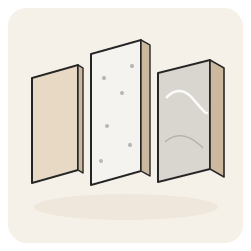
Price can change based on the material, thickness, finish, pattern, quality, and local availability.

Simple edges take less fabrication. Waterfall ends, detailed profiles, drainboards, and other custom features usually involve more cutting and finishing.
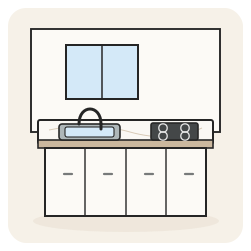
Sink and cooktop openings require precise cutting. Moving fixtures or appliances may also bring plumbing or electrical work into the project.

Check whether the quote covers removal and hauling. Heavy stone, tiled, or strongly adhered countertops may take more time to remove.
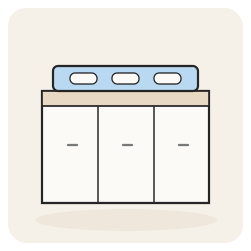
Uneven or damaged cabinets may need leveling, repair, or reinforcement before installing the new countertop.
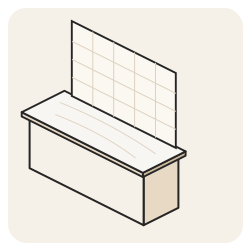
A backsplash, sink, faucet, disposal, or cooktop can add more materials and labor to the job.

Where you live matters, and so does access to the kitchen. Stairs, tight entrances, limited parking, or long carrying distances can make installation more involved. Local labor rates also vary.
Homeowners may consider financing when a damaged countertop needs replacement, countertops are part of a larger remodel, or paying the full project cost at once would use more savings than they want to spend. Related sink, backsplash, plumbing, or cabinet work may also be part of the same project.
Interest and fees raise the cost of borrowing. A longer term may lower the monthly payment while increasing total repayment, so compare the terms with the project cost before deciding.
Homeowners may encounter several countertop financing options. Renovate does not necessarily provide or connect consumers with every product below.
| Financing Option | Uses the Home as Collateral? | How It Generally Works | Terms to Review |
| Unsecured home improvement loan | Generally no | Repaid in installments | APR, fees, amount, term, total repayment |
| Contractor or retailer financing | Depends | May use third-party lender or card issuer | Promotional terms, standard APR, fees, eligible purchases |
| Credit card | No | Revolving credit up to the available limit | APR, minimum payment, fees, promotion end date |
| Buy now, pay later | Generally no | Commonly splits a specific retailer purchase into scheduled payments; may not cover the full installed project | Schedule, late fees, autopay, returns, refunds, credit reporting |
| Home equity loan | Yes | Lump sum secured by home equity | Closing costs, rate, term, payment, collateral risk |
| HELOC | Yes | Reusable line of credit secured by home equity | Variable rates, draw period, repayment period, fees, collateral risk |
The right fit depends on the project cost, available terms, existing debt, repayment ability, and whether you are willing to use your home as collateral. The CFPB explains that home equity loans use home equity as collateral, while a HELOC is a reusable credit line secured by that equity.
Some companies advertise “countertop financing no credit check,” but Renovate does not guarantee that type of option. If Renovate connects you with a lender or lending partner, that company may review your credit history or other financial information as part of its process.
The CFPB explains that a lender may use a soft inquiry during an initial review or prequalification, while a hard inquiry may occur if you decide to continue with the lender’s application. Review the lender’s disclosures before proceeding so you know whether and when either type of inquiry may be made.
Before accepting an option, review the numbers behind it.
The CFPB notes that APR reflects the interest rate plus certain lender fees, making it a useful figure for comparing borrowing costs.
Renovate gives homeowners one place to start when exploring possible financing and contractor connections for a countertop project.

Renovate does not charge consumers to submit a request. If you accept financing, the lender will disclose its own fees and borrowing costs.

Start online with personal, financial, and project information, including the material, estimated cost, installation, and related work.

Renovate tries to connect homeowners with third-party lenders or lending partners and contractors. Availability depends on the project, location, information submitted, and companies participating in the network.

You don't need a particular credit score to submit the form. A lender decides whether to approve an application and what terms, if any, to provide.
If the countertop is part of a broader kitchen project involving cabinets, flooring, appliances, or layout changes, explore kitchen remodel financing.
For counters in an outdoor cooking area, outdoor kitchen financing may be more relevant.
Tell us about your countertop material, estimated project cost, and installation needs to see whether a financing option may be available through our network.
In some cases, yes. A financing request may cover more than the countertop itself, including fabrication, removal, and professional installation. It may also include sink cutouts, backsplash work, or related plumbing. What qualifies will depend on the lender, which also decides whether to approve the requested amount.
No standard credit score applies to every lender. Credit history may affect approval and terms. A lender may also consider your income, employment, current debts, requested amount, and other application details when deciding whether to approve an application. Requirements and review processes vary by lender.
You can still submit a request if your credit score is low. That does not mean financing will be available, though. Lenders set their own requirements and may look at factors beyond your score, including income, existing debt, employment, and the amount you want to borrow.
No set amount is available to every homeowner. What you may qualify for depends on the lender, your financial situation, and the project cost. When estimating what you need, include fabrication, installation, removal, cutouts, backsplash work, and any related plumbing or electrical expenses.
Timing varies. A preliminary response, the lender’s final application decision, and funding may occur at different times. The lender may request documents or additional information, and project details, location, and contractor availability can also affect the overall timeline. There is no universal completion or funding schedule.
It depends on the terms available to you. Compare the APR, fees, payment structure, available credit, and total repayment for each option. If a credit card includes a promotional rate, check when it expires and what happens afterward. An installment loan may follow a different payment schedule.
Some lenders may include quartz, granite, and other countertop materials in a financing request, along with fabrication and installation. The amount needed will vary based on countertop area, material choice, layout, and related work. The lender determines which project expenses are eligible and whether to approve the requested amount.
Not every financing option requires home equity. An unsecured home improvement loan generally does not use your property as collateral. Home equity loans and HELOCs work differently because your home secures them. Renovate may not connect consumers with every type of financing discussed here.


