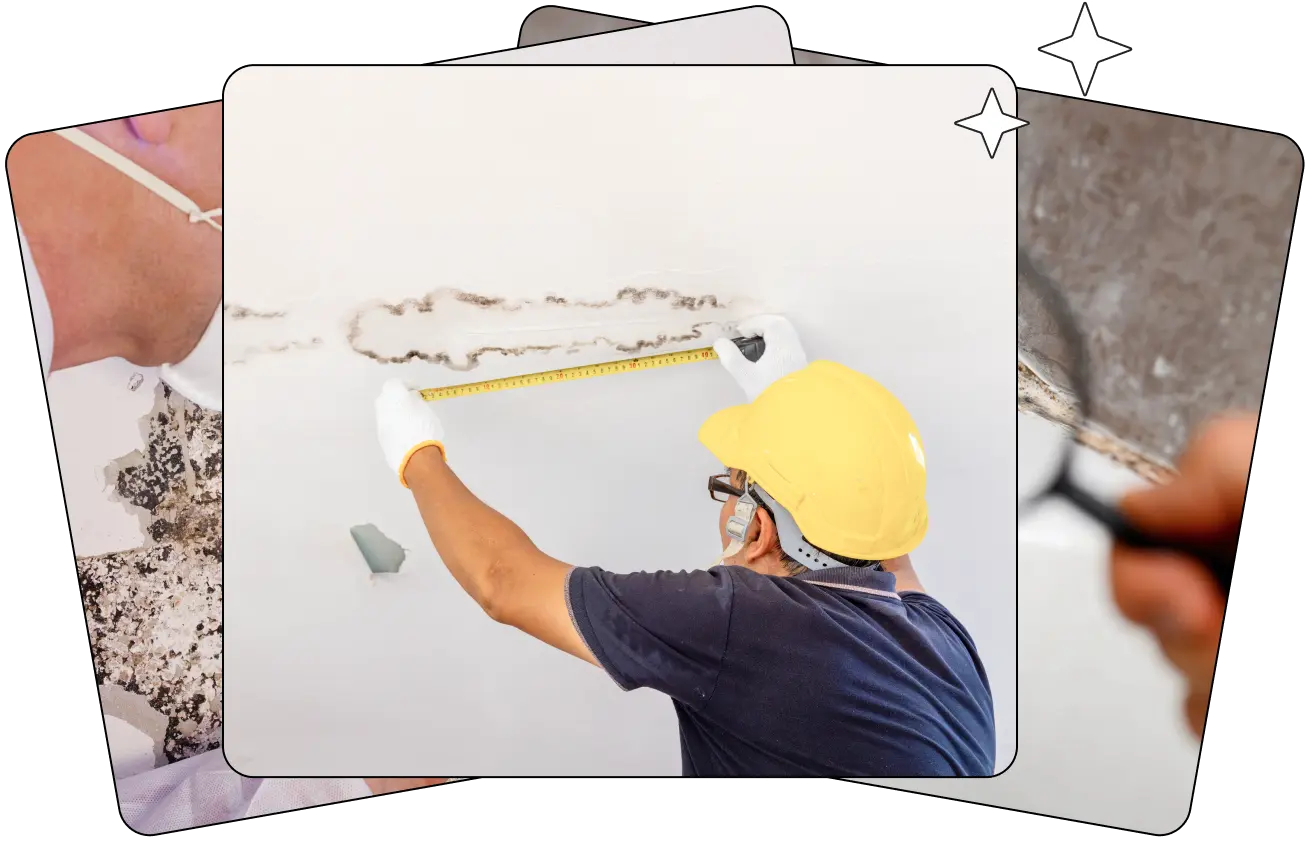
Mold is more than an eyesore. It can spread quickly behind walls, under floors, or inside attics, causing damage to your property and health long before you notice visible signs. Even a small leak or a bit of moisture trapped can create the right conditions for mold growth, compromise indoor air quality, and weaken structural materials.
Renovate can help you request mold inspection services in your area. This may be your first step toward starting your project with ease.
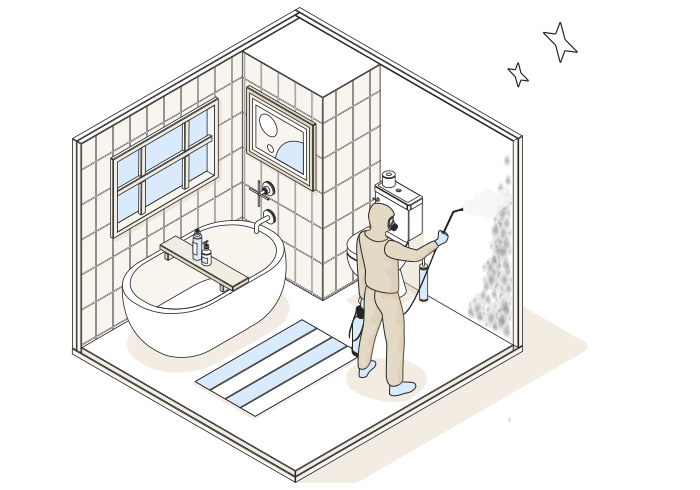
Mold can appear anywhere moisture lingers. Below are some of the most frequent problems homeowners encounter and how they develop.
Leaks from plumbing or roofs often go unnoticed. Trapped moisture creates a perfect environment for mold to thrive inside walls or ceilings, spreading silently until stains, peeling paint, or soft spots appear.
Basements and attics are prone to humidity and poor ventilation. These dark, damp spaces encourage mold growth on wood beams, insulation, and drywall. Left untreated, the musty odor can travel through your HVAC system.
High humidity from showers and cooking allows mold to form on grout, caulking, or under sinks. Once mold takes hold in these spots, it can be pretty stubborn to remove without professional cleaning and better ventilation.
Symptoms such as persistent coughing or allergy flare-ups may worsen indoors when mold spores circulate through the air. More sensitive people may also experience more sinus irritation and eye discomfort.
Mold rarely stays on the surface. It can work its way into drywall, wood, and flooring, gradually breaking down materials. Left unaddressed, this can lead to rotting sections, weakened structures, and more expensive repairs over time.
Every home is different, which is why inspectors use multiple techniques to locate and identify mold. When you use Renovate, you can expect a thorough and efficient process from start to finish.
Professionals may take surface and air samples to identify the type and concentration of mold spores. This helps confirm whether the issue is limited to one area or has spread through the ventilation systems.
Detailed mold visual inspection services help locate visible growth, moisture stains, or signs of previous leaks. Inspectors may use flashlights and magnifiers to examine corners, walls, and flooring closely.
Infrared scanning picks up subtle temperature changes that reveal damp areas hidden behind drywall or flooring. It’s one of the fastest ways to find potential mold sources without opening walls.
Attics and basements often have less airflow than other parts of the home, which makes them more susceptible to mold. During an inspection, specialists check insulation, beams, and ventilation paths for early signs of contamination.
Renovate makes it simpler to find qualified mold detection professionals. Here’s what you can expect.


When it comes to mold, accuracy matters. Renovate helps you explore qualified professionals who deliver dependable results.

Our contractor network includes mold inspectors who follow recognized industry standards for testing and analysis. You can expect clear findings and honest recommendations.

Our network includes local professionals who are familiar with your region’s climate, humidity levels, weather conditions, and common building materials. Their local insight allows for more precise detection and personalized advice.
From air sampling to infrared imaging, the contractors in our network may use advanced equipment to locate mold, even when it’s hidden behind walls, flooring, or insulation.

You don’t need to search dozens of websites. One quick form helps you request to connect with local experts who are ready to assist you as soon as possible.
From the first request to the final report, professionals in our network aim to communicate clearly and prioritize your peace of mind.
A standard residential mold inspection typically costs between $300 and $800, depending on the size of your home and the complexity of the issue. Comprehensive testing, which includes multiple samples or air analysis, may increase the cost. Always ask for a detailed quote upfront.
Common signs include a musty odor, water stains, peeling paint, or visible dark spots on walls or ceilings. If your home recently experienced flooding, leaks, or high humidity, an inspection is strongly advised, even if no visible mold is present.
You might spot surface mold on tiles or walls, but hidden mold requires professional tools to locate. DIY test kits often deliver unreliable results. A qualified inspector can pinpoint mold sources, test air quality, and identify contributing moisture problems.
Many inspectors include or offer air sampling as part of their service. Air tests identify microscopic mold spores and determine whether the contamination is widespread. Ask your contractor if air quality testing is part of the standard inspection package.
Mold inspections are not typically free. Many contractors charge for inspections, sampling, and lab analysis, which may all be necessary for a quote.
Some professionals in our network partner with lenders to provide financing options. This allows homeowners to pay for inspection or remediation services in installments. Approval depends on individual credit factors or lender policies.