Homeowners usually don’t think much about roof edges until something starts to look off. Think: a stain along the fascia, water slipping behind the gutter after a heavy rain, or paint that keeps peeling no matter how often it’s redone.
In many cases, the problem stems from the roof drip edge.
A drip edge doesn’t stand out, but it does steady, behind-the-scenes work. When the right type is chosen and installed by a professional, it helps direct water into the gutter, protects roof edges, and limits long-term moisture damage to fascia boards, decking, and exterior walls. A faulty drip edge may require roof repair help.
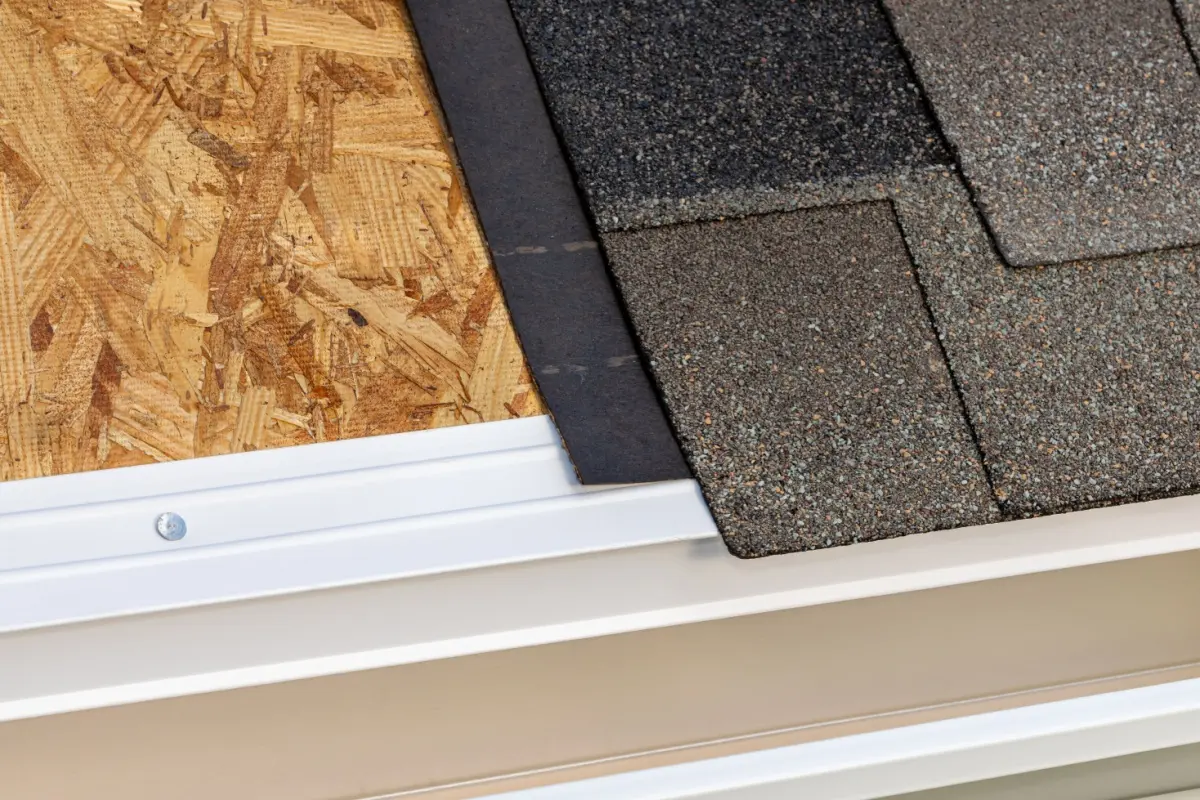
For a clearer understanding of roof drip edge types, materials, profiles, and costs, this guide breaks down what you should know when talking with a roofing contractor.
A roof drip edge is a thin strip of metal installed along the outer edges of a roof. Its job is to guide rainwater away from the roof and into the gutter, instead of letting water slip behind the fascia or soak into the roof decking. Even though it’s a small component, it helps protect some of the most exposed parts of the roof over time.
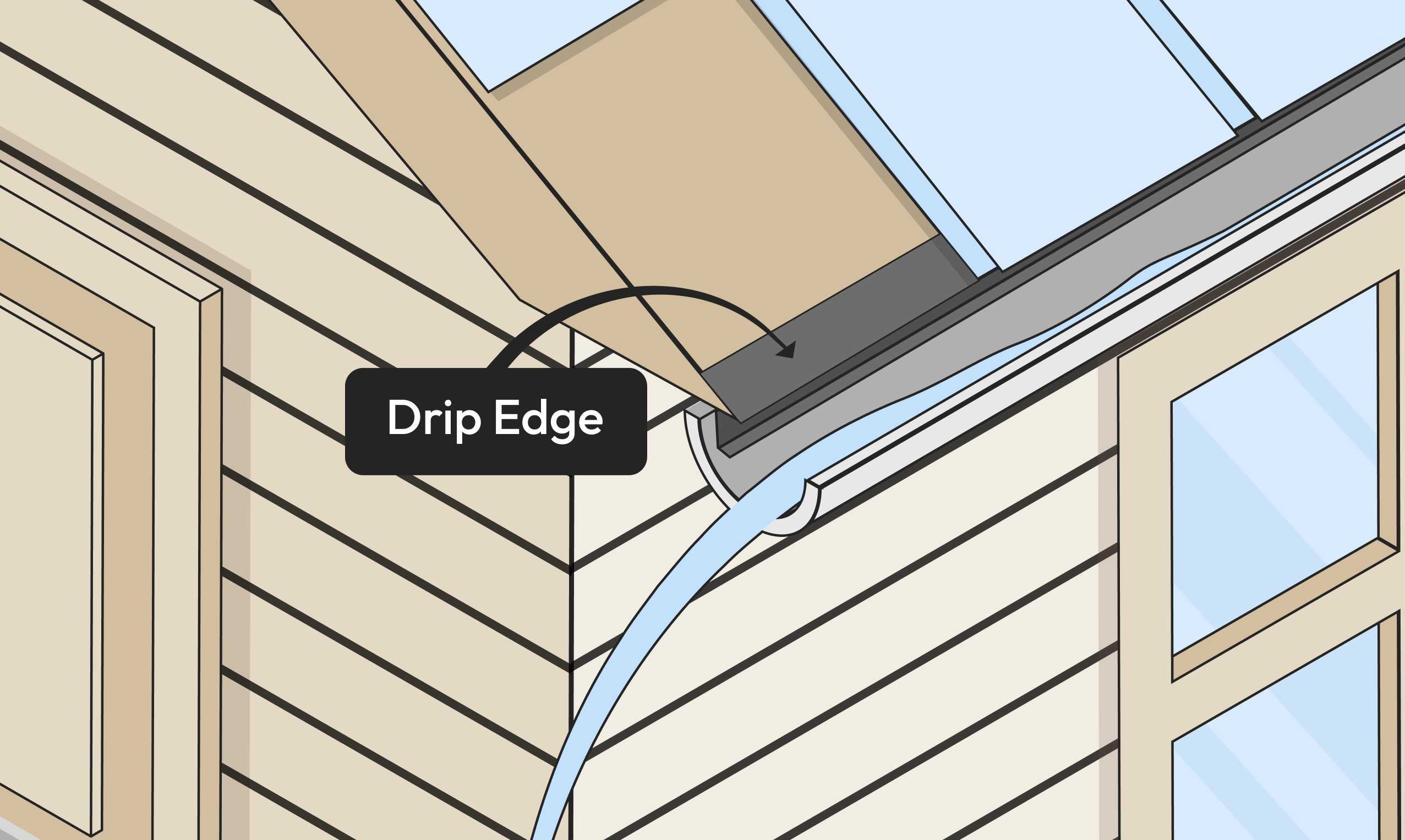
On most pitched residential roofs, drip edges are typically installed in two main areas:
In many parts of the country, model building codes like the International Residential Code (IRC) require a drip edge at both eaves and rakes for shingle roofs to help manage water and protect the structure.
Drip edge isn’t used the same way along every part of the roof. Water behaves differently at horizontal edges than it does along sloped ones, which is why placement matters.
Because these areas handle water differently, contractors may use different profiles or installation methods at eaves and rakes. Those choices are usually based on the roof design and local building code requirements.
A roof drip edge helps control what happens to water as it leaves the roof. Without it, rain can cling to the underside of asphalt shingles, slip behind the gutter, or soak into materials that aren’t meant to handle constant moisture. These issues often develop slowly and may show up as signs of ceiling leaks.
When the right drip edge is selected for the roof type and installed properly, it helps protect several parts of the home. This includes:
There are several types of drip edge. They vary by material, shape, and size. What works best depends on the roof you have and the conditions it needs to handle.
| Metal | Durability | Corrosion Resistance | Typical Cost Range (Excluding Labor) | Common Use Cases |
| Aluminum | Moderate | Good | $0.30–$1.00 per linear foot | Common on residential asphalt shingle roofs in mild to moderate climates |
| Galvanized Steel | High | Moderate | $0.50–$1.20 per linear foot | Used where added strength is needed, including high-wind areas or heavier roof systems |
| Copper | Very high | Excellent | $3.50–$15 per linear foot | Premium and historic homes, architectural roofing, long-term installations |
Also, note that according to IRC provisions, drip edge must extend at least 1/4 inch below the roof sheathing and at least 2 inches back onto the roof deck, with adjacent pieces overlapping a minimum of 2 inches.
The different types of roof drip edge profiles refer to the shape of the metal and how each helps move water off the roof. On most residential roofs, contractors typically work with a few common profile styles.
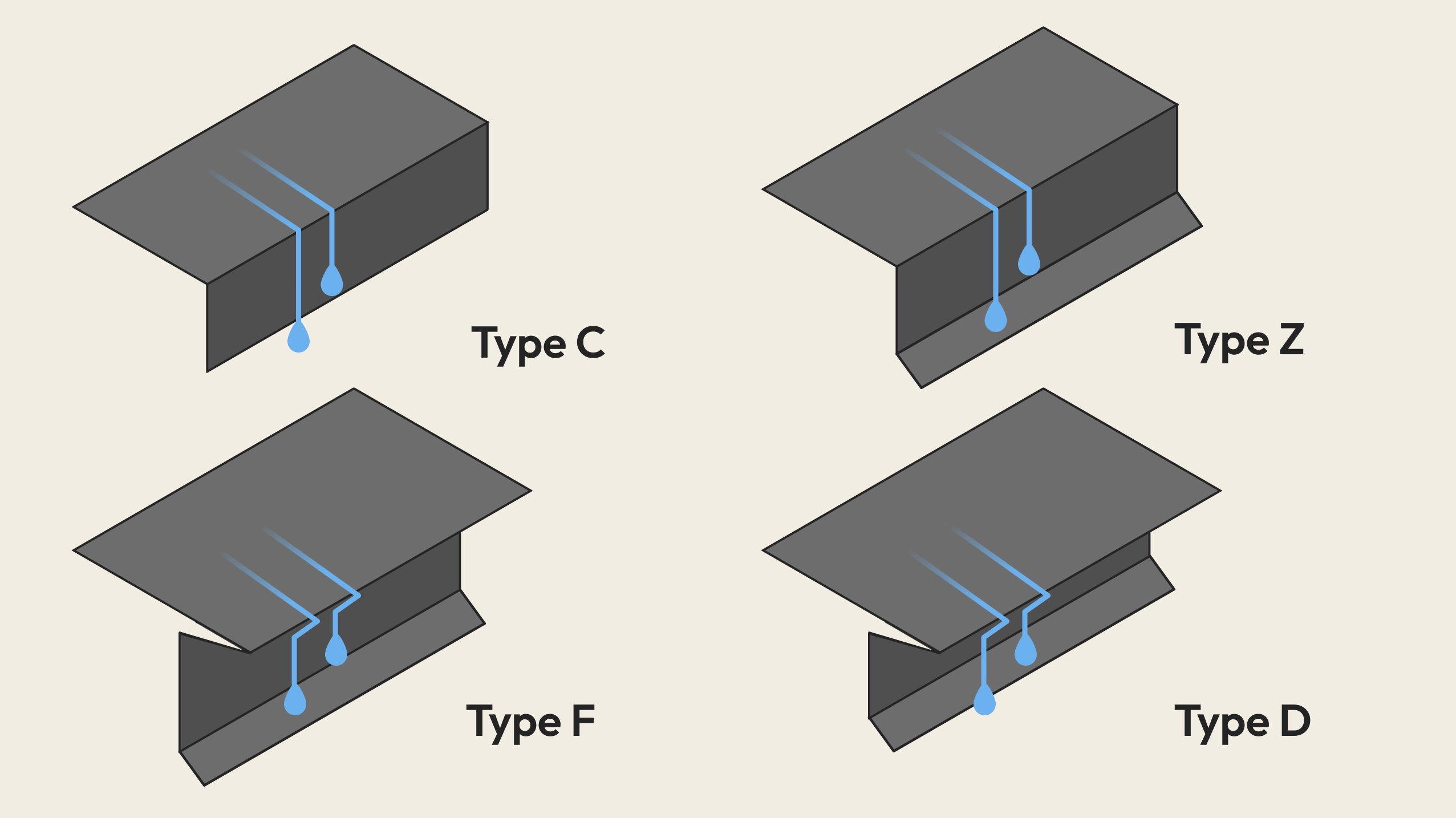
This type uses a basic bent angle and is typically installed on simple roof edges. However, it offers less protection against wind-driven rain.
This is basically Type C with a small hemmed edge at the bottom. That little extra edge helps guide water into the gutter rather than having it cling to the metal and run back toward the fascia.
By extending into the gutter, this flashing directs water straight inside. It is often used when gutters are replaced or the fascia sits farther back.
With a wider flange, this style pushes water farther away from the fascia, which is why many contractors use it on residential asphalt shingle roofs.
Drip edge is usually sold in standard lengths, often around 10 feet per piece. But the size and thickness can vary. For example, some options are wider, some are heavier. As a result, those differences affect how well the drip edge fits your roof and handles water.
While you may see specific measurements listed in an estimate or at a supplier, sizing is typically something your roofing contractor decides based on how your roof is built. This is because roof pitch, fascia depth, gutter replacement, and local building codes all factor into choosing the right flashing size for your roof.
Not every roof uses the same drip edge roof flashing types. Water flows differently on shingle, metal, and low-slope roofs, so the edge protection needs to match the roof system. When the wrong type is used, water may not drain as it should, even if the material itself looks fine.
Drip edge is usually installed or replaced when the roof edge is already accessible, not as a standalone upgrade.
Handling it during other roofing work helps ensure it fits correctly with the underlayment, shingles, and gutter system.
Proper placement also matters for water control and warranty coverage, which is why this work is typically handled by a roofing professional.
Drip edge is most often installed or replaced:
Drip edge problems often show up as water or moisture issues around the roof edge. During an inspection, a contractor may recommend replacement if the drip edge is damaged, missing, or no longer doing its job.
A contractor may suggest replacement if they see:
Drip edge is one of the more affordable parts of a roofing system, especially compared to the damage it helps prevent. Pricing can vary, but it’s usually influenced by a few practical factors related to the roof and the timing of the work.
Costs typically depend on:
You can explore roof financing to manage the cost more easily.
Homeowners often ask how to calculate drip edge quantities.
Contractors usually measure the perimeter of the roof edges where the drip edge is, including eaves and rakes. This helps estimate material costs and labor time.
Choosing between different roof drip edge types depends on how your roof is built, the conditions it faces, and what you expect long-term. Contractors usually consider the following key factors when recommending the best option:
Different systems use different edge solutions. Asphalt shingle roofs, for example, typically use standard metal drip edges. On the other hand, metal roofs often require system-specific trim. Flat or low-slope roofs use edge metal designed to work with membranes.
Weather affects performance. Heavy rain, strong winds, snow, and ice can all influence which materials and profiles handle water most effectively.
Many codes require a drip edge and set rules for where and how it must be installed. These requirements vary by location.
Some materials, like copper, last longer and need less attention over time. Others may cost less upfront but require more upkeep.
When hiring a roofer, it’s usually best to focus on experience and clear communication. Look for someone with:
Pro Tip: If you’re concerned about costs, Renovate can help you request roof financing.
Homeowners who are planning broader home improvement projects may also benefit from learning how to choose a contractor for renovation before starting roofing or exterior work.
Here is what your roof pro will likely do during drip edge planning:
However, even the pros can sometimes miss a thing or two. That’s why it helps to know what can go wrong.
Drip edge issues are easy to overlook. If they are left unchecked, they may lead to water problems along the roof edge if something isn’t right.
Even a properly chosen drip edge can cause problems if it’s installed the wrong way. Here are the warning signs to look for along the roof edge:
Before work begins, confirm the drip edge your roofer is recommending is appropriate by asking the following questions:
Drip edge installation can affect inspections and roofing warranties. A missing or improperly installed drip edge may fail code requirements or create issues with manufacturer coverage. This is why licensed contractors typically handle this work.
Here are quick answers to the most common homeowner questions about drip edges and roofing requirements.
Drip edges vary by material (aluminum, steel, copper) and profile (Type C, D, F). Each combination manages water differently and suits different roof systems.
Type C has a simple angled shape, while Type D includes a wider flange that helps push water farther away from the fascia. Type D is commonly used on residential asphalt shingle roofs.
Steel is generally stronger, while aluminum offers better corrosion resistance in some environments. The better option depends on the climate, roof type, and contractor preference.
While older homes may not have a drip edge, many modern building codes require it. Drip edge helps protect roof edges and can reduce long-term repair costs.
Building code requirements vary by location, but often specify drip edge installation along eaves and rakes. Licensed contractors typically handle code compliance as part of the roofing project.