After a heavy storm, some homes lose shingles while others come through untouched. Walk down the same street, and you will often see the difference overhead. One house has a roof that slopes on every side. The next has two clean angles and a tall triangle facing the wind.
The contrast usually comes down to one decision: a hip roof vs. a gable roof.
Although these two roof styles may look similar at a glance, they behave very differently when weather, cost, and space come into play. Choosing between them affects how your home handles wind and snow, how much you spend to build or repair, and even how usable your attic will be.
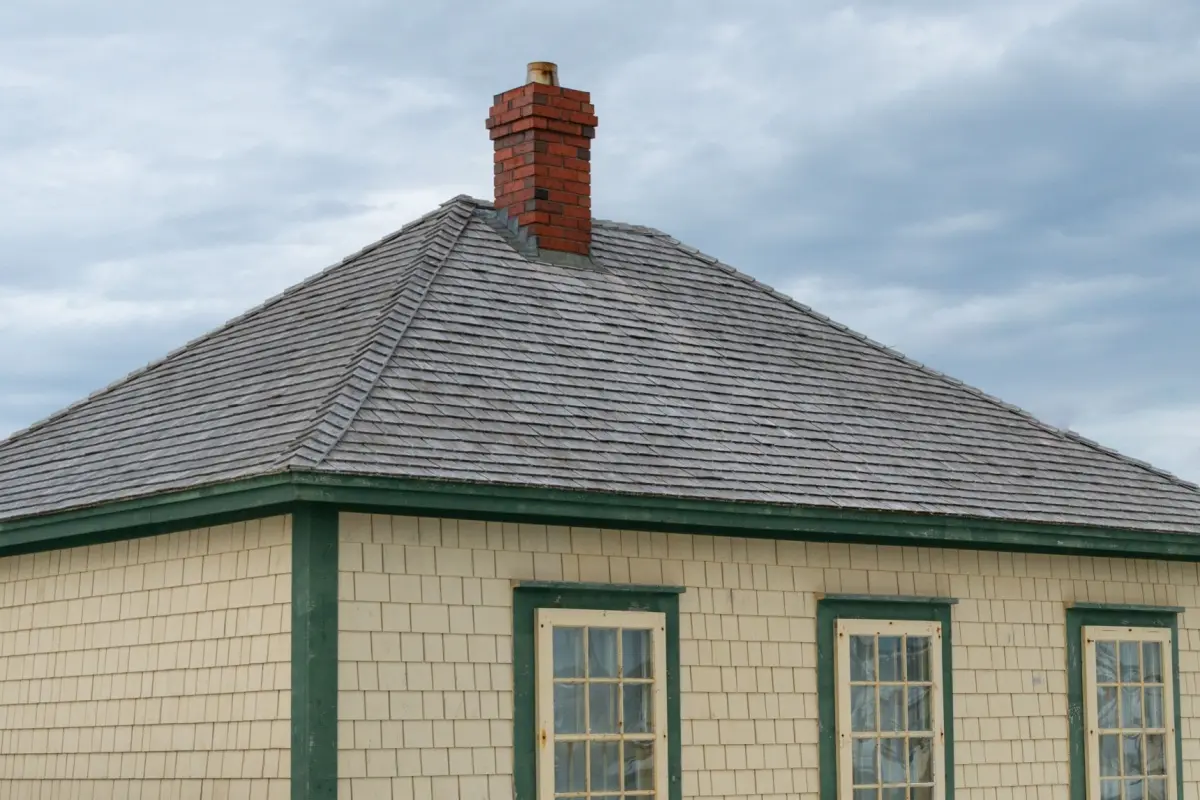
A hip roof slopes downward on all four sides of the home. The sides meet at a ridge or a single point, depending on the design. Because they lack flat vertical ends, hip roofs are known for their stability and balanced appearance.
This type of roof is often chosen in regions with frequent storms and high winds, or where a refined, symmetrical look is preferred.
Below is a simple visual to help picture the shape:
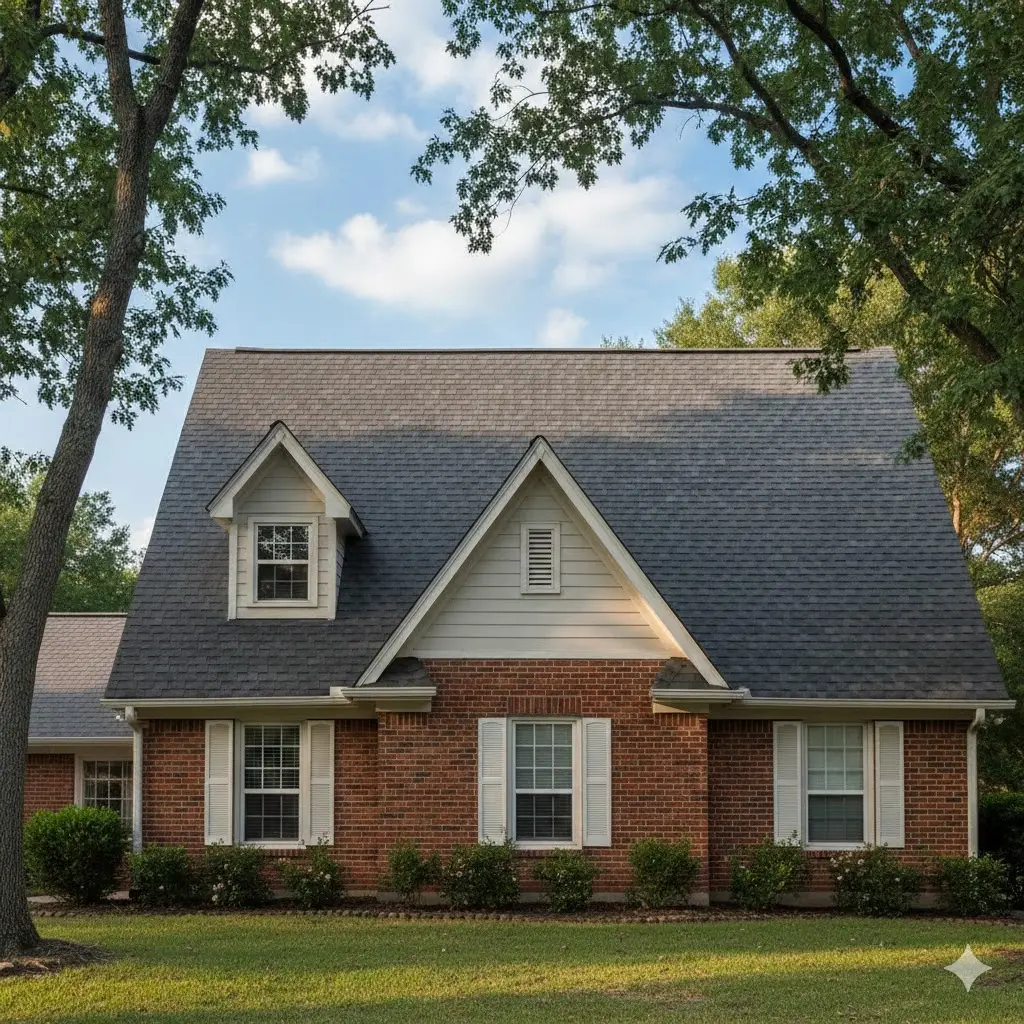
Gable roofs are one of the most common roof styles in residential construction. They are popular because they are practical, adaptable, and cost-friendly. This roof type has two sloping sides that meet at a ridge, with vertical triangular walls (gable ends) on each side, creating a clear contrast between the hip and gable roof shapes.
Here is a simple graphic to show the shape:
Hip and gable roofs may seem similar at a glance. The fundamental difference between a gable and a hip roof shows up when comparing structure, performance, and cost.
| Comparison factor | Hip roof | Gable roof |
| Roof structure | Slopes on all four sides | Two main slopes with vertical gable ends |
| Wind resistance | Strong and stable due to aerodynamic shape | Moderate; may require additional bracing |
| Water and snow management | Even drainage on all sides | Very effective with steeper pitches |
| Attic and ventilation | Less attic space and fewer ventilation options | More attic space and easier airflow |
| Construction complexity | More complex framing | Simpler framing |
| Upfront cost | Higher due to labor and materials | Generally more affordable |
| Maintenance needs | May involve additional hips or ridges, depending on design complexity | Fewer joints, more straightforward upkeep |
| Architectural flexibility | Refined, symmetrical appearance | Highly adaptable to many home styles |
| Insurance considerations | May qualify for wind mitigation discounts in some regions, depending on inspection results and structural features | It can be higher in high-wind regions |
Roof shape plays a bigger role once weather becomes part of the equation. Wind pressure, snow loads, and heavy rainfall affect a roof’s performance over time. FEMA’s wind retrofit guidance for residential roofs explains that proper roof-to-wall connections and sheathing attachment often have a greater impact on wind resistance than roof shape alone.
| Climate condition | Hip roof performance | Gable roof performance | Practical considerations |
| High-wind and hurricane areas | Aerodynamic shape helps reduce wind uplift and pressure | Vertical gable ends are more exposed to wind forces | Hip roofs are often preferred in coastal and hurricane-prone regions, but performance depends on proper bracing, hurricane ties, sheathing attachment, and overall code-compliant construction. |
| Snow and cold weather | Even weight distribution across all sides. However, snow performance is influenced more by roof pitch and structural engineering than by shape alone. A properly engineered gable roof can perform just as well under heavy snow loads, and low-pitch roofs of either type may retain snow longer. | Steep slopes allow snow to shed quickly | Proper insulation and ventilation help prevent ice dams on both roof types |
| Rainy and tropical climates | Balanced drainage on four slopes limits water concentration | Fast runoff on two slopes increases reliance on gutters | Regular gutter design and maintenance are essential in heavy rainfall areas |
Insurance premiums are typically influenced more by roof age, wind mitigation features, inspection certification, and local building codes than by roof shape alone.
Cost is often a deciding factor when choosing a roof style. While materials and pricing vary by location, roof shape directly affects labor time, framing complexity, and long-term maintenance needs. Material choice also affects total roof cost and performance. Homeowners comparing asphalt, standing seam, and other options can explore different types of metal roofing panels
to better understand how material selection impacts price, durability, and long-term maintenance.
| Cost factor | Hip roof | Gable roof |
| Installation cost | Higher due to complex framing and layout | Lower and faster to construct |
| Material use | Requires more roofing and framing materials | Uses fewer materials overall |
| Labor requirements | Skilled labor and longer build time | Simpler labor and shorter build time |
| Long-term maintenance | Slightly higher due to more seams and joints | Generally lower with fewer intersections |
When the roof shape complements the home’s architectural style, the result feels intentional and cohesive. In neighborhoods with strong architectural patterns, it can even affect buyer interest and resale appeal.
| Home style | Hip roof fit | Gable roof fit |
| Ranch | Common choice with a balanced, low-profile look | Less common, but used on some updated designs |
| Mediterranean | Very popular and visibly aligned with the style | Rarely used due to shape and proportions |
| Colonial | Used in select designs for symmetry | Very popular and historically common |
| Craftsman | Occasionally used on wider layouts | Very common, especially with front-facing gables |
These variations are often chosen when homeowners want the strength of a hip roof, the space of a gable roof, or a more distinctive exterior without sacrificing performance.
| Roof type | Description | Why homeowners choose it |
| Dutch gable | A gable added on top of a hip roof | Increases attic space while maintaining wind resistance |
| Half-hip | Gable ends are partially replaced with short hip slopes | Adds protection while keeping a traditional appearance |
| Combination roof | A mix of hip and gable sections across the home | Supports complex layouts and enhances visual variety |
Because roof structure affects cost, performance, and long-term maintenance, the better choice depends on how your house is built, where it is located, and what you expect from the space over time.
If your home is in a high-wind or storm-prone area, a hip roof often provides added stability because wind pressure is spread across all sides.
In colder regions with heavy snowfall, a gable roof with a steeper pitch can help snow slide off more easily.
Hip roofs typically cost more due to their more complex framing and material requirements.
On the other hand, gable roofs are simpler to construct and often reduce upfront expenses. This makes it a better candidate when you’re working within a tight renovation or build budget.
If attic space, storage, or future conversions matter to you, gable roofs typically offer more usable room and easier ventilation.
Hip roofs limit headroom and may require more planning to ensure proper ventilation.
Some architectural styles naturally suit one roof shape better than the other. A roof that fits the home’s proportions and neighborhood character tends to age better visually and enhance resale appeal.
Yes, but it involves structural changes and higher costs. It is usually done during major renovations.
Yes. Ventilation and insulation are easier to design in gable roofs, but both can perform well with proper planning.
Hip roofs generally handle wind better than other roof shapes.
Gable roofs offer more usable attic space.
Not usually. Gable roofs are simpler to inspect and repair.
Steep gable roofs shed snow quickly, while hip roofs manage rain evenly.
Yes. Many larger homes use both to match layout needs.
Longevity depends more on materials and installation quality than shape
Gable roofs are generally quicker and easier to build.