Copper roof installation is a specialized project that requires careful planning, precise metalwork, and experience working with architectural copper. It generally includes assessing the roof, selecting a copper system, preparing the deck and underlayment, installing the copper, completing seams and flashing, and inspecting the finished work. For the broader process, see our roof installation guide.
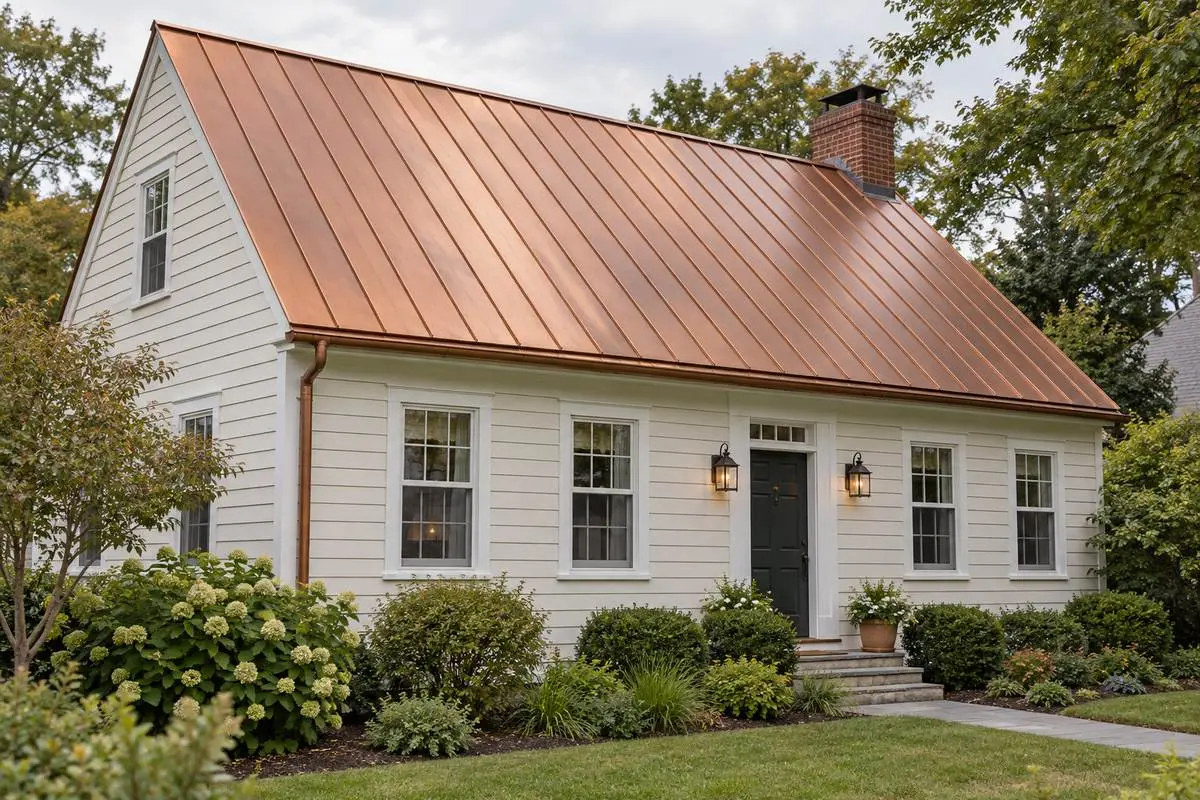
For homeowners, the appeal is its long service life and appearance that evolves over time. The tradeoff is a higher upfront cost and the need for a contractor with the right experience.
Copper roofing requires a larger upfront investment than most residential roofing materials. Consider the benefits and tradeoffs before deciding whether it fits your home.
| Type | What It Looks Like | Where It’s Commonly Used |
|---|---|---|
| Standing seam copper roofing | Long panels joined by raised seams | Pitched roofs, porches, additions, and larger architectural features |
| Flat-lock or flat-seam copper | Smaller interlocking sections that create a relatively flat surface | Low-slope areas, curved roofs, and detailed architectural work |
| Copper shingles or tiles | Individual pieces that create a more textured roof | Homes where the look of shingles or tiles is preferred |
| Copper accents | Copper covering one feature rather than the full roof | Dormers, bay windows, entrance roofs, turrets, and cupolas |
Low-slope flat-seam installations commonly require soldered seams, depending on the specified system.
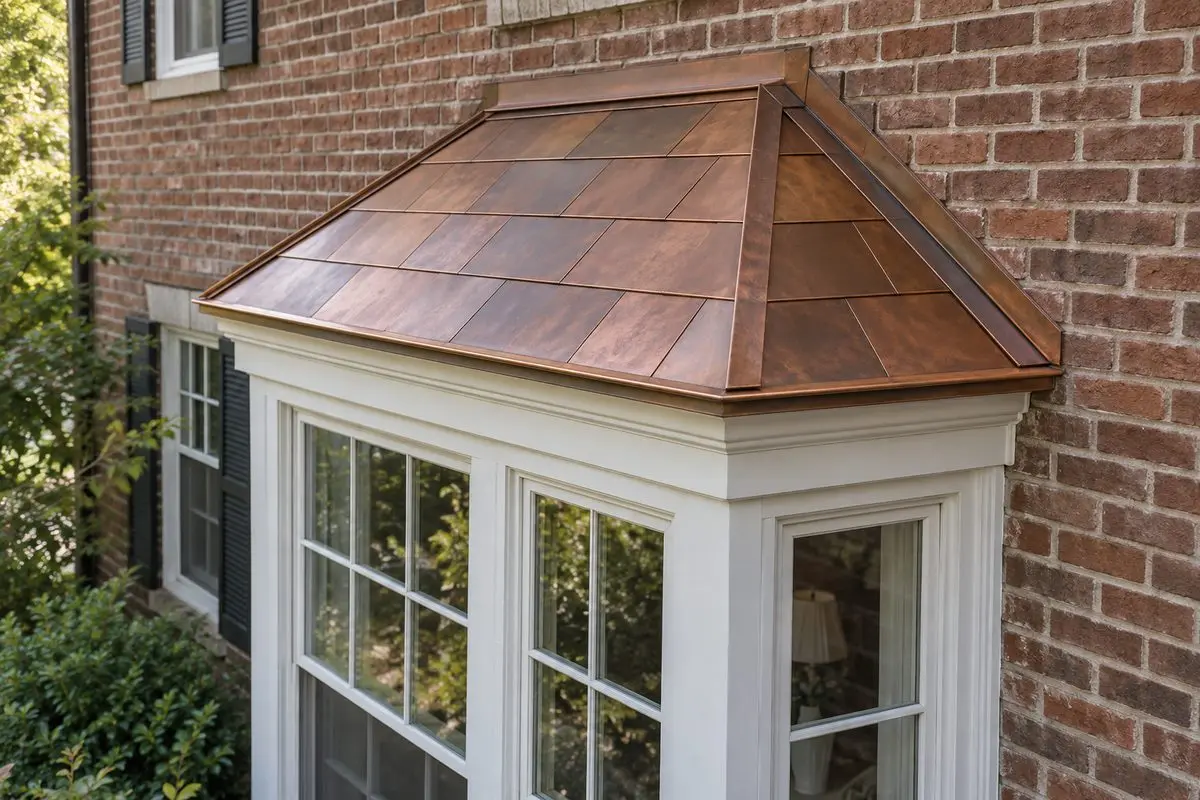
You may also see the term copper roofing sheets. This usually refers to the raw copper used to fabricate panels or other roof components rather than a separate roofing system. The contractor should assess your roof first, then recommend the copper system that best fits its slope, drainage, shape, and design.
Before work begins, the contractor should inspect your roof and determine what the project actually requires. That includes checking the roof deck’s condition, slope, and drainage, and examining transitions around chimneys, skylights, and walls.
For a replacement, the contractor should decide whether the old roof needs to come off. Tear-off can expose damaged decking or other problems that were not visible during the first inspection, so the proposal should explain how added repairs would affect the price.
Your proposal should identify the copper roofing system, the copper’s weight or thickness, and the other materials included in the installation. It should also explain how the contractor plans to handle key details such as seams and flashing. The scope should identify compatible fasteners, clips, flashing, underlayment, and any separation layer.
The installation must allow the copper to expand and contract as temperatures change. The contractor should also plan how it meets adjoining materials and where rainwater will drain. Copper runoff can stain nearby surfaces or damage incompatible metal components.
You do not need to make these technical decisions yourself. What matters is that the scope is specific enough for you to understand what is included and compare it with another estimate.
Once work begins, the contractor will generally:
The exact installation method will vary by copper system, including whether seams are soldered. During the final review, the contractor should check seams, flashing, roof edges, drainage, and visible damage, and confirm that the completed work matches the written scope.
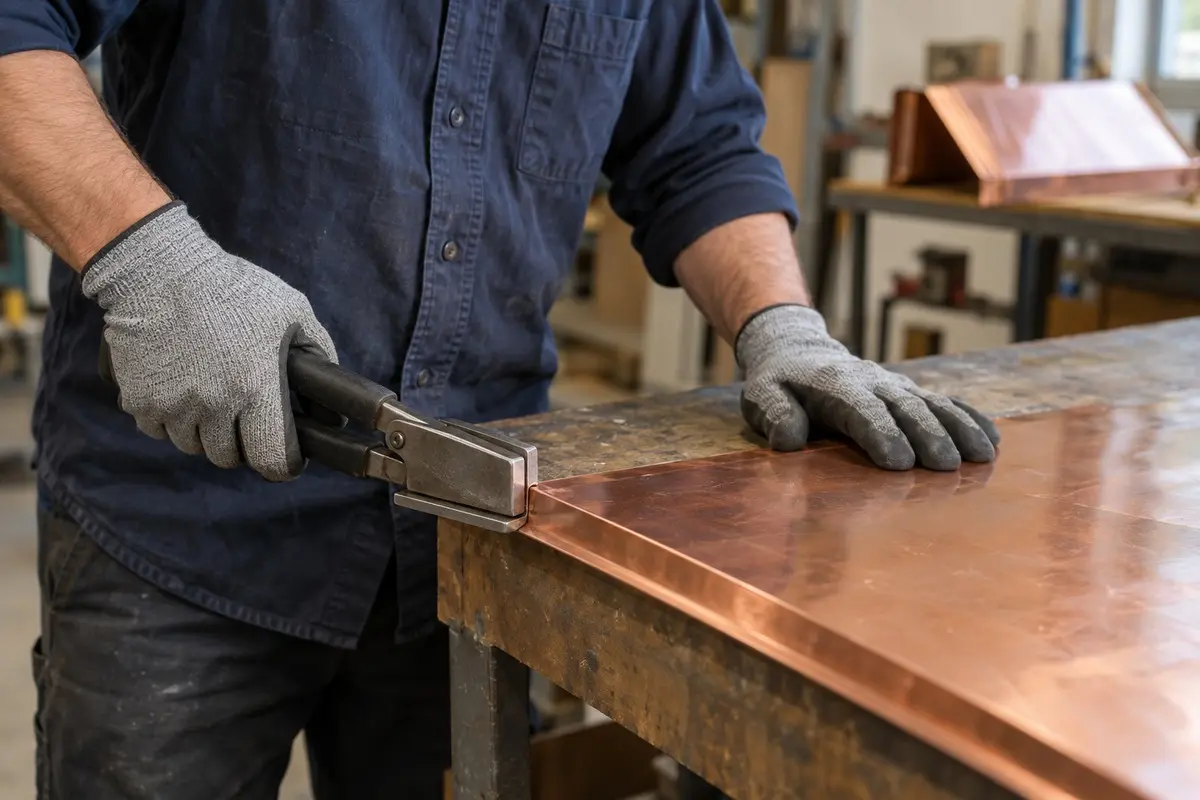
Ask for a project-specific schedule that accounts for roof size, complexity, custom fabrication, tear-off, repairs, weather, and contractor availability.
For initial budgeting in 2026, allow roughly $15 to $50 per square foot for copper roofing materials and professional installation, depending on the system. For a roof measuring 2,000 square feet, that works out to approximately $30,000 to $100,000.
Copper shingles generally fall toward the lower end of published estimates, while labor-intensive flat-seam work can cost considerably more. Complex fabrication, difficult access, and higher local labor rates can push a project beyond these ranges.
| Copper Roofing System | Approximate Installed Cost per Square Foot |
|---|---|
| Copper shingles | $15–$30 |
| Standing-seam copper | $20–$35 |
| Flat-seam copper | $25–$50 |
These approximate ranges are rounded from multiple published estimates and include copper materials and professional installation. They are budgeting estimates, not quotes. Confirm whether your contractor’s price includes removal of the existing roof, disposal, deck repairs, permits, and other project-specific work.
Roof area is different from your home’s interior square footage. Contractors measure the actual roof surface, and you may see prices quoted by the roofing square, which equals 100 square feet.
The price of a copper roof depends on how much material you need and how complicated the installation will be. Your quote should account for:
Smaller accents and specialty tile or decorative profiles need project-specific quotes. Copper prices and local labor rates can change, so ask how long your estimate remains valid. If the upfront cost is difficult to cover at once, roof financing may help you plan for the expense.
If the images of copper roofing in our blog so far don’t look like what you’re used to seeing in the wild, that’s because of one of copper’s most interesting attributes: it’ll eventually turn green. The process involves the metal developing a natural patina. Here’s how it happens and what you need to know about maintaining and repairing the roof.
New copper starts with a bright metallic finish, then gradually darkens and develops a natural patina as it reacts with the surrounding environment. The color and speed of that change depend on local conditions, so different parts of the same roof may weather at different rates.
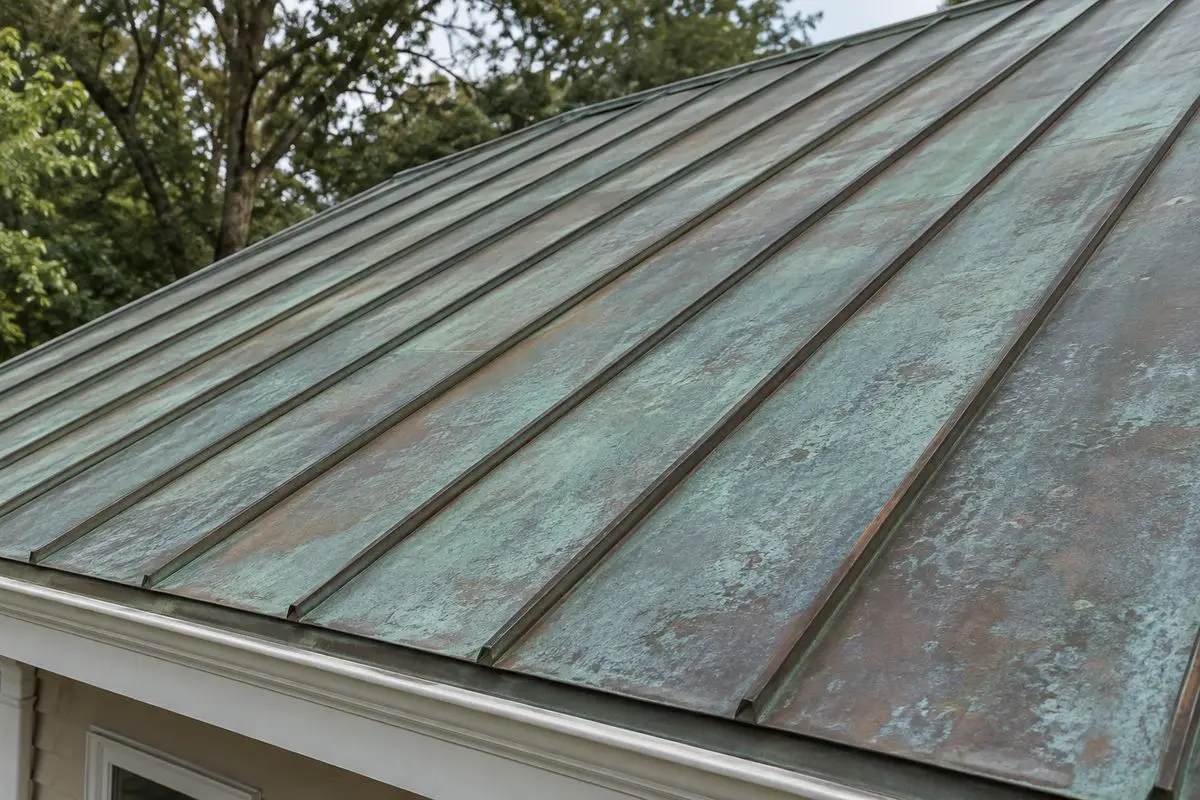
That patina is a normal part of copper aging and helps protect the metal underneath. Homeowners should not expect every roof to turn the same shade of green or follow the same timeline. In some dry climates, copper may remain brown or dark rather than developing the familiar green patina.
Copper is relatively low maintenance, but it still needs occasional attention. Keep gutters and drainage paths clear, and watch from the ground for visible damage, debris buildup, or unusual staining.
After severe weather or if you suspect a leak, have the roof inspected rather than climbing onto it yourself. Discuss any treatment intended to clean, preserve, or change the finish with a contractor who routinely works with copper.
Minor damage around a seam, flashing, or a small puncture can sometimes be handled with a localized roof repair. More extensive damage, widespread installation defects, or damaged roof decking may require correcting or replacing a larger section of the roof. Have a contractor experienced with copper assess the damage and specify compatible repair materials.
General roofing or metal-roofing experience is not enough on its own. Ask specifically about copper projects that are similar to yours.
Look for:
Online reviews can help you understand a contractor’s overall track record, but they should not replace evidence of actual copper experience. Renovate helps homeowners submit a request to connect with a local contractor.
There is no fixed lifespan for every copper roof. Properly designed copper roofs have remained in service for more than a century, but that should not be treated as a guarantee. Workmanship, roof design, local exposure, and maintenance all influence how long the system performs.
Yes. Copper sits at the premium end of residential roofing. Our 2026 planning range is about $15 to $50 per square foot installed. Copper materials, specialized labor, and custom fabrication contribute to the price; the selected system and roof complexity also matter.
Sometimes, but a contractor experienced with copper should evaluate the existing roof first. Whether an overlay is appropriate depends on the existing roof covering, the condition of the deck, the copper system being installed, and any local code or manufacturer requirements.
There is no standard timeline for every copper roof. A straightforward installation may move faster than a roof requiring extensive custom fabrication or repairs after tear-off. Larger or more complex roofs usually take longer, and weather and contractor availability can extend the schedule.
Yes. The bright finish of new copper gradually changes as the metal reacts with its environment. Moisture, shade, drainage, and local air conditions can make different parts of the roof change color at different rates. Uneven weathering is not automatically a sign of a problem.