Roof installation is the process of building a complete roof system, from the deck to the finished surface. A contractor must prepare the existing roof, inspect the underlying surface, install the new covering, and finish the roof details before the job is closed.
For replacement projects, homeowners typically spend about $9,500 to $10,000 nationwide in 2026, although projects can range from roughly $5,800 to $46,000 depending on roof size, material, pitch, location, and hidden repairs. New-construction pricing differs because there is no existing roof to remove. See Renovate’s roof replacement cost guide for a more complete breakdown.
Roof installation starts with the roof deck, the wood base attached to your home’s framing. From there, the contractor builds the system in layers. Underlayment helps protect the deck beneath the visible roof covering, while an ice and water barrier may be added in leak-prone areas such as eaves, valleys, or roof edges.
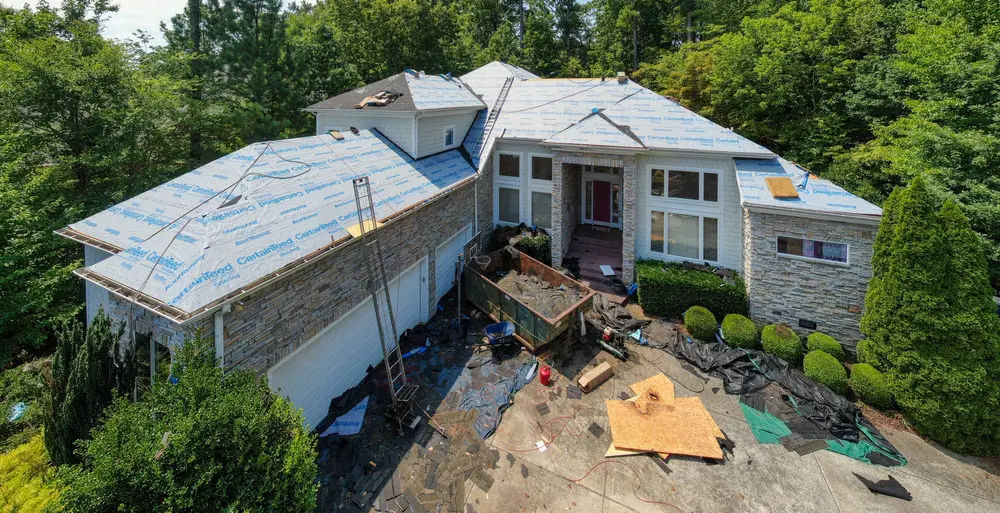
After the main protective layers go down, the crew focuses on the vulnerable points. Roof edges, chimneys, and skylights need careful finishing so water does not work its way underneath. Ventilation is also part of the job, since trapped attic heat and moisture can shorten the roof’s lifespan.
The job should end with site cleanup and delivery of the warranty documents, so you know who to contact if something looks wrong later.
New roof installation usually refers to roofing a new home, addition, or major remodel. Roof replacement happens on an existing home. The contractor may remove the old roof or, in limited cases, install a new covering over the existing one.
To avoid surprises, set the right expectations for each phase of the roof installation.
Before the crew arrives, most of the important decisions should already be settled. Your quote should show what the contractor will install, which materials are included, how permits will be handled, and how cleanup and disposal will be handled.
This is also the time to get the house ready for a noisy, messy workday. Move cars out of the driveway and protect anything stored in the attic from dust or debris. If neighboring homes are close together, giving neighbors a quick heads-up can make the disruption easier to manage.
During installation, your home will be loud, and access around the house may be limited. Plan for the driveway to be partially or fully blocked, and keep children and pets away from the work area while the crew removes and installs materials.
A simple asphalt shingle roof may take a few days, but the schedule can change once the roof is opened up and the contractor finds damage.
Once the roof is finished, the main thing to watch is how it performs after the first rain. Check ceilings, the attic, exterior walls, and the ground around the house for anything that looks unusual. A new stain or water showing up where it should not be is worth documenting and sending to the contractor while the project is still fresh.
While this definitely isn’t a DIY project, it can help to know what steps the contractor will take to get the job done.
Before the tear-off starts, the crew should protect the areas around the house. This is when driveways, siding, landscaping, and nearby outdoor features are most exposed to falling material. For homeowners, this step is also an early sign of how carefully the crew plans to treat the property.
On a replacement project, the old roofing comes off first. This part is loud and messy, but it gives the contractor a clear look at what was hidden underneath. Some damage cannot be confirmed from the ground, which is why the roof condition may change the plan once the surface is removed.
The deck needs to be solid before the new system goes on. Rotted, soft, delaminated, or damaged decking should be repaired or replaced. Skipping this step can leave weak areas under a new roof.
Once the deck is ready, the crew starts adding the layers that sit beneath the visible roof. These layers help move water off the edges, protect the deck, and provide extra coverage for vulnerable areas. In colder climates or problem areas, an ice barrier may be required by code.
Flashing is where careful installation makes a big difference. The crew uses it around the places where water is most likely to find an opening, such as chimneys and valleys. Ask whether old flashing will be replaced or reused, since weak flashing can cause leaks even on a new roof.
After the base layers and detail work are ready, the crew installs the main roof covering. The method depends on the material, but the goal is the same: each section needs to be fastened and finished so it works with the layers underneath.
Ventilation should fit the home. The contractor should be able to explain how air will enter and leave the attic, and whether any existing vents need to be replaced or adjusted.
The job should close with the property left clean and a careful review of the finished roof. The crew should remove old materials, check the yard and driveway for debris, and provide the final paperwork. Some projects also need a local inspection before the roof is fully signed off.
A low roof quote can look appealing, but the real difference is often in the details. Before you choose a contractor, make sure the estimate clearly explains:
Your contractor will typically ask you to choose your preferred roofing materials. Here are some typical options.
Asphalt shingles are widely used for residential roof installation because they are affordable and available in many styles. Asphalt shingle installation is usually the baseline that homeowners compare other materials against.
Metal roofing is often chosen for durability and a cleaner, modern look. The main choice is usually between standing-seam panels, where fasteners are hidden, and exposed-fastener panels, where screws are visible and may require more maintenance over time.
Tile and slate are premium, long-lasting options. They are also heavy, so the home’s structure may need to be evaluated before installation. Slate roof installation requires specialized contractors and should not be treated like a standard shingle job.
Flat and very low-slope roofs need a different approach than standard pitched roofs. Asphalt shingles generally require a slope of at least 2:12, and lower-slope applications may need additional underlayment. Flatter roofs often use TPO, EPDM, PVC, or modified-bitumen membranes; the membrane keeps water out, while the roof’s slope and drains, scuppers, or gutters move water off.
Flashing, vents, and roof edges may sound like small parts of the job, but they do a lot of the work that keeps a roof reliable. They help move water away from the home and let heat escape from the attic. If these details are rushed or left vague in the quote, a new roof can still develop problems.
Roof installation cost varies widely. The best way to compare costs is to compare itemized quotes with the same scope.
Roofing is measured in squares. One square equals 100 square feet of roof area. Your roof area is not the same as your interior square footage. Pitch, overhangs, dormers, and roof shape can increase the surface area.
Material choice can quickly change the budget, even on the same roof. Use the ranges below as planning estimates for installed cost. Actual pricing depends on roof size, access, and the condition of the existing roof.
| Roofing Material | Estimated Installed Cost per Square Foot | What Affects the Price |
| Asphalt Shingles | $3.50–$8.50 | Material grade, roof complexity, tear-off, and local labor |
| Metal Roofing | $6.00–$24.50 | Panel type, coating, fastener system, and specialized labor |
| Wood Shingles or Shakes | $6.00–$15.00 | Cedar grade, fire treatment, installation time, and maintenance needs |
| Clay or Concrete Tile | $10.00–$25.00 | Material weight, skilled labor, and possible framing upgrades |
| Slate | $15.00–$32.00 | Heavy natural stone, specialized installation, and structural requirements |
| Flat Roof Membranes, TPO or EPDM | $4.50–$12.00 | Membrane type, seam method, insulation needs, and drainage details |
A simple roof is easier to access and install. A more complex roof takes longer because the crew has to work around steeper slopes, higher sections, roof transitions, and areas that need careful flashing. The more detailed the work the roof requires, the more labor is added to the final price.
The condition of the old roof can change the final price once work begins. Damaged decking or trapped moisture beneath the existing roof may only become apparent after a tear-off. That is why the estimate should explain how decking repairs will be priced before the crew opens the roof.
Roofing labor depends on where you live and how busy local contractors are. Prices may rise when demand is high, especially after major storms or during peak roofing season.
Permit rules depend on where you live. Local code may shape the materials used, the inspection process, and how the roof is built to withstand the weather in your area. Your contractor should explain which permits are required and ensure the installation meets local requirements.
A strong quote should be specific enough to compare line by line. Use this checklist when comparing quotes or when you explore roof financing options:
Saving money on roof installation usually comes down to avoiding rushed decisions and preventable surprises. The goal is to control the project without weakening the roof system.
A roof installation company should be able to explain the job clearly before asking you to sign. Get at least three written, itemized quotes and compare the scope line by line. Do not pay the full project price upfront, and do not make the final payment until the work is complete and you are satisfied. Use this checklist when comparing roof installation contractors:
Be careful with anyone who pressures you to sign quickly or avoids documentation. Renovate can help try to connect homeowners with a contractor in their area. Availability varies by location.
Roof repair services may be enough for isolated missing shingles or a localized leak.
A full roof replacement may be needed when problems recur or the roof shows signs of widespread damage. Urgent issues, such as active leaks or roof openings caused by storms, may require emergency roof repair before a full installation can be scheduled.
A straightforward asphalt shingle roof often takes a few days to install. The timeline may change if the roof is difficult to access or requires repairs once the old material is removed. Specialty materials, inspections, and weather can also delay the project.
You usually do not need to stay home all day, but you should be reachable. The contractor may need approval for decking repairs, change orders, or access issues. If you work from home, the noise may be difficult to handle, especially during tear-off.
Sometimes an overlay is allowed, but it depends on local code and the condition underneath. It should not be used over damaged structural components. Tear-off gives the contractor a clear view of the deck.
Permit rules depend on where you live and how much work the project involves. Before you sign, ask the contractor whether a permit is required and whether the quote already includes related fees and inspections.
Depending on credit and provider requirements, you may be able to finance a roof installation through a personal loan, contractor financing, or another product. If approved, compare the APR, fees, repayment period, monthly payment, and total amount owed before choosing an option.
The best time to install a roof is when the weather is stable enough for safe, proper work. Spring and fall are popular in many areas, but timing depends on your local climate and contractor availability.