If your chimney crown needs to be replaced, expect to spend $1,000 to $3,000, including labor and materials. Smaller repairs, such as sealing cracks or resurfacing the crown, often cost $150 to $1,500. The final price depends on the condition of the crown, the size of the chimney, roof access, and whether water damage has spread to other areas.
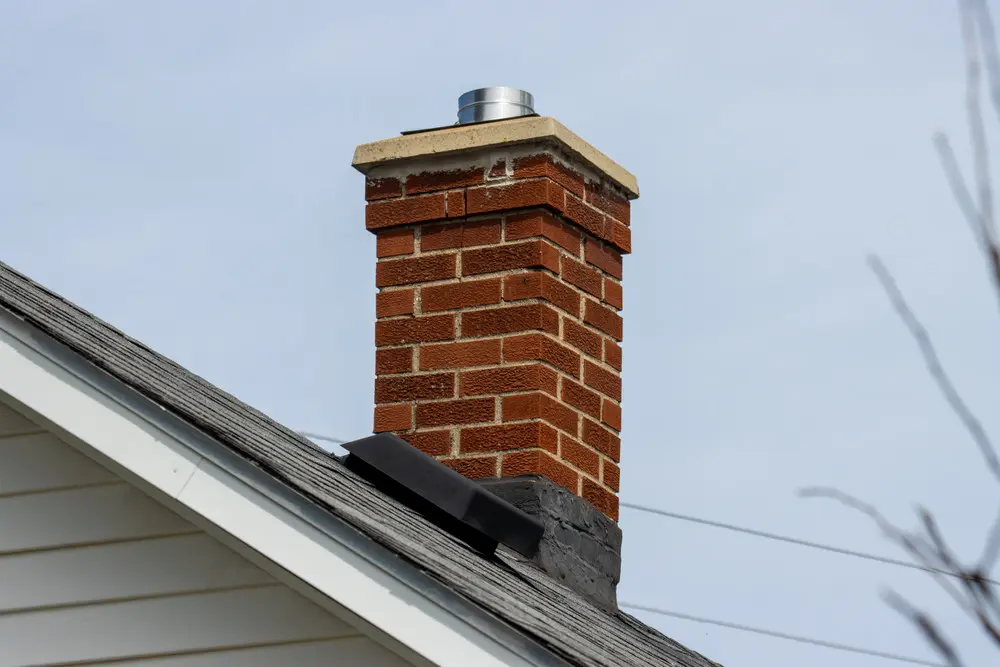
One small crack at the top of your chimney may not seem like a big deal, but wait until a heavy rainstorm hits. Water seeps into the masonry, and a minor repair turns into a much larger project. That’s why the Chimney Safety Institute of America recommends repairing or replacing damaged crowns to help prevent larger masonry repairs.
Crown repairs often come up during leak investigations, flashing repairs, or larger exterior projects. If you’re already planning roofing work, it may be helpful to review your overall roof replacement cost.
A chimney crown is usually the sloped concrete or masonry surface at the top of a masonry chimney that sheds water away from the chimney. Some masonry chimneys use a custom metal crown cover instead.
A chimney cap covers the flue opening, while a chase cover protects the top of a framed chimney chase. These are different components with different repair costs. For cap-specific pricing, see our guide to chimney cap replacement cost.
Chimney crown pricing depends on what actually needs fixing. A light crack repair is one job. Removing and rebuilding a failing crown is another.
The figures below include both labor and materials.
| Project Type | Typical Pricing | What It Usually Covers |
| Limited sealing or small crack repair | $150–$700 | Localized cracks, sealant, cleaning, and early-stage damage |
| Moderate repair or resurfacing | $600–$1,500 | Wider cracks, surface deterioration, patching, or resurfacing |
| Full chimney crown replacement | $1,000–$3,000 | Old crown removal, preparation, new crown, materials, and labor |
| Replacement plus limited flashing or masonry work | $1,500–$4,000+ | Crown replacement plus a defined amount of adjacent repair |
| Major chimney deterioration or rebuild | $3,000–$15,000+ | Work has moved beyond a crown-only project |
These national planning ranges include labor and materials. Local pricing can fall outside them based on chimney size, roof access, damage, and the exact scope of related repairs.
One reason homeowners receive very different estimates is that contractors may be pricing completely different scopes of work.
A quote for a few hundred dollars may only cover sealing cracks. A quote for several thousand dollars may include removing the existing crown, rebuilding it, and repairing water damage underneath.
Before comparing prices, make sure every contractor is quoting the same type of repair.
It’s human nature to hope a simple repair will solve the problem. In some cases, it will.
If the damage is limited to a few small cracks or minor surface wear, sealing or resurfacing the crown can extend its life and prevent water intrusion. Once the crown starts crumbling, separating, or collecting water, replacement often becomes the better investment.
| Condition | Likely Best Option | Why |
| Hairline cracks | Repair or seal | Damage is still limited |
| Minor surface wear | Repair or resurface | The crown may still be structurally sound |
| Large cracks or gaps | Inspect, often replace | Water can continue entering the chimney |
| Crumbling or missing sections | Replace | The crown no longer protects the chimney properly |
| Flat or poorly sloped crown | Replace or rebuild | Water may pool instead of draining away |
| Recurring leak after repairs | Replace or broader inspection | The underlying problem may be larger than a crack |
A repair may cost less today, but repeated repairs can become more expensive than replacement if the crown is already failing.
The goal here is not to choose the cheapest option. The goal is to stop water from damaging the chimney.
Two homeowners can receive very different estimates for what appears to be the same problem. That’s because chimney crown pricing depends on more than the repair itself.
The factors below often drive costs up or down.
The condition of the crown is usually the biggest factor in pricing.
A contractor sealing a few cracks will spend far less time and use far less material than one who removes and rebuilds the entire crown. The difference alone can create a price gap of thousands of dollars.
Larger chimneys require more material and labor. Multi-flue chimneys often cost more than single-flue systems.
Custom chimney shapes can increase costs, too, since they may require specialized forms and additional masonry work.
Different crown materials can affect the final price, but the material itself is only part of the cost. Removal, custom fabrication, masonry work, and roof access may have a greater effect on the estimate.
| Material or Crown Approach | Typical Cost Position | Notes for Homeowners |
| Mortar wash | Lower upfront cost | May cost less than a full crown rebuild, but it may not be suitable when the existing crown is badly cracked, crumbling, or poorly sloped |
| Basic metal crown cover | Lower to mid-range | Often requires less removal and installation labor than a masonry crown, although custom sizing can raise the price |
| Stainless steel crown cover | Mid-range | Usually costs more than basic metal, but it is not automatically more expensive than a brick or concrete crown |
| Brick crown | Mid to high | The materials may be relatively inexpensive, but removal and masonry labor can increase the installed cost |
| Concrete or cast crown | Mid to high | A common choice for masonry chimneys, but forming, pouring, and removing the old crown can place it near the upper end |
Basic metal is often one of the less expensive installed options, while stainless steel usually costs more than standard metal. However, a concrete or brick crown can cost as much or more once removal, forming, and masonry labor are included.
The easier a chimney is to reach, the lower labor costs tend to be.
Steep roofs, tall chimneys, and difficult access points often require safety equipment and setup time, increasing the overall cost.
A damaged crown is not always the only issue.
Water may already have affected the chimney flashing, brickwork, mortar joints, or nearby roofing materials. In those situations, the final project cost may be higher than crown replacement alone.
A quick sealant repair is usually treated differently from a chimney rebuild. Permit rules depend on your local building department and the type of work being done.
Pricing can change by area, too, especially if roofers and masons are booked out during the busy season.
A chimney crown problem often goes unnoticed until water damage begins to appear elsewhere.
Common warning signs include:
These symptoms do not automatically mean the crown is the source of the problem. Water can enter through flashing, masonry joints, roofing materials, or other chimney components. A professional inspection can help identify the actual cause.
A detailed estimate helps you compare contractors more accurately.
Look for:
A quality crown should be built to direct water away from the chimney. Proper slope, overhang, and construction details matter just as much as the material itself.
Who you call depends on where the damage is. A mason is often the best choice for rebuilding a concrete, brick, or mortar crown. A chimney specialist can help when the source of a leak is unclear, or the flue and other chimney components need inspection. Bring in a roofer when flashing or nearby roofing materials are part of the problem. If water has reached the firebox, damper, or other interior components, a fireplace repair pro may also be needed.
If roofing work is involved, Renovate’s guide to how to choose a roofing contractor can help you compare your options.
The best way to control costs is to address small problems before they become larger ones.
There are several ways to reduce the overall cost without cutting corners on the repair itself:
If the crown replacement is part of a larger roofing project, it may also be worth reviewing available financing options for roofing.
Chimney crown replacement usually costs $1,000 to $3,000, while smaller repairs often range from $150 to $1,500.
Minor cracks and surface wear can often be repaired. Replacement is usually the better option when the crown is badly cracked, crumbling, poorly sloped, or allowing water into the chimney.
Most importantly, the most useful estimate is not always the cheapest one, but the one that clearly explains whether the contractor plans to seal, resurface, rebuild, or replace the crown.
A chimney crown is usually the sloped concrete or masonry surface at the top of a masonry chimney. Some chimneys use a custom metal crown cover instead. Its purpose is to direct water away from the chimney structure.
A chimney cap covers the flue opening and helps keep out rain, debris, and animals. Many caps also include a screen that helps keep sparks and embers from escaping.
They perform different functions and are repaired separately.
Repair is often the better option when the crown has minor cracks or early signs of wear.
Replacement is usually recommended when the crown is badly cracked, crumbling, poorly sloped, or allowing water into the chimney.
A professional inspection can determine whether the existing crown is still structurally sound.
Chimney crowns are commonly repaired or replaced by masons, chimney specialists, and some roofing contractors.
A mason is often the best choice for rebuilding concrete, brick, or mortar crowns.
If the source of a leak is unclear, a chimney specialist can inspect the entire system and recommend the appropriate repair.
Chimney crown replacement usually costs about $1,000 to $3,000, including removal of the old crown, materials, and labor. Smaller repairs such as sealing, crack repair, or resurfacing may cost less. The final price depends on crown size, material, roof access, damage level, and related repairs.
Possible added costs include debris removal, moss removal, waterproofing, brick or mortar repair, chimney flashing repair, permit fees, and roof access or staging charges. Ask whether the estimate includes related repairs and how the contractor prices extra work if hidden damage is found during removal.
Most homeowners should not replace a chimney crown themselves. The work involves roof access, masonry or concrete skills, proper slope, sealing details, and chimney safety concerns. A poor repair can trap water, worsen leaks, or create more expensive chimney damage later.
A straightforward chimney crown replacement may take a few hours of active work. Setup, curing time, weather, roof access, and related masonry repairs can extend the project or require a return visit.
Homeowners insurance may cover chimney crown damage caused by a sudden covered event, such as a storm or falling tree. It usually does not cover age, normal wear, poor maintenance, or gradual deterioration. Check your policy and document the cause of the damage before filing a claim.
A properly built chimney crown can last for decades, but its lifespan depends on the material, installation quality, weather, freeze-thaw exposure, and maintenance. Flat, cracked, or poorly built crowns may fail much sooner.
Permit rules vary by city and project scope. Minor sealing may not require one, while structural masonry work or chimney rebuilding might. Ask whether the contractor will handle the permit and include the fee in the estimate.