A chimney cap is usually a smaller repair, but the price can still vary quite a bit. Most replacements cost around $200 to $850.
A basic single-flue cap on an easy-to-reach chimney often costs between $300 and $600. But if the job involves copper, multiple flues, a steep roof, or repairs around the crown or flashing, it can go over $1,000.
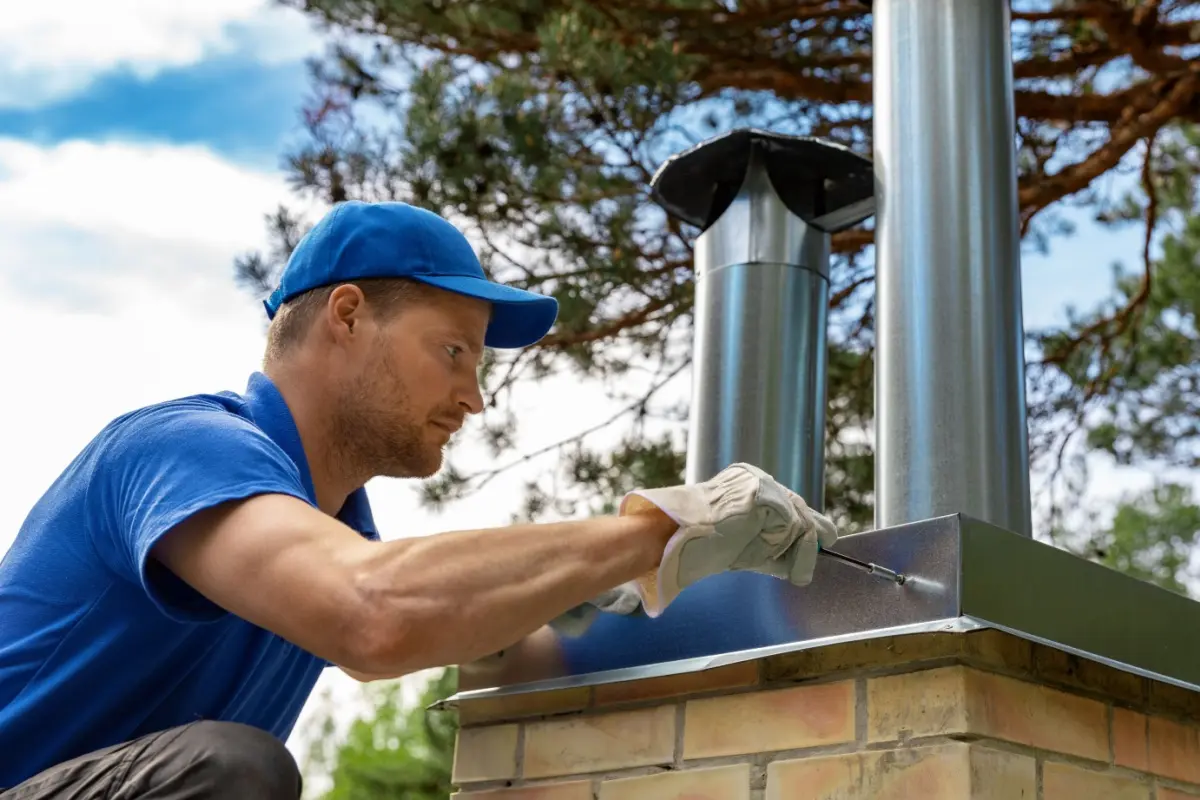
For an active chimney, a damaged or missing cap is worth fixing. The cap helps block rain, birds, animals, leaves, and debris from getting into the chimney. Some caps also help control sparks.
If the problem seems connected to a roof leak, damaged flashing, or older roofing materials, it may be worth getting a broader roof replacement cost estimate before you hire someone.
The total price depends on the cap material, chimney size, roof access, labor rates, and whether the chimney already has water damage or masonry issues.
| Project Type | Typical Cost Range | What It Usually Includes |
| Basic single-flue prefabricated cap | $200–$450 | Standard cap, simple access, minimal prep |
| Standard stainless steel cap | $300–$650 | More durable material with professional installation |
| Multi-flue chimney cap | $500–$1,000+ | Larger cap covering multiple flues |
| Custom copper or decorative cap | $800–$1,500+ | Custom fabrication, premium material, and more labor |
| Cap replacement plus minor chimney repairs | $500–$1,200 | Cap replacement with small crown, flashing, sealant, or debris-related repairs |
The lowest price usually applies to a standard cap on a one-story home with easy access to the roof. Costs climb when contractors need roof safety equipment, custom fabrication, debris clearing, old cap removal, or extra chimney and roof repairs.
Homeowners often mix these parts, leading to confusing estimates.
| Part | What It Is | Why It Matters for Cost |
| Chimney cap | Cover over the flue opening, often with mesh sides | Usually the least expensive chimney-top repair |
| Chimney crown | The masonry/concrete top of a masonry chimney | Repairs cost more than a standard cap replacement |
| Chase cover | Metal cover on top of a prefab chimney chase | A separate part that many people mistake for a cap |
| Capping or sealing an unused chimney | Closing off an unused chimney system | A different project that needs inspection first |
A contractor may recommend more than cap replacement if the crown is cracked or water has already damaged the surrounding masonry.
Before you compare quotes, it helps to know what contractors typically price. A chimney cap can be a quick swap, or it can turn into a bigger job once access, sizing, and nearby damage come into play.
Material plays a big role in both cost and lifespan.
| Material | Cost Level | Best For | Watch-Out |
| Galvanized steel | Lowest | Tight budgets | Rusts faster |
| Aluminum | Low to mid | Lightweight and rust-resistant option | Can dent more easily |
| Stainless steel | Mid-range | Homeowners prioritizing durability | Higher upfront cost |
| Copper | Premium | Long-term durability and appearance | Highest material cost |
| Concrete or masonry | Varies | Some masonry chimneys | Can crack in freeze-thaw cycles |
Stainless steel is one of the most common choices for residential chimney caps. It balances durability, appearance, and price better than many cheaper materials.
Copper caps are popular on upscale homes or historic properties where appearance matters just as much as function.
A small single-flue cap usually costs much less than a large multi-flue cap.
Multi-flue systems need larger covers, more material, and more labor. Some require custom fabrication to fit properly.
Roof access affects labor pricing quickly.
A low-slope one-story roof is much easier and safer to work on than a steep three-story roof. Tall homes, slippery roofing materials, limited ladder access, and steep pitches increase labor time and safety setup costs.
Prefabricated caps can cost less when they fit correctly.
Custom caps cost more but may be necessary for:
Custom copper caps sit at the top end of the price range.
Sometimes the cap is not the only problem.
Water damage around the chimney may affect:
If contractors discover moisture damage, the project may require more than a simple cap replacement.
If the estimate includes sealing or chimney-area leak-prevention work, it may help to compare those repair costs with general roof-sealing cost estimates. Sealing alone will not fix a rusted, missing, or badly fitted cap.
The same chimney cap job can cost very different amounts depending on the area. In some cities, labor alone may cost more than the cap itself.
Homes near the coast or in places with heavy snow often end up paying more for chimney work. Older neighborhoods and taller homes can raise the price, too, especially if roof access is difficult.
Timing can affect the quote as well. After storms or during busy roofing seasons, prices may be higher.
Minor problems may only need repairs. Bigger issues usually call for full replacement.
| Situation | Repair or Replace? | Why |
| Loose cap or fasteners | Repair may be enough | The cap may still be structurally sound |
| Minor mesh damage | Repair may be enough | Small screen sections can sometimes be repaired |
| There is a small leak around the cap | Inspect first | A leak may involve flashing, crown, or masonry |
| Rusted or warped cap | Usually replace | Water protection may already be compromised |
| Missing cap | Replace | The chimney is exposed to rain and animals |
| Wrong-size cap | Replace | Poor fit can cause leaks and drafting problems |
A minor repair may cost around $200. Full replacement usually makes more sense once rust, warping, cracking, or poor fit becomes severe.
Lifespan depends on material quality, installation, climate, and maintenance.
Galvanized steel caps cost less upfront but usually wear out faster due to rust exposure.
Aluminum resists rust but may dent or loosen more easily in severe weather.
Stainless steel is one of the most common long-term choices for residential homes.
Copper lasts a long time and develops a distinctive patina, though its higher cost keeps it out of many standard budgets.
Salt air, snow, ice, high winds, and neglected maintenance can shorten the lifespan of any chimney cap.
For most active chimneys, yes.
A chimney cap is relatively inexpensive compared to the water damage, pest problems, and chimney deterioration it helps prevent.
Without a cap, rainwater can enter the chimney system directly. Over time, moisture can damage masonry, weaken mortar joints, and create cracks or gaps where creosote can collect or combustion gases can escape.
Caps help block:
A damaged or missing cap can lead to much more expensive repairs later.
A few smart decisions can keep the project affordable without cutting corners.
Do not save money by:
The right contractor depends on the source of the problem.
A roofer may be a good fit when the project involves:
A chimney sweep or chimney specialist may be a better fit for:
A mason may be needed if the chimney crown, brickwork, or mortar has deteriorated.
Custom caps sometimes require sheet metal and fabrication specialists.
A detailed roof estimate helps prevent surprise charges later. A written estimate should clearly explain the materials being used, the work included, the expected timeline, and the full price.
Look for:
The lowest bid can end up costing more later if it skips inspections, uses lower-quality materials, or leaves out cleanup and warranty coverage.
One of the most stressful parts of any home renovation project is figuring out who to hire. For a relatively small job like replacing a chimney cap, look for a pro with experience in this type of work.
As you vet potential contractors, ask for examples of past chimney cap jobs they have worked on. Flipping through pictures of past jobs can help put your mind at ease.
It can also help to read our guide on how to find a roofing contractor. We show you what questions to ask, what should be in writing, and the biggest red flags to watch out for. When you’re ready to connect with a pro, we can also help you make the request.
Standard chimney cap replacement usually costs a few hundred dollars.
Factors that raise the total price include custom caps, copper materials, multi-flue chimneys, steep roofs, and nearby chimney or roof repairs, which can quickly add up.
Replacing a damaged chimney cap is usually worth the cost if the existing cap is missing, rusted, loose, warped, or allowing water and debris into the chimney system.
The best estimates clearly explain the cap material, sizing, labor, roof access, warranty coverage, and any additional chimney or roof repairs included in the project.
Sometimes. A loose cap, minor screen damage, or a small fastener issue may be repairable if the cap remains structurally sound. Replacement is usually better when the cap is rusted, warped, cracked, missing, poorly fitted, or no longer effectively keeping water and debris out.
It depends on the material, weather conditions, installation quality, and maintenance—stainless steel and copper usually last longer than galvanized steel. Heavy snow, high winds, salt air, and poor installation can shorten the life of any chimney cap.
A chimney cap sits over the flue opening and helps keep out rain, animals, and debris. A chimney crown is the concrete masonry surface at the top of the chimney that surrounds the flue and helps direct water away from the structure.