The Inflation Reduction Act funded two state-administered home energy rebate programs that may help pay for qualifying heat pump projects: HOMES and HEEHR. There is no single federal homeowner application; availability varies by state or Tribe, and federal HEEHR guidance changed materially in May 2026.
There are also some new rules this year, so read on to find out what could affect your Inflation Reduction Act heat pump rebate before you plan your project.
Last reviewed: August 11, 2026.
The Department of Energy renamed the electrification program earlier this year. It’s now called the High-Efficiency Electric Home Rebate program, or HEEHR. You’ll still see the older names, HEEHRA and HEAR, on some state pages and older articles. They’re the same program.
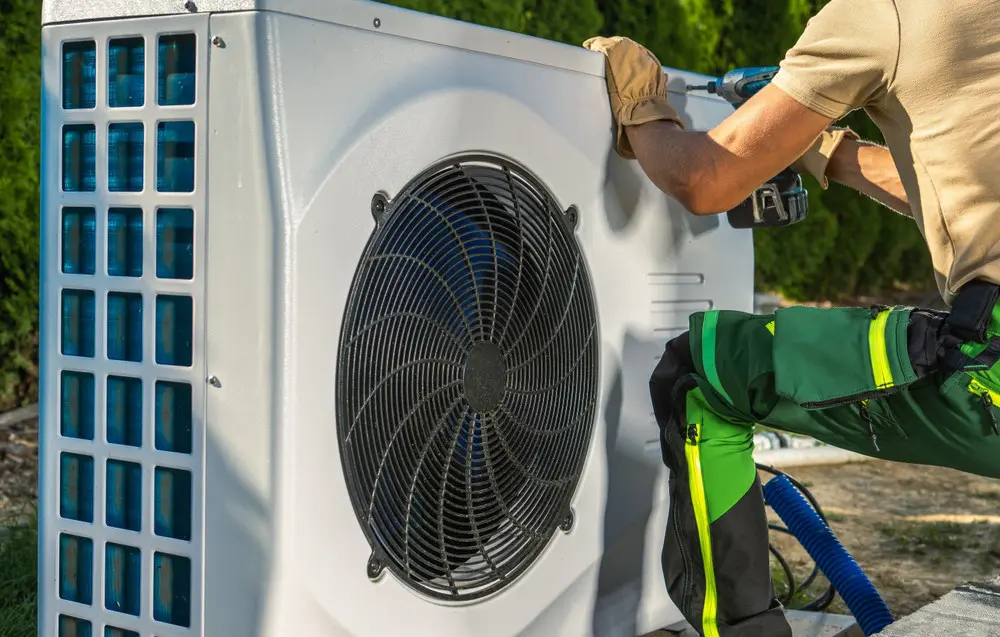
The biggest change this year is that new HEEHR reservations generally cannot pay to replace gas, oil, or propane HVAC equipment. HEEHR now limits existing-home HVAC rebates to upgrades from existing electric equipment to more-efficient electric equipment.
A few exceptions apply. A reservation approved under earlier guidance may proceed. Eligible new construction remains allowed. A home may retain an existing fossil-fuel system when installing an otherwise eligible heat pump, but keeping it does not make a fuel-switching project eligible.
Programs operating at the time the May 29 notice was issued received a three-month implementation period, unless DOE approved additional time. Programs that hadn’t launched yet must follow the new rules from day one.
Important 2026 note: State materials may still be changing. Before publication or installation, confirm both DOE’s current guidance and the state, territory, or Tribal program’s current rules.
HEEHR is an income-limited rebate that may lower the cost of a qualifying heat pump at the time of purchase. A participating contractor, retailer, marketplace, or another approved program channel may provide the discount or payment.
The federal framework allows up to $8,000 for an eligible heat pump, subject to project-cost percentages and a $14,000 combined HEEHR limit. Households below 80% of area median income may receive up to 100% of eligible project cost, while households from 80% to 150% may receive up to 50%. Local programs can narrow eligibility or amounts.
Since area median income varies by location and household size, use the income screening tool your state program provides rather than guessing based on a number you saw elsewhere.
The $8,000 heat pump cap sits inside a larger $14,000 ceiling per household, which can also cover things like a heat pump water heater, an electrical panel upgrade, or insulation and air sealing. If you need to break down the cost more than the rebate provides, learn more about water heater financing
Generally, no; not for a new HEEHR reservation in an existing home. Imagine two neighbors who both want heat pumps. One has electric resistance heating and wants to upgrade to a more-efficient heat pump. The other has an oil furnace and wants to switch to a heat pump.
Under the current HEEHR rule, the first project can likely qualify because it’s an electric-to-electric upgrade. The second one generally can’t, because HEEHR is no longer set up to pay for the replacement of non-electric HVAC equipment.
The second neighbor may still install a heat pump and retain the oil system as backup, but that does not make the HEEHR project eligible. HOMES, a state or utility rebate, or another financing path may still apply to a fuel-switching project.
HOMES works differently from HEEHR. Instead of rewarding a specific piece of equipment, it rewards the energy savings a whole-home project produces. A heat pump can be part of that project, but buying one doesn’t automatically trigger a rebate.
If you add insulation, seal air leaks, upgrade the ductwork, and install a heat pump as one project, an energy model can estimate the savings. Under the federal modeled-savings framework, a 20% to 34% reduction may qualify for up to $2,000, or $4,000 for a lower-income household. At 35% or more, the maximums rise to $4,000 and $8,000. Local programs set the final rules.
A heat pump can fit into either program, but the reason it qualifies is different. HEEHR cares about the equipment and what it’s replacing. HOMES cares about the overall energy savings the project delivers.
| Category | HEEHR | HOMES |
|---|---|---|
| Eligibility basis | Income, equipment, and existing system | Modeled or measured whole-home energy savings |
| Income treatment | Generally limited to households at or below 150% AMI | Can serve various income levels, with higher amounts if a household is lower income |
| Project type | A specific qualifying electric upgrade | A package of improvements |
| Heat pump’s role | A named qualifying measure | One part of a larger energy-saving project |
| Existing equipment | Existing HVAC generally must already be electric | No federal electric-to-electric requirement |
| How it’s delivered | Point-of-sale discount or another approved method | Project rebate based on approved savings |
| Federal Maximum | Up to $8,000 for the heat pump, $14,000 combined | Up to $8,000 for a package of improvements |
There’s no single nationwide table that stays accurate for long, since programs launch, pause, and update their rules on their own schedules. Here is what you should do instead:
Your actual rebate depends on more than the federal maximum you see advertised. Your state’s own offer, your income, your project cost, and how much funding is left all affect what you get.
Here is what that could look like with HEEHR. Say you are replacing electric resistance heat with a heat pump, the project costs $12,000, and your local program offers the federal 50% structure. The rebate would be $6,000, leaving $6,000 to pay directly or through HVAC financing.
HOMES works differently because it is based on total energy savings. Say you spend $24,000 on insulation, air sealing, ductwork, and a heat pump, and the project is modeled to cut energy use by 36%. If the local program approves the full $8,000 rebate, the remaining project cost would be $16,000.
It’s easy to mix up rebates and tax credits, but they’re administered completely differently.
| Benefit | Administered By | How It Is Received | 2026 Status | Income Limit |
|---|---|---|---|---|
| HEEHR | State, territory, tribe, or approved implementer | Upfront discount or approved rebate | Available only where local programs are operating | Yes |
| HOMES | State, territory, or approved implementer | Project rebate based on energy savings | Available only where local programs are operating | Higher amounts for lower-income households |
| Section 25C credit | IRS | Claimed on a tax return | Ended for equipment placed in service after 12/31/2025 | No |
| Section 25D credit | IRS | Claimed on a tax return | Ended for property placed in service after 12/31/2025 | No |
HEEHR cannot be combined with another federal grant or rebate for the same qualified electrification project, and HOMES and HEEHR cannot both pay for the same upgrade cost. Different measures within a larger project may use different benefits only when the administrator permits it and nothing is counted twice.
State, utility, local, and manufacturer programs each set their own combination rules. Total benefits also cannot exceed eligible project cost. Before stacking incentives, ask these five questions:
Once you know whether HEEHR or HOMES fits your project, here’s the order to work through:
An approved HVAC contractor can also help size the system correctly and coordinate the required documentation.
If HEEHR doesn’t cover your project, you still have options. State, utility, municipal, and manufacturer programs often run alongside the federal rebates, and some states offer their own energy loans for efficiency upgrades.
Before committing to the project, consider the potential disadvantages of a heat pump, including upfront cost, cold-weather performance, home weatherization, system sizing, and possible electrical or ductwork upgrades.
If rebates do not fully cover the project, homeowners may explore financing offered through participating contractors and independent third-party lenders. Renovate is not a lender and does not make credit decisions. Availability, approval, rates, fees, and terms are determined by third parties.
[Get Started]
No. HOMES and HEEHR cannot both pay for the same upgrade cost. A program administrator may allow different measures within one broader project to use different benefits, but HEEHR also cannot be combined with another federal grant or rebate for the same qualified electrification project. Get the proposed combination approved in writing before work begins.
Yes. The state, territory, or Tribal program sets equipment, efficiency, installation, and contractor requirements. HEEHR also considers what existing equipment is being upgraded, while HOMES depends on modeled or measured whole-home savings. An ENERGY STAR label alone does not guarantee that a particular model or project qualifies.
Generally, no—not for a new HEEHR reservation in an existing home. DOE’s May 2026 guidance limits HVAC rebates to upgrades from existing electric equipment to more-efficient electric equipment. Previously approved reservations and eligible new construction may be treated differently. HOMES or a separate state or utility incentive may still apply.
Renters may benefit from HOMES or HEEHR where the local program serves rental or multifamily properties, but permanent HVAC work normally requires the property owner’s approval and participation. Income, building type, existing equipment, contractor, and application rules still apply. Contact the program administrator and landlord before signing or paying for work.
No. The rebates are administered by states, territories, and Tribes, and only some programs are currently accepting applications. A jurisdiction may offer HOMES, HEEHR, both, or a limited pathway for certain homes. Check DOE’s current program-status page, then confirm the local rules before choosing equipment or signing a contract.
No—not for a heat pump placed in service after December 31, 2025. A qualifying heat pump installed and placed in service during 2025 may still be relevant to that year’s federal return, subject to IRS requirements. The former Section 25D credit for residential geothermal property also ended after December 31, 2025.
Often, yes. HEEHR programs commonly require income verification, an approved contractor or retailer, and a reservation before installation. HOMES generally requires an assessment and approved energy-savings model or measurement plan first. Do not assume a retroactive rebate will be available after equipment is purchased or installed.