When planning a metal roof installation, contractors may recommend different materials and charge very different prices. That’s because installing a standing seam roof isn’t quite the same as installing corrugated metal panels.
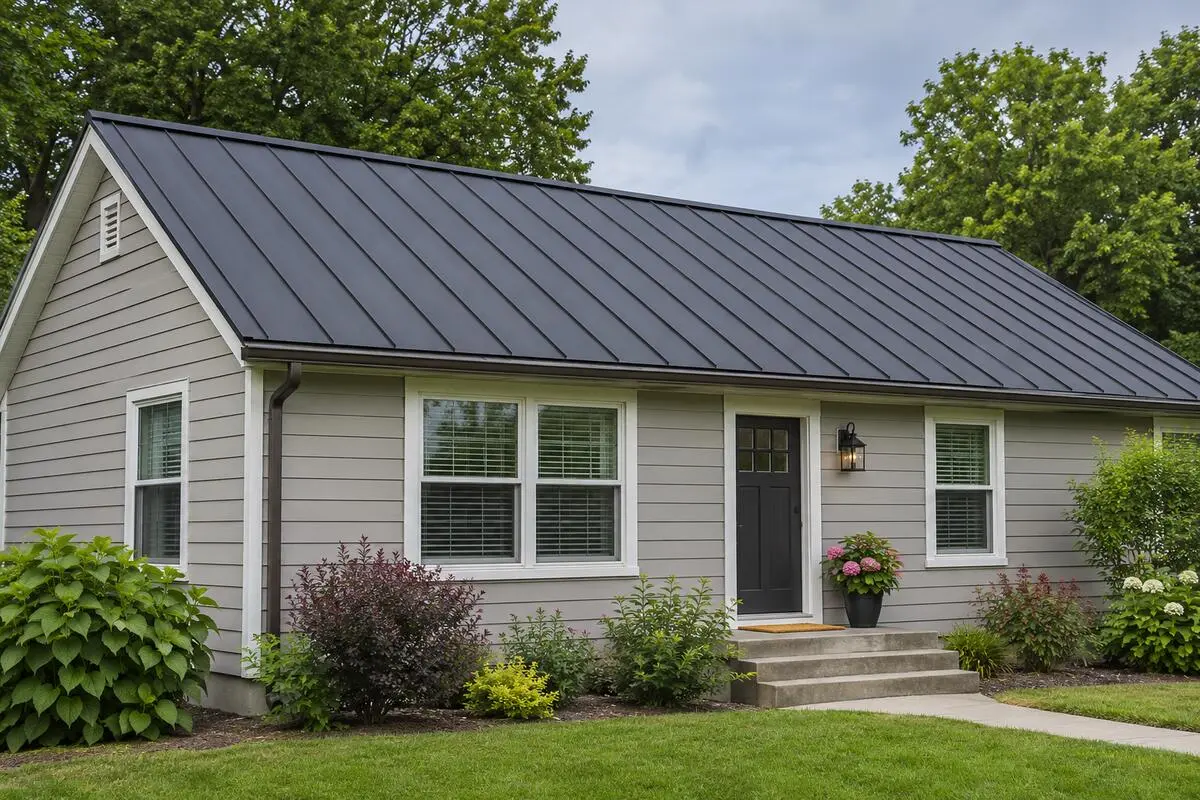
The process generally involves checking your roof’s condition, preparing the surface, and installing the new roofing according to the manufacturer’s instructions and local building requirements. Your roofing system choice affects the installation process and overall cost.
Metal roofs don’t all look or fit together the same way. Before comparing quotes, check which product each contractor is pricing.
| System | How It’s Attached | What to Consider |
| Standing seam | Concealed clips or other approved hidden attachments | Clean appearance; specialized profiles and installation |
| Exposed-fastener panels, including corrugated | Visible screws through panels into approved supports | Often costs less upfront; washers need inspection |
| Metal shingles and tiles | Interlocking pieces with product-specific fasteners | Traditional roof styles; details vary by manufacturer |
Standing seam roofs use long metal panels that connect along raised edges, keeping most fasteners out of sight. Some standing seam panels use snap-lock connections, while mechanically seamed panels have edges that are folded together with specialized seaming equipment.
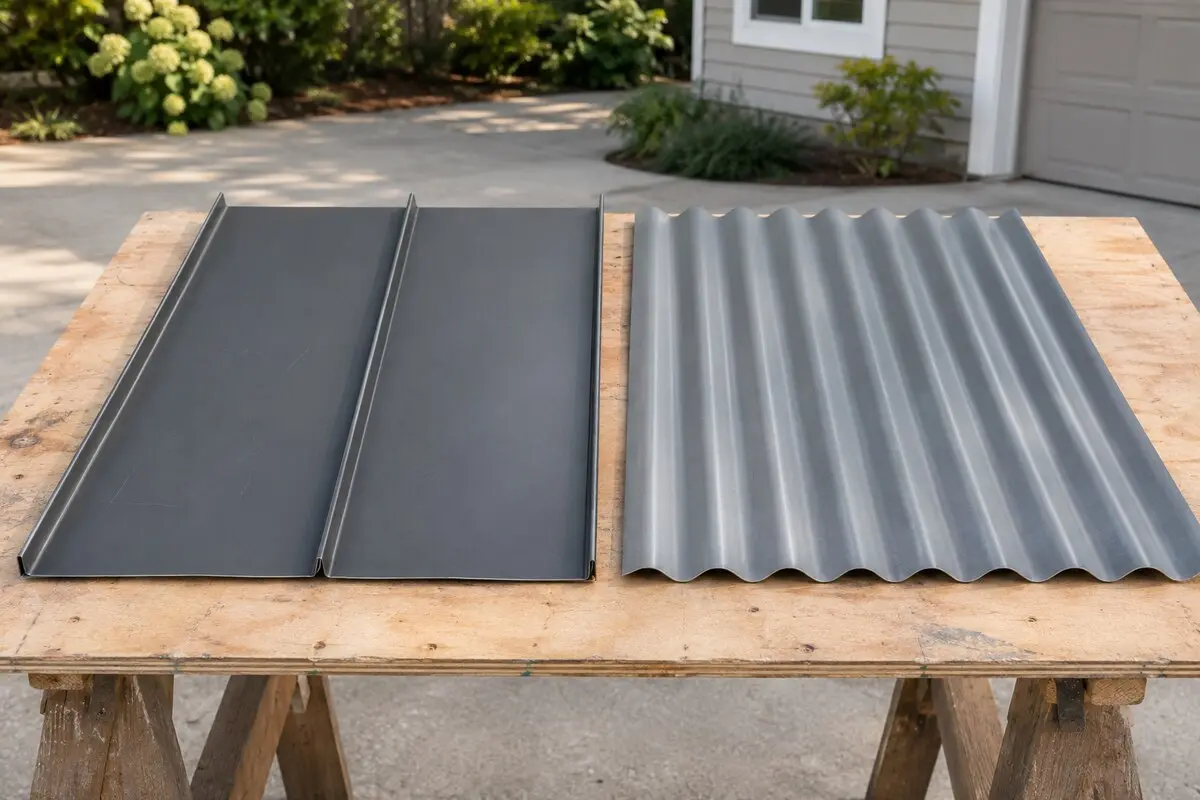
That difference matters on shallow-slope roofs. Certain mechanically seamed designs can be used on lower slopes than many snap-lock profiles, but the requirements vary by product. Ask your contractor which system suits your roof.
These panels are attached with screws that you can see on the roof. Corrugated panels have a wavy shape, while other styles have wider, straighter ridges. Both can work well on homes as long as they’re installed according to the manufacturer’s instructions.
They often cost less upfront than standing seam. Their exposed screws and washers need periodic inspection.
Want a metal roof without the look of long panels? Metal shingles and tiles can resemble slate, wood shakes, traditional shingles, or clay tiles. Some steel products also have a textured stone coating.
Attachment and flashing details vary by product. Ask for a sample and pictures of homes fitted with the same system.
Roofing a new house isn’t quite the same job as replacing an old roof, but the main stages are similar. Here’s what you’ll typically see a professional crew handle:
Roof work can get pretty noisy, especially when the old roofing comes off. Move your car, keep pets away from the work area, and confirm how the crew will protect your plants and anything stored in the attic. Rain or unexpected damage may also slow things down, so ask how they’ll cover any unfinished sections.
Yes, you can install metal roofing over shingles with some approved systems. But the contractor first needs to check the number of existing layers, the condition of the shingles and decking, possible moisture problems, structural capacity, and local rules.
The manufacturer’s instructions must also be followed. Leaving the old shingles in place could save you money on removal, but removing them lets the contractor inspect the decking and fix any damage. Skipping tear-off doesn’t automatically make reroofing the better value, especially if hidden damage or moisture problems could require later repairs.
It’s easy to focus on the color and shape of the metal panels. The parts underneath also secure the roof and manage water.
Panels form the outer roof surface. Fasteners and clips secure them to an approved support, and their materials must be compatible with the metal to help prevent corrosion.
Metal expands and contracts as temperatures rise and fall, so the attachment system must account for movement. Ask whether the specified clips and fasteners suit the panel profile and your area’s wind conditions.
Underlayment provides a second layer of water protection beneath the roofing where required. Insulation does something different: it slows heat transfer. It won’t stop a leak caused by faulty flashing.
The right approach to air sealing and moisture control depends on the building. Building Science Corporation describes both vented and unvented roof designs, so an attic without vents isn’t automatically a problem. Ask how the proposed roof assembly will handle moisture.
Flashing keeps water out around chimneys, pipes, skylights, walls, and roof edges. It’s especially important where different roof sections meet, since water can seep through gaps if these areas aren’t properly sealed. Ask how the contractor will handle roof valleys, where water from adjoining roof slopes concentrates, and whether those details are included in the estimate.
During metal roof ridge cap installation, the crew covers the joint where two slopes meet. Closures, sealants, and ventilation details vary by system, so check the quote.
Before work starts, the contractor should confirm that the product suits the roof’s slope, framing, and decking. Wind, snow, coastal exposure, and compatibility with metal also affect product selection.
Ask who handles permits and inspections, and how the work will meet local rules and manufacturer instructions. The crew should also have appropriate training and fall protection. OSHA’s residential construction guidance explains the worker-safety requirements.
If you’re considering a steel or aluminum roof, expect to pay around $6 to $18 per square foot for installation, based on published U.S. cost guides. The price includes materials and labor, but it varies by roofing system. You may also pay more if the old roof needs to be removed, damage is found underneath, or you want additional upgrades.
| Roofing System and Metal | Installed Cost per Sq. Ft. | 2,000-Sq.-Ft. Roof Example |
| Exposed-fastener steel panels | $6–$12 | $12,000–$24,000 |
| Standing seam steel | $10–$16 | $20,000–$32,000 |
| Steel shingles or tiles | $7–$14 | $14,000–$28,000 |
| Standing seam aluminum | $10–$18 | $20,000–$36,000 |
| Aluminum shingles or tiles | $7–$16 | $14,000–$32,000 |
Copper and zinc roofs tend to cost more than steel or aluminum. For copper standing seam, published installation prices range from around $18 to $35 per square foot, but you’ll need a quote to know what it would cost for your home.
Your home’s square footage isn’t the same as its roof area. For example, a 2,000-square-foot house could have a larger roof depending on its pitch, shape, and overhangs. You may also notice that contractors measure roofing in squares. In roofing terms, one square means 100 square feet.
Labor is already included in the installed prices above. If you find material-only prices online, don’t compare them directly with a contractor’s complete bid or add labor twice.
Metal thickness, protective coatings, panel style, roof height, valleys, difficult access, and local labor rates all affect your estimate. Compare materials before judging prices.
Roof replacement costs can go beyond the new metal panels and installation. Before agreeing to a quote, confirm whether it covers removing the old roofing, repairing damaged decking, flashing, underlayment, permits, inspections, ventilation changes, and trim.
Say a contractor quotes you $24,000 for a 2,000-square-foot standing seam roof, but that price doesn’t include removing the old roofing. If removal adds $3,000 and decking repairs cost another $1,500, your total would be $28,500. These are just example figures, but they show how much extra work can add to your final bill.
You don’t need to be a roofing expert to ask good questions. Discuss how the crew will check panel alignment, suitable fasteners, flashing, moisture protection, and room for thermal movement. These checks also help reduce the risk of mistakes during metal roof installation.
You can check on progress from the ground or ask your contractor to share photos. If you notice uneven seams, coating scratches, or gaps around pipes, bring them up with the crew. Some rippling in metal panels, called oil canning, only affects their appearance. If issues come up later, metal roof repair and replacement services can help you determine whether a smaller repair is enough.
A quote should explain what you’re buying, not just the price. Use these points to compare contractors fairly:
Ask about similar metal roofs the contractor has installed, references, and the insurance and licensing required in your area. Ask who supervises and prices unexpected repairs.
Still deciding whether you need replacement? Explore roof repair services, or compare metal roofing versus shingles before choosing your material.
A good metal roof starts with more than choosing a panel. You want a system suited to your home, a contractor who can explain the installation, and an estimate that leaves few surprises.
If you’re planning the work, you can submit a roofing request through Renovate to explore possible contractor connections in your area. Availability and pricing vary by location and project.
*Quotes are provided by independent contractors. Availability and pricing may vary.
A roofing crew prepares the supporting surface, adds the specified water-management layers, attaches the metal panels or shingles, and finishes flashing and trim. Standing seam roofing usually hides its attachments, while exposed-fastener panels have visible screws. The contractor follows the chosen manufacturer’s instructions and requirements for your roof.
That depends on the roof design. You may have decking or another approved support, underlayment, and special moisture-control layers beneath the metal. Insulation helps control heat, while ventilation depends on the roof assembly. Ask your contractor what each proposed layer does and why it’s needed.
Sometimes, yes. Some approved metal systems can go over existing shingles if the roof’s condition, number of layers, supporting structure, local rules, and manufacturer instructions allow it. The contractor should look for moisture damage. Removing the shingles may be the better choice when repairs are needed underneath.
For a smaller, simple roof, the job might take just a few days. Bigger roofs or those with more complex designs could take a week or longer. Removing old roofing, making repairs, limited access, crew size, and bad weather can all slow things down. Ask your contractor how long they expect the work to take and what they’ll do if it rains.
Leaks can develop around poorly detailed flashing or penetrations, while incompatible metals can cause corrosion. Exposed screws and washers may also wear over time. Some panel rippling is only cosmetic, though. Regular inspections and professional assessment of anything unusual can help you catch problems early.