Most asphalt shingle roofs take one to two days to replace. But the project may run longer due to scheduling, permits, and the final cleanup. What the crew finds under the old roof can also affect the timeline.
One reason roofers move fast may be something you don’t expect: what happens after the old roof comes off. That’s when the clock starts ticking on how long your home is exposed. One inch of rain may not sound like much, but on a typical residential roof, it can add up to more than 1,000 gallons of water. Professional roofers know to open it, inspect it, repair it, and cover it all up again before that exposure turns into trouble.
Figuring out how long it takes to replace a roof is only the first step. It also helps to understand the roof replacement cost before comparing contractors.
The timeline depends on the roof. The table below gives a general sense, but a contractor who has seen the actual roof will always give a more accurate estimate.
| Roof Type | Timeline | Why It May Take Longer |
| Simple asphalt shingle roof | 1–2 days | Weather, access, extra layers, and decking damage |
| Larger or complex asphalt shingle roof | 2–4 days | Multiple planes, steep pitch, valleys, chimneys, skylights |
| Metal or standing seam metal roof | 2–7+ days | Panel layout, custom cuts, precise seaming, flashing details |
| Slate or tile roof | Several days to 1+ week | Heavy materials, slower installation, structural considerations |
| Flat or low-slope roof | 1–5+ days | Membrane system, drainage details, weather, and curing needs |
Installation is one part of a longer sequence. Here is what the full process typically looks like.
| Stage | Timeline | What to Expect |
| Inspection and estimate | Same day to a few days | Contractor inspects roof, attic, flashing, and ventilation |
| Quote review and contractor selection | A few days to a few weeks | Comparing scope, materials, warranty, price, and timeline |
| Permits and scheduling | Varies by location | Some projects require permits before work begins. |
| Material ordering and delivery | A few days to several weeks | Materials may arrive before or on the morning of installation |
| Dumpster or dump truck setup | 1–2 days before installation | Driveway access may be limited |
| Tear-off | A few hours to 1 day | Old roofing removed |
| Deck inspection and repairs | Same day to a few days | Damaged sheathing is addressed before the new roof goes on |
| Installation | 1–2 days for asphalt shingle roofs | Underlayment, flashing, vents, and roofing material installed |
| Cleanup and final walkthrough | Same day or next day | Debris removed, nail sweep completed, job reviewed |
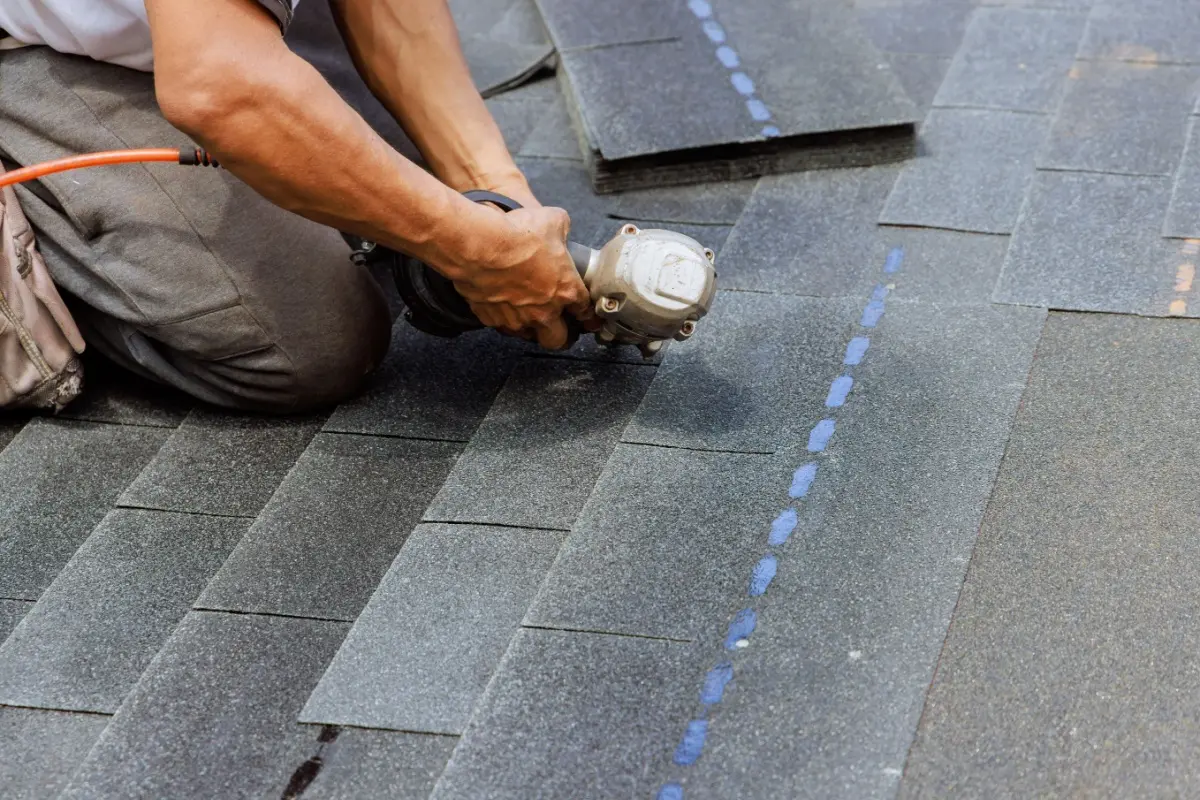
Tear-off is the removal of the old roof down to the decking or the plywood layer underneath. On regular asphalt shingle roofs, it takes a few hours to a full day, though steep pitches or multiple existing layers can extend that. Whatever the crew finds in the decking once the old material is removed needs to be addressed before installation starts.
More surface area means more tear-off, underlayment, flashing, and cleanup. And roof square footage isn’t the same as home square footage: pitch, overhangs, garages, and roof shape all add up. When in doubt, a roofer can give you an accurate measurement.
Steep roofs and multi-story homes are slower to work on. The safety setup alone adds time, and carefully moving materials up and into position at every stage adds more.
Valleys, dormers, skylights, chimneys, and other penetrations all require careful flashing and cutting. A roof with lots of intersections and transitions simply takes longer to work through.
Asphalt shingles are generally the fastest to install. Other systems might take longer due to flashing and safety measures:
| Material | Timeline |
| Asphalt Shingles | 1–2 days |
| Metal Panels | 2–5 days |
| Standing Seam Metal | 3–7+ days |
| Cedar Shakes | 3–4 days |
| Tile or Slate | 6–10 days |
| Flat / Low-Slope | 1–5+ days |
Extreme temperatures can delay or stop work. Asphalt shingles become less flexible below 40°F, which can affect how they seal and may require additional handling steps. Shorter daylight hours in winter also reduce the time crews can work each day.
The roof deck cannot be fully inspected until the old materials are removed. Rotten plywood, damaged flashing, and poor ventilation need to be addressed before installation can continue.
A larger crew can move faster, but only when the job is well supervised. More important than size is whether the contractor can clearly explain how many people will be on site, who will be running the project, and what happens if the weather delays the schedule.
Permitting requirements vary by location and project scope. Specialty materials, custom panels, slate, tile, or less common flat roof systems may also have longer lead times than standard asphalt shingles, which affects when the project can begin.
| House Type | Timeline |
| Small one-story home | 1 day |
| Average single-family home | 1–2 days |
| Large two-story home | 2–4 days |
| Home with a steep or complex roof | 3–5+ days |
| Townhome or attached home | 1–3 days |
| Garage, shed, or small detached structure | Same day to 1 day |
The crew will arrive to set up materials and a driveway dumpster. You’ll likely hear hammering and feel vibrations throughout the house, so it’s a good idea to secure fragile wall decor just in case.
A reputable crew should collect debris throughout the job and perform a final cleanup and magnetic nail sweep at the end of the project, sometimes the same day and sometimes the next day. It’s wise to keep children and pets away from the work area until cleanup is complete.
You are typically welcome to stay home, but if you work remotely or have sensitive pets, planning an outing makes the day much easier.
Most delays are manageable when the contractor communicates clearly and has a plan. The ones that catch homeowners off guard are usually the ones nobody discussed before work began.
| Delay | Why It Happens | How to Reduce the Risk |
| Weather | Rain, snow, ice, or high winds make conditions unsafe | Ask about the weather contingency plan before work starts |
| Hidden decking damage | Rot or water damage was found after the tear-off | Ask how the contractor prices replacement decking, such as per sheet or per square foot, before work begins. |
| Permits and inspections | Local requirements vary by project scope | Confirm who handles permits and when they are needed |
| Material lead times | Specialty products take longer to source | Lock in material selections as early as possible |
| Site access | Cars, fencing, or landscaping slow staging | Clear the driveway and work areas before the crew arrives |
| Change orders | New repairs or upgrades added mid-project | Walk through likely add-ons with the contractor before signing |
| Contractor scheduling | High demand during busy or storm season | Book early and confirm the project window in writing |
If the roof is not finished in one day, unfinished areas should be temporarily protected from rain, dew, or unexpected weather. That’s one reason most roof replacements are planned so your home isn’t left exposed overnight.
On a multi-day job, the crew may work in sections, finishing or protecting one area before moving to the next, and covering any exposed decking with underlayment or another temporary water-resistant barrier until the final roofing materials are installed. You may hear roofers call this drying in the roof.
Before work starts, ask: “If the roof is not finished in one day, how will you protect the house overnight?”
Asphalt shingles are generally the fastest residential roofing material to install. Most crews work with them regularly, materials are widely available, and the installation process is well established, which is part of why asphalt-shingle quotes are often easier to compare.
Metal roofs often take longer to replace than asphalt shingles. Panel layout, custom cuts, and flashing details require more precision, and the timeline varies depending on whether the system uses exposed or concealed fasteners, which drives variation in metal roof cost.
Standing seam systems require more panel layout and seam work than standard exposed fastener metal roofing. The installation is slower by design, and the timeline reflects that level of precision.
Slate and tile are heavier than most other materials, so they’re slower to install and may require a structural review before work begins. These projects typically run several days to a week or more, and the slate roof cost reflects the labor and handling involved.
Flat and low-slope systems follow a different installation process than pitched roofs, with a timeline depending on the membrane system, drainage details, and whether any curing time is required. Those same variables also shape flat roof replacement costs.
A contractor who manages timelines well is usually one who communicates clearly from the start. Beyond licensing, insurance, and a written scope of work, the questions you ask before signing will tell you a lot about how the job will be run.
If you need help getting started, Renovate can also help you find a pro. You can learn more in our guide on hiring a renovation contractor.
Most homeowners can stay home, but the project will be loud and disruptive. If you work from home, have pets, or young children, planning to be elsewhere during the tear-off will, at a minimum, make the day easier to manage.
Yes, some roofs can be replaced in one day, especially smaller or average-sized asphalt shingle roofs with simple layouts, good access, favorable weather, and no hidden decking damage. One-day replacement is less likely for large, steep, complex, metal, slate, tile, or damaged roofs.
Spring and fall are popular because temperatures are more moderate, but roofs can be replaced year-round when conditions are safe. Rain and cold temperatures can affect both scheduling and the handling of certain materials during installation.
Common signs include shingle damage, recurring leaks, water stains inside the home, and sagging areas. A professional inspection can help determine whether roof repair or full replacement makes more sense.
Lifespan depends on material, climate, and maintenance. Asphalt shingles typically last 20 to 30 years, while metal, slate, and tile can last significantly longer. Flat roofing systems vary depending on the membrane type and drainage conditions.
The on-site work may only take a day or two for many asphalt shingle roofs, but the full process can take longer. Roof estimate review, contractor scheduling, permits, material ordering, weather, and inspections can add days or weeks before installation begins.
A good contractor should monitor the forecast, avoid exposing more roof than they can protect, and use temporary protection if the weather interrupts the job. Homeowners should ask before work begins how the crew will protect exposed areas if rain appears unexpectedly.