Torch-down is a waterproofing system for flat roofs where layers of material are sealed together to create a watertight surface. Most residential torch down roofing costs about $3.50 to $8.00 per square foot installed, with many common projects landing around $4,400 to $17,500. Your final price depends on roof size, material quality, the number of layers, roof condition, tear-off needs, drainage work, labor rates, and local permit requirements.
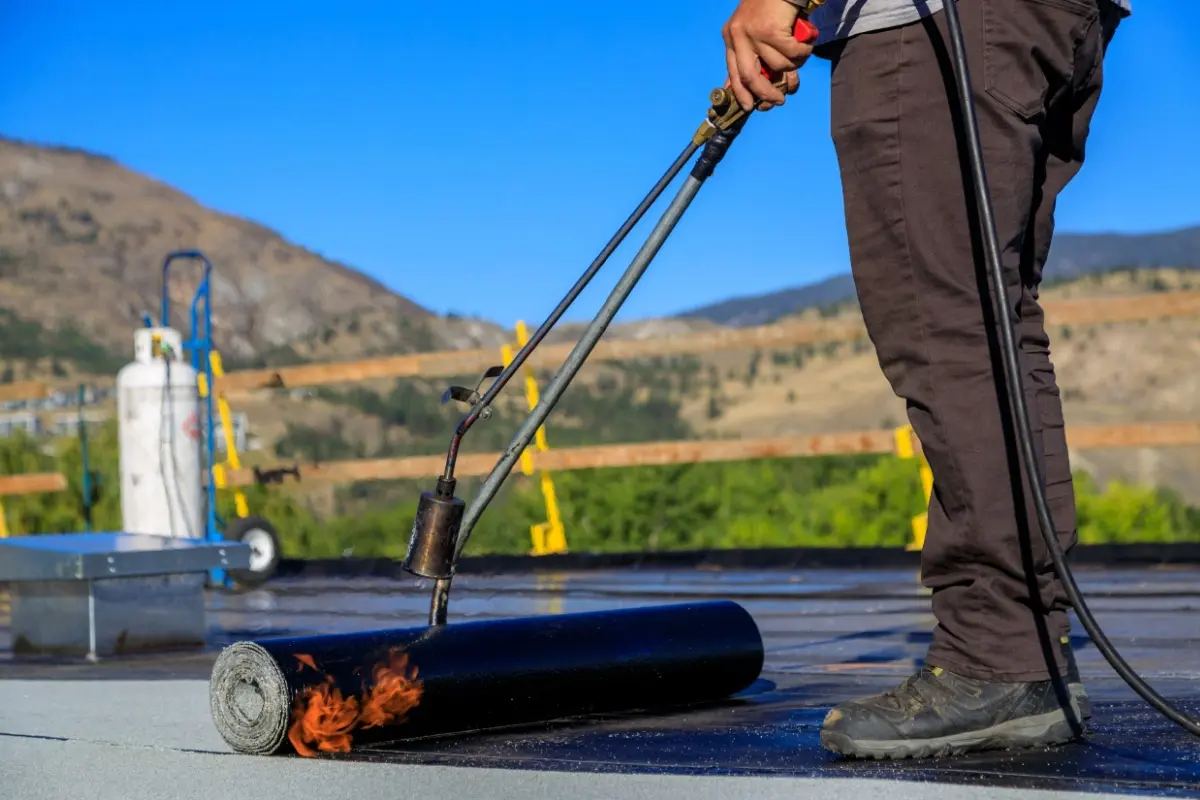
Because the seams are heat-welded rather than glued, torch down roofing can create a strong waterproof barrier on low-slope surfaces. It still needs proper drainage, though; standing water should be addressed before the new membrane goes on.
Several factors shape your roof replacement cost, and understanding them makes it easier to evaluate quotes.
Larger roofs require more material and labor hours and generate more tear-off debris, all of which drive the total higher. Contractors price torch-down work by the square, where one square equals 100 square feet.
The table below reflects fully installed costs, including labor and materials:
| Roof Size (Sq. Ft.) | Estimated Installed Cost |
| 1,000 | $3,500–$8,000 |
| 1,500 | $5,250–$12,000 |
| 2,000 | $7,000–$16,000 |
| 2,500 | $8,750–$20,000 |
These estimates include labor and materials for the new torch down system. Major tear-off, wet insulation, decking repair, permit fees, drainage upgrades, and unusually complex flashing can increase the final quote.
Torch-down roofing is not a one-size-fits-all, and it is not meant for standard pitched roofs. Traditional shingles rely on a steep slope so that gravity can pull rainwater down and away.
Torch-down is designed to create a watertight seal on flat and low-slope surfaces where that pitch does not exist. Because of this, you will most commonly see it on flat roofs, porches, and additions with low pitches.
Beyond the slope, your roof’s specific layout plays a major role in your final quote:
| Roof Layout | How It Affects Your Bill |
| Simple flat or low-slope roof | Having no obstacles keeps labor in the base range. |
| Garages, porches, and additions | These common projects keep costs low to average. |
| Roofs with skylights, vents, or chimneys | Precisely cutting and heat-sealing around each obstacle increases labor costs. |
| Roofs with parapet walls (raised edges) | Torching the membrane up vertical sidewalls increases time and material costs. |
Your roofing material choices directly affect your final bill. Torch-down roofs are built by melting layers of specialized asphalt together, and the exact makeup of those layers affects the price.
First, climate often influences the membrane choice. APP modified bitumen is more rigid and UV-resistant, while SBS modified bitumen is more flexible in colder temperatures. Some roof systems use both, so your contractor should recommend the assembly that fits your climate, roof design, and warranty requirements.
Second, the thickness and finish of the top layer (the cap sheet) affect the cost. You will need to choose between a standard two-layer or a thicker three-layer installation, as well as whether you want a smooth finish or one coated in small pebbles.
| Roofing Choice | How It Affects Your Bill |
| 2-layer roof | Costs $3.50-$8 per square foot. |
| 3-layer roof | Costs $4 to $7 per square foot. |
| Smooth top layer | Keeps the price on the lower end. |
| Granulated (pebble) top layer | Costs more but adds sun and fire protection. |
Torch-down installation requires open-flame equipment and precise seam welding, and labor accounts for 50 to 60% of most projects. Contractors with specific modified torch-down roofing experience cost more than general roofers, but the quality of the seams is what determines whether the roof holds up over time.
The existing roof condition is among the hardest factors to predict before work begins. Soft decking, wet insulation, or old membrane failure all need to be addressed before the new system goes on.
If the previous roof had ponding water issues, the contractor may need to install tapered insulation to create sufficient slope for drainage, which can add to the project scope or cost.
Tear-off is priced separately from installation. Removing a single existing layer typically adds $1,000 to $1,500 to the project. Multiple layers, heavy membranes, or hazardous older materials push that figure higher. Many contractors add these as separate line items on their invoice, so you can see what you’re paying for.
Persistent ponding water can shorten a flat roof’s service life and may affect warranty coverage, so drainage should be part of the project scope.
Torch-down systems rely less on ventilation than pitched roofs, but moisture management is still necessary. If insulation below the membrane traps moisture, it can degrade the deck and reduce the system’s lifespan. A contractor should assess moisture control before finishing the project.
Most torch-down replacements require a permit. Fees typically range from $100 to $1,000, depending on the municipality and project scope. Always ask whether the permit cost is included in the contractor’s estimate, as it is sometimes listed separately.
Contractors who use open-flame equipment should carry liability coverage that specifically allows torch-applied roofing. Some policies exclude or restrict this work, so ask the roofer for proof of insurance before the project starts.
Material warranties often run about 10 to 25 years for asphaltic membrane systems, though some qualifying commercial systems may offer longer coverage. Workmanship warranties come from the contractor and depend on the installer, project scope, and local market.
Layers affect your quote in two places: the new torch down system you choose and the old roof layers that need to come off. A two-layer system keeps the upfront price lower, while a three-layer system adds more material and labor but can improve durability. Existing layers matter, too. Removing one old membrane may be straightforward, but multiple layers increase tear-off time, disposal fees, and the chance of finding wet insulation or damaged decking underneath.
| Layer Factor | How It Affects Your Bill |
| New two-layer system | Lower upfront cost, but usually shorter lifespan |
| New three-layer system | Higher material and labor costs, but better durability |
| One existing layer to remove | Adds tear-off and disposal costs |
| Multiple existing layers | Raises labor, debris, and hidden-damage risk |
Your location can change the cost even when the roof size stays the same. Labor rates, permit fees, disposal costs, contractor availability, climate, and local code requirements all affect the final estimate.
| Location Factor | How It Affects Your Bill |
| High-cost metro area | Higher labor, disposal, and permit costs |
| Area where flat roofs are common | More contractor availability may keep quotes competitive |
| Area with fewer low-slope specialists | Scheduling and labor may cost more |
| Cold or snowy climate | Material choice, drainage, and insulation details matter more |
| Strict permit or code area | Extra inspections or documentation may add cost |
Torch-down installation uses an open propane torch, which alone puts it outside the scope of most DIY projects. The fire risk is real, but the bigger issue is that the finished roof’s quality depends entirely on seam welding. Too little heat leaves weak bonds; too much damages the membrane; either way, the roof leaks. Flashing around penetrations is where most flat roofs fail, and getting it right requires experience from a qualified contractor. Hiring a roofing contractor may also help the installation meet local building codes, manufacturer requirements, and warranty conditions, possibly reducing the risk of costly repairs later.
Repair makes sense when the damage is isolated, and the roof is under 15 years old. A small puncture, a minor seam separation, or a single flashing leak on an otherwise sound membrane does not warrant a full replacement.
A replacement is better when problems start showing up across the roof rather than in one spot. Widespread cracking, blistering, or wet insulation underneath are signs that the membrane itself is failing. So is a roof that has been patched multiple times without the leaks going away. At that point, another repair is rarely the more economical option when compared with ongoing maintenance and roof-sealing costs.
A new torch-down roof is unlikely to increase home value on its own, but a failing or leaking flat roof can actively hurt a sale. Replacing it before listing removes a negotiation point and reassures buyers that the property has been maintained.
Installation requires open-flame equipment and an experienced contractor, which can limit your options in some markets and raise labor costs. The system is only appropriate for flat and low-slope roofs. Fumes during installation may be a concern in enclosed or residential settings, and quality depends heavily on the installer.
A properly installed two-layer system typically lasts 15 years. A three-layer system with a granulated cap sheet can last 20 to 25 years. Actual lifespan depends on material quality, installation, drainage, climate, foot traffic, and the consistency of roof maintenance.
The comparison is not straightforward because the two systems are designed for different roof types. Torch down is used on flat and low-slope roofs. Shingles require pitch to drain properly. If your roof is flat, shingles are not a viable alternative.