A shed roof is a single-slope roof. It travels in one direction, with no ridges or valleys. It’s the most straightforward roof style you can build, which is exactly why it’s the go-to choice for new home additions.
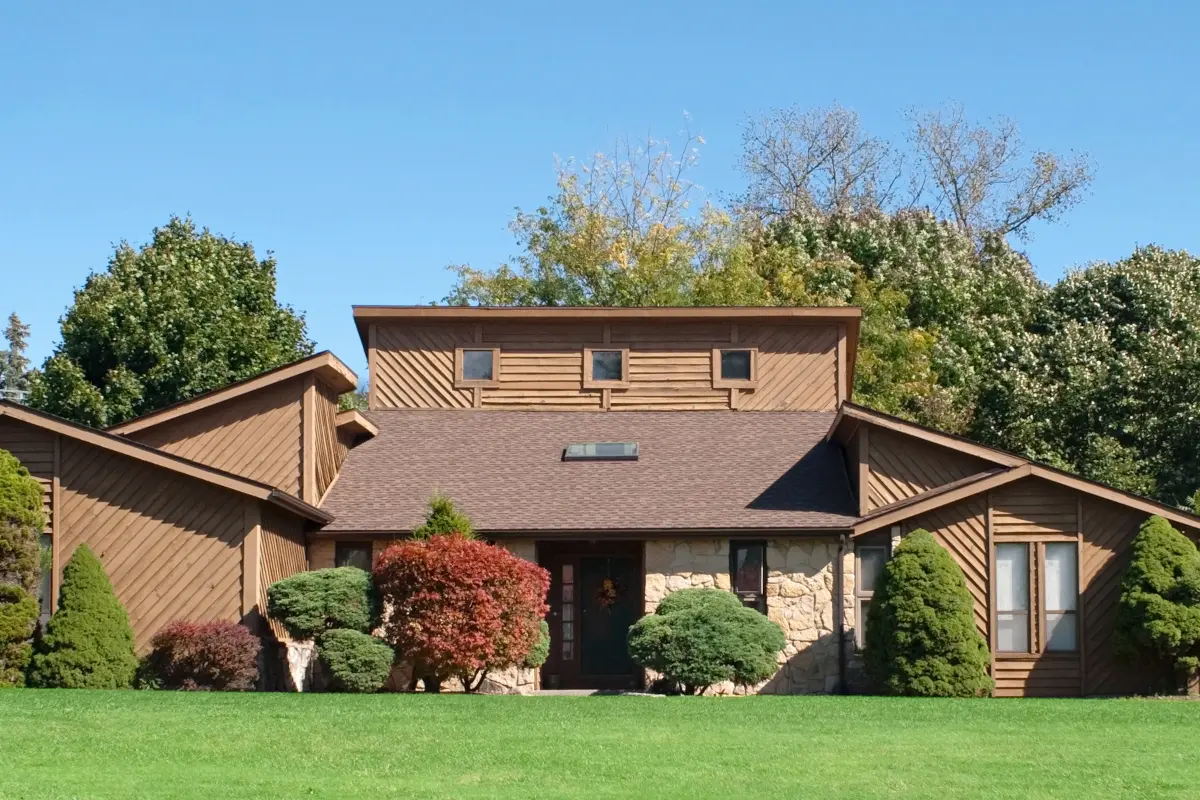
It’s not just about simplicity. Shed roofs drain well, cost less to build, and have become a popular choice in modern home design. Here’s what you need to know before you build or buy.
Please note that the costs below are broad U.S. estimates and can vary by location, roof size, material, tear-off needs, repairs, roof access, and contractor minimums. Smaller shed roofs may cost more per square foot than larger roofs because setup and labor minimums still apply.
There are many roof styles out there: gable, hip, gambrel, flat, and more. Each has its own structure, drainage behavior, and visual personality. Here’s how a shed roof stacks up against the most common options:
| Roof Style | Look | Structure | Drainage |
| Shed | Clean, modern, minimalist | Single slope spanning two walls. The simplest build | Water flows one way; one gutter is needed |
| Gable | Classic triangle shape | Two slopes meeting at a ridge create attic space | Handles rain and snow well on both sides |
| Hip | Slopes on all four sides | More complex to build, but very stable in high winds | Drains away from all four walls, needs gutters on all four sides |
| Gambrel | Barn-style, rustic | Two slopes per side. It fits a full upper floor with fewer beams | Lower slopes drain fast, but the slope break needs careful sealing |
| Flat | Sleek, urban, industrial | Uses membrane sheets instead of shingles, the roof can double as a deck | Drains through internal pipes and pools water if the drains get clogged |
While the basic shed concept is a single slope, how you angle it and where you attach it can completely change the look and function of your structure. Here are the most common types of shed roofing:
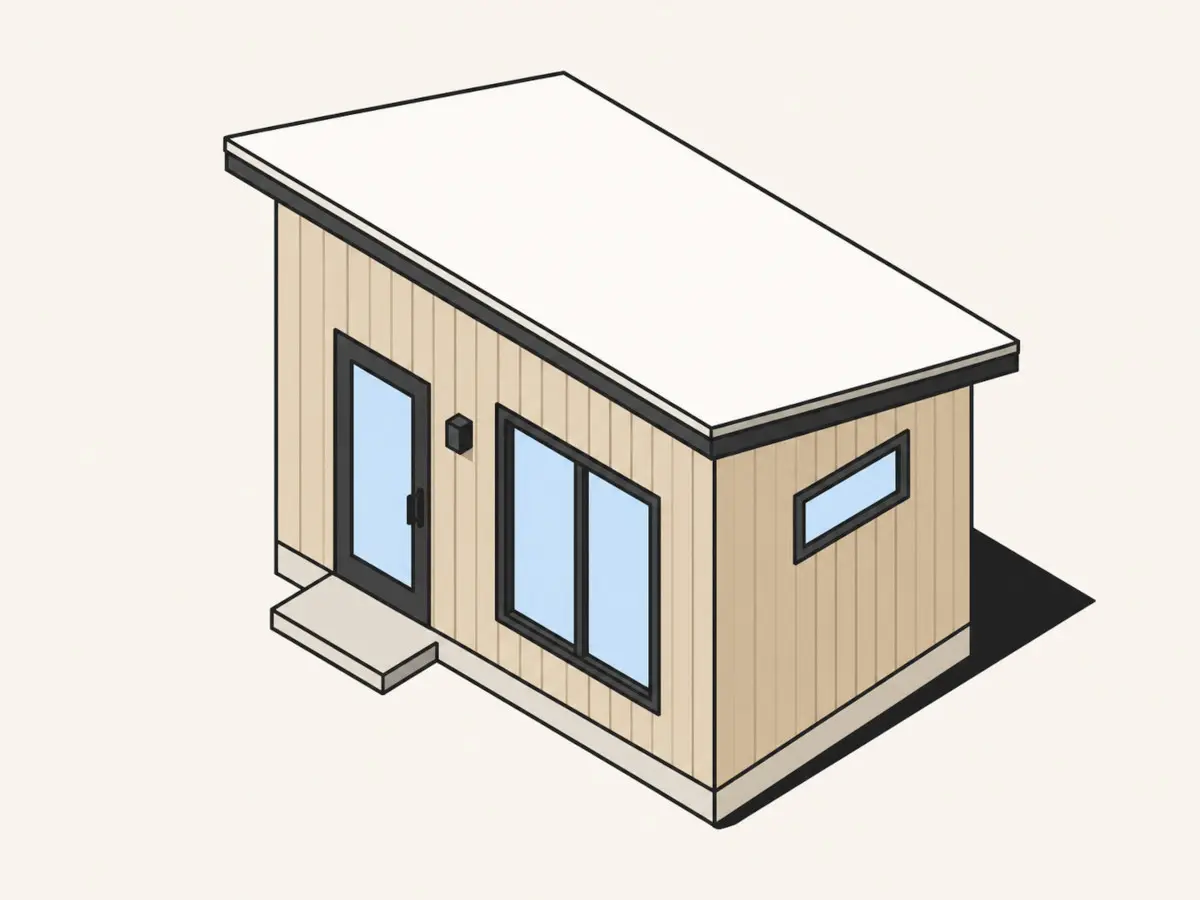
A mono-pitch roof is a single flat surface sloping at one angle, freestanding and not attached to any other structure. The height difference between the two walls allows for taller windows on the higher side, which is why you’ll often see this style in home offices and modern residential builds, not just in backyard sheds.
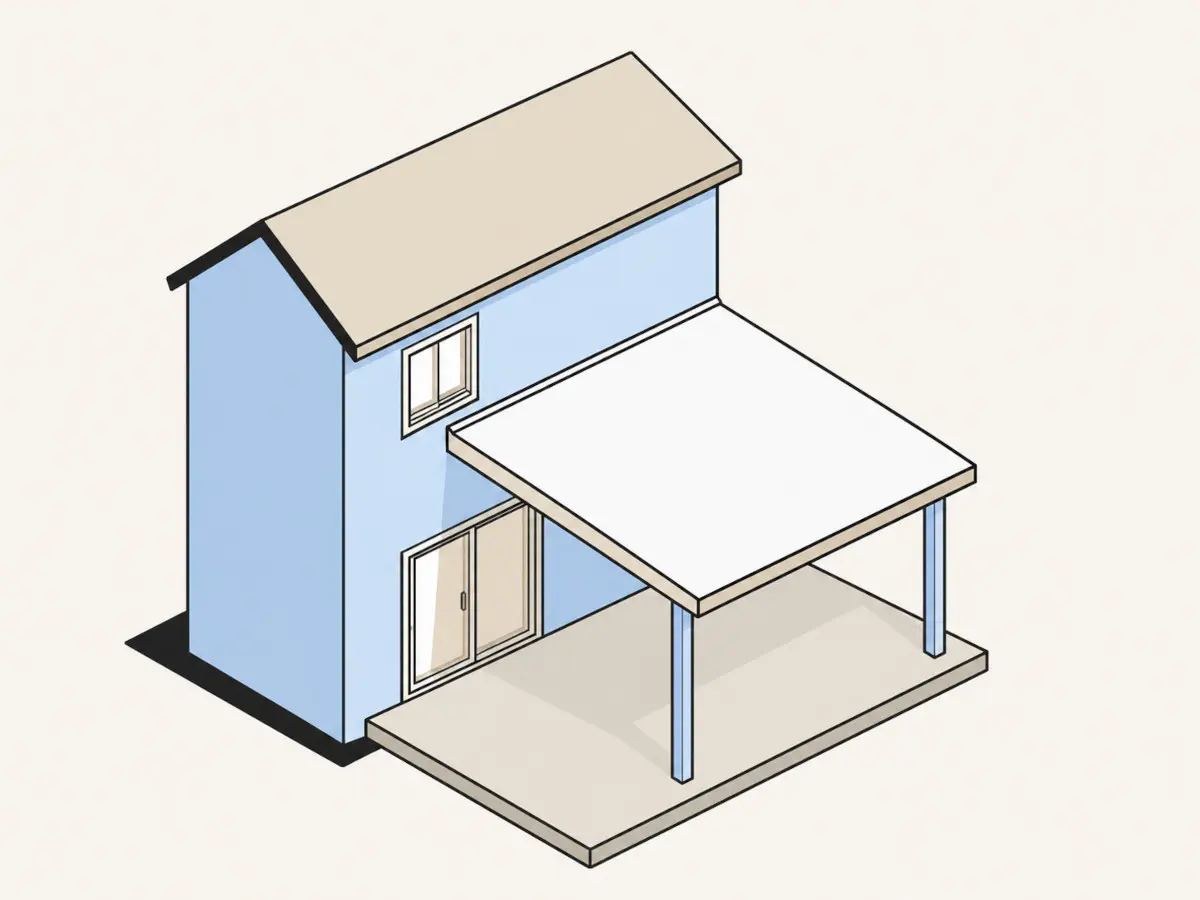
A lean-to shares one side with an existing wall (your house, garage, or any solid structure). The other side rests on a lower outer wall. Because one wall is already there, it’s a straightforward build that works well for carports, side additions, and storage sheds attached to an existing building.
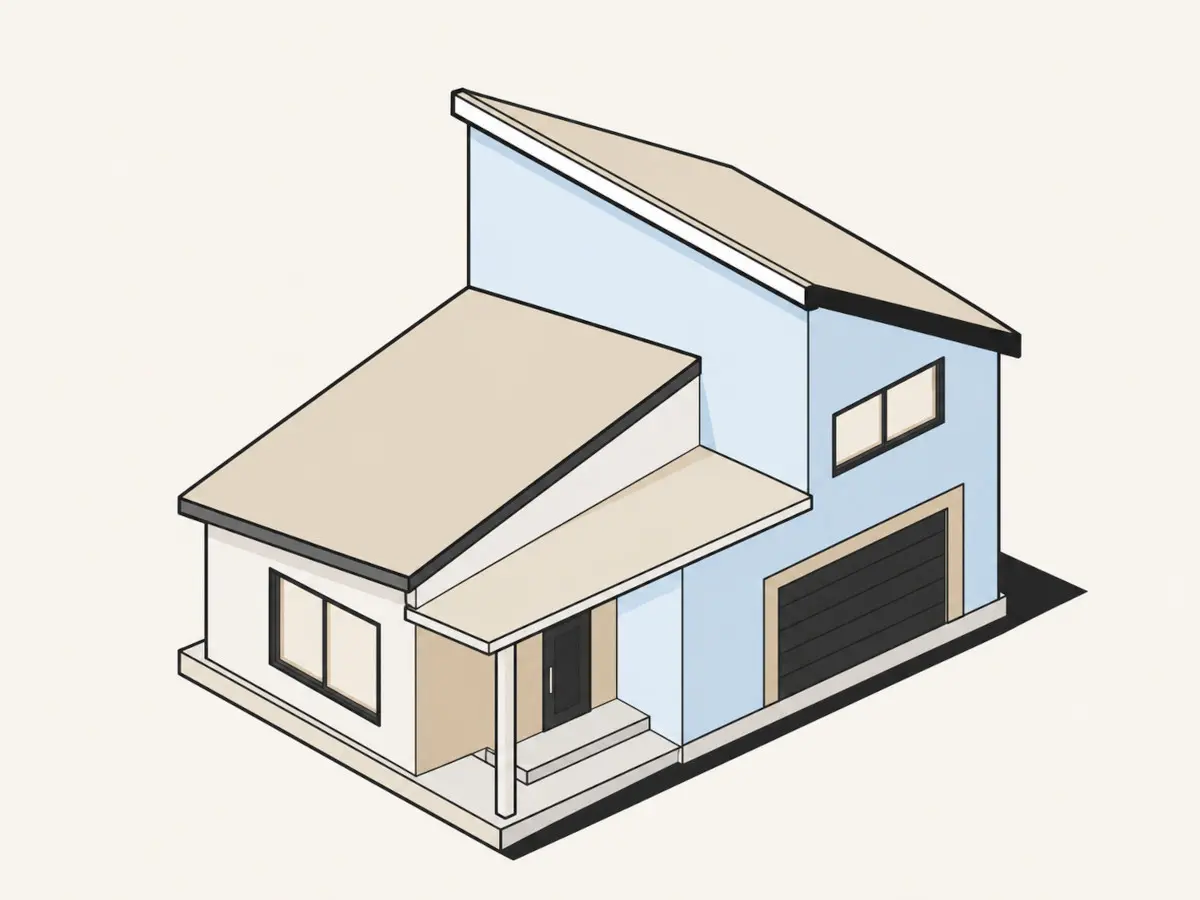
In many regions, skillion is just another word for a shed roof. In design circles, it usually refers to a steeper version. It is sometimes used in pairs at different heights facing each other without meeting at a peak. The steeper pitch moves water and snow off faster than a shallower slope.
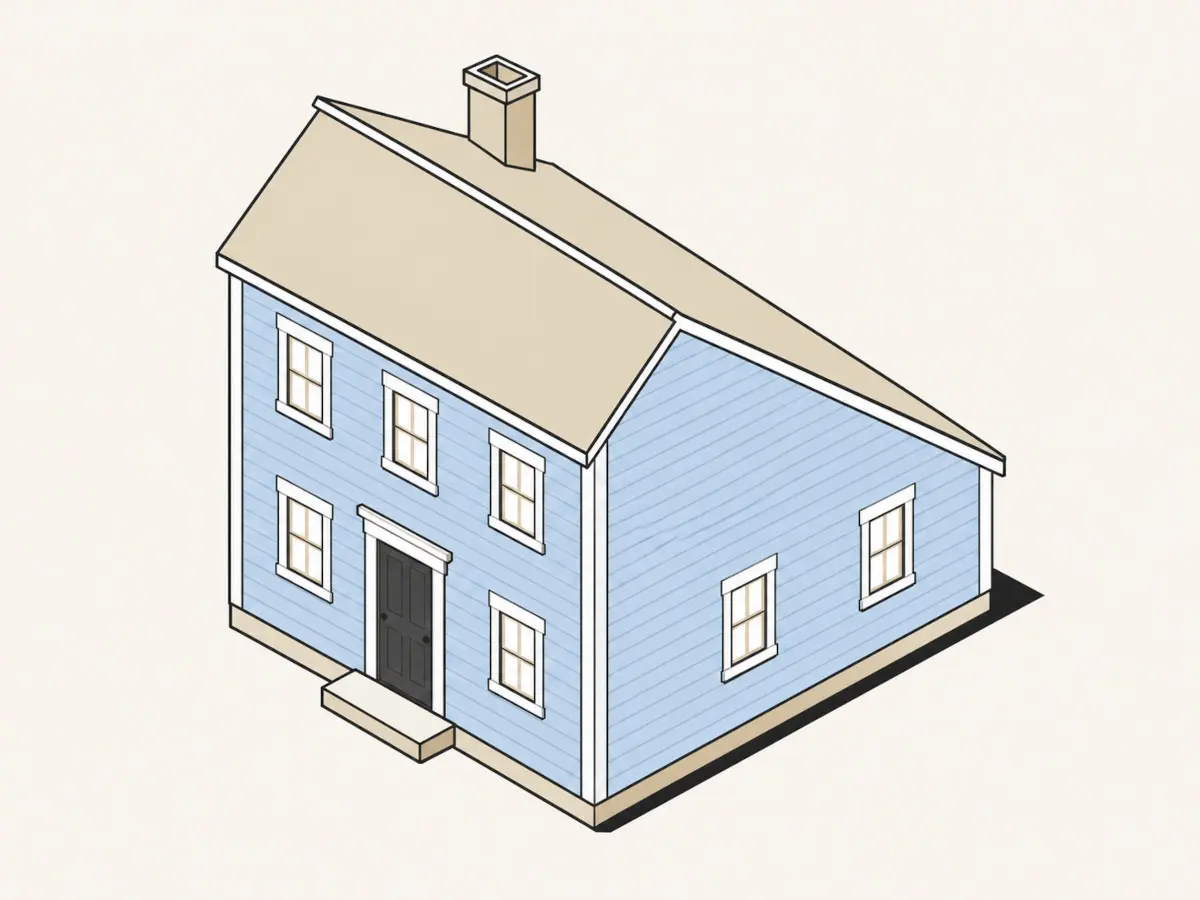
A saltbox-style shed roof is a related option rather than a true single-slope roof. It resembles a gable roof, but one slope is significantly longer than the other. That asymmetry gives it a traditional character while creating more headroom on one side. Useful when you need usable space inside without going to a full gable design.
The simplicity of a shed roof is its main draw, but it’s always worth delving deeper to understand why it works and where it may fall short.
If the following advantages align with your priorities, a shed roof might be just the solution for you.
Parallel rafters running from one wall to the other mean less complex framing, fewer materials, and less labor. For most homeowners, that translates directly to a lower quote from your contractor.
Because one wall is taller than the other, you have a large windowed surface. High windows on that tall wall can brighten up a workspace or living area without sacrificing privacy.
A single uninterrupted slope, especially one facing south, gives you a more usable surface for solar panels than a gable roof, which splits across two directions.
Water flows in one direction, so there’s one gutter and one downspout. Fewer joints means fewer places where leaks tend to start.
As good as all those pros sound, if the following negatives outweigh them, then you should probably steer clear.
The tall wall creates wind pressure that pushes up on the roof. In windy areas, ask your contractor about uplift-rated connectors, proper fastening, and local wind-load requirements to ensure the roof does not lift off the walls.
Without an attic acting as a buffer zone, heat and moisture have nowhere to go. If insulation isn’t handled correctly, you risk trapped moisture, higher energy bills, and rot over time.
A shallow slope doesn’t shed snow the way a steeper roof does. If you’re in a snowy climate, that added weight over the winter can stress the structure and may mean higher material costs upfront to compensate.
One gutter handles the entire roof. If it gets clogged or isn’t sized correctly, you can end up with water pooling near your foundation, which is a much bigger problem than a leaky gutter.
The right material depends on your climate, budget, and roof slope. Here’s how the most common options compare:
Metal is the most popular choice for shed roofs, and for good reason. Corrugated panels and standing seam metal both hold up well across climates. It is resistant to fire, rot, and moss.
Expect a lifespan of 40 to 70 years. Metal roofing works on many low- and moderate-slope shed roofs, but check the manufacturer’s minimum slope.
If you want your shed to match your house, asphalt shingles are the most straightforward option. They’re widely available, affordable, and give a clean residential look.
That said, asphalt shingles work best on steeper shed roofs. Most manufacturers require at least a 2-in-12 pitch, and roofs from 2-in-12 to under 4-in-12 are considered low slope and may need special underlayment to help prevent leaks. Lifespan is typically 15 to 30 years.
Lightweight and easy to install, these wavy sheets (often sold under the brand name Onduline) are a practical choice for DIYers. They won’t rust, work well on low-pitched roofs, and don’t require specialized tools. Its lifespan is around 10 to 15 years.
Polycarbonate panels are translucent, so natural light passes straight through. That makes them a natural fit for potting sheds, greenhouses, or any workspace where you’d rather skip artificial lighting during the day.
They’re impact-resistant and flexible on slope, though they can scratch over time. Lifespan ranges from 10 to 20 years.
EPDM is a rubber membrane that typically comes as a single large, seamless sheet, making it one of the best options for very flat or low-slope roofs.
On small sheds, EPDM can often be installed as one large sheet, reducing seams. Fewer seams mean fewer places for standing water to cause problems. It can last 20 to 30 years.
A shed roof is typically the least expensive roof style to build, largely because of its simple framing, but the choice of materials can still move the price significantly.
| Roof Style | Cost Per Square Foot | Features |
| Flat | $4–$14 | Less pitch requires specialized waterproof membranes to prevent pooling. |
| Shed | $3–$9.50 | Single slope with parallel framing works with standard shingles or metal panels. |
| Gable | $5–$12 | Two slopes meeting at a central ridge is the most common residential roof style. |
| Hip | $8–$16 | Four slopes meeting at the top, more stable in wind but more complex to frame. |
| Gambrel | $10–$25 | Two slopes per side in a barn-style shape maximizes interior space but is labor-intensive. |
The roof style saves you money on labor, but your material choice can still significantly affect the final cost.
While shed roofs are low-maintenance, their single-slope design has a few quirks. Because they often have a lower pitch than a traditional gable roof, gravity doesn’t always do the heavy lifting for you.
To keep your roof from becoming a very expensive waterfall, here are some maintenance checks to keep in mind.
A shallow slope holds leaves and twigs instead of shedding them. Clear the surface twice a year, especially around the gutters.
Metal roofs expand and contract with temperature changes, which can loosen screws over time. Look for popped heads or cracked washers every two to three years.
Where the roof meets the tall wall is the most likely place for water to get in. Reseal anything that looks cracked or find roofing repair services near you.
All your runoff goes to one side. If water is still sitting 48 hours after rain, your gutters may need adjusting, or your pitch may be too shallow for your current material.
A shed roof works well for smaller structures, additions, and modern builds where simplicity and cost matter. If you’re working on a larger home, live somewhere with heavy snow or high winds, or want more attic space, a gable or hip roof might serve you better. If you’re unsure what works best, it is better to consult with a contractor.
It depends on the material. Metal lasts 40 to 70 years, asphalt shingles 15 to 30 years, and EPDM membrane 30 to 50 years. Regular maintenance will extend the lifespan of any of them.
A pitch between 3-in-12 and 6-in-12 works well for many shed roofs, but the right pitch depends on the material, climate, and manufacturer requirements. Asphalt shingles generally need at least a 2-in-12 pitch and may require special underlayment below 4-in-12.
For a straightforward shed, yes. It’s simpler to build and costs less. A gable roof makes more sense if you want attic storage or a more traditional look.
In rainy climates, yes. In heavy snow areas, you’ll want a steeper pitch and heavier framing to handle the load. A shallow slope holds snow rather than shedding it.
Corrugated metal is typically the most affordable, followed by asphalt shingles. Both are widely available and work well on a single slope.
Yes. They’re common on modern homes, extensions, and accessory dwelling units. Less conventional than traditional roof styles, but a legitimate option architecturally.