Replacing a roof is expensive, so it is natural to ask whether your roof can last a little longer. The problem is that a cheaper fix only helps if the roof is still in good enough shape to be saved.
Restoration can make sense when the roof is still structurally sound and only needs minor repairs or improvements. Replacement is the smarter choice when the roof has major issues. A professional inspection can confirm whether restoration makes financial sense in the long run or is just a short-term solution.
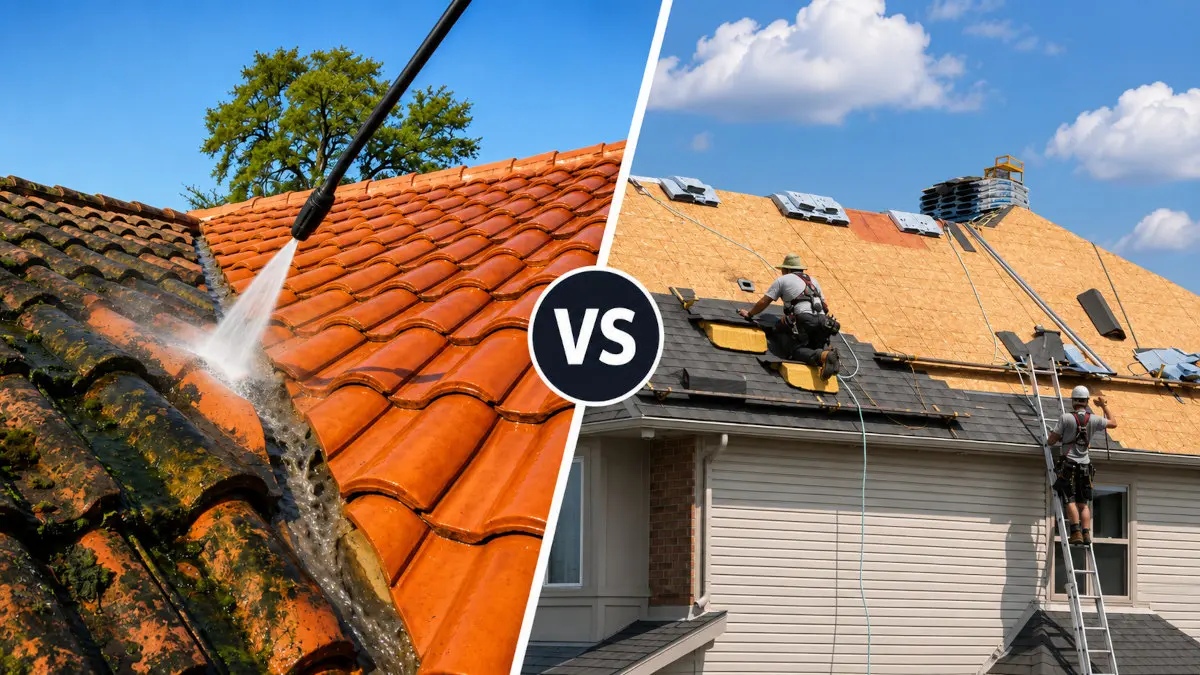
When comparing restoration with full replacement, it helps to understand your expected roof replacement cost first, because restoration only saves money when the existing roof is still worth preserving.
This guide helps you assess your roof’s condition and better understand which option makes more sense: roof restoration or replacement.
Roof restoration means different things depending on who you ask. Some contractors use it to describe shingle treatments or rejuvenation products. On flat roofs, it often refers to a coating system applied over an existing surface. Others use it more loosely to mean cleaning and refreshing an older roof without tearing it off.
For this article, restoration means extending the life of an existing roof that is still structurally sound, fixing smaller problems before they become larger ones.
Restoration typically starts with cleaning, removing moss, algae, and debris that hold moisture against the surface and accelerate wear. From there, a qualified roof contractor will address minor issues such as small leaks, loose flashing, or a few damaged shingles.
On some flat or low-slope roofs, a protective coating may also be applied over the existing surface to slow weather damage. That option only makes sense when the structure underneath is still in good shape.
Roof replacement means removing the old materials and starting fresh with a new system. It is usually the right call when the existing roof is too old, too damaged, or too unreliable to keep patching.
Replacement starts with stripping the old materials down to the decking, the wood base the roof sits on. From there, the contractor inspects what is underneath and addresses any damage before anything new goes on.
The installation then covers underlayment, flashing, drip edge, and the new roofing material of your choice. The exact scope of the work depends on the roof type and local code requirements.
These three terms get used interchangeably, but they describe very different scopes of work.
Repair handles a single, isolated problem on a roof that is otherwise in decent shape. One missing shingle on a newer roof is very different from shingles coming loose in several places, and that distinction matters.
Repair is the fastest and least expensive option, but it does not reset the roof’s age or address broader wear.
Restoration is more involved than a repair but stops short of full replacement. It works best when the roof is aging, but the decking underneath is still stable, no sagging, no widespread water damage.
The catch is that if the damage goes deeper than the surface, restoration may make the roof look better without fixing the real problem.
Replacement removes the old materials entirely and installs a new system. It is usually the right call when the roof is near the end of its life, leaking in multiple areas, or has needed repeated repairs that have not held.
It costs more upfront, but it gives the home a new protective system rather than another patch on an aging roof.
Restoration may make sense when the roof has problems like:
Replacement is usually safer when the roof has problems like:
With a roof cost breakdown like this, it’s easy to compare apples to oranges without a standard. For this comparison, restoration refers to a professional life-extension process that may include cleaning, minor roof repairs, surface preparation, and a compatible coating or treatment.
Replacement refers to a total tear-off, where the old material is removed down to the wooden deck to start completely fresh.
| Roof Material | Restoration Scope | Restoration Cost | Replacement Cost (per square foot installed) |
| Asphalt shingle | Rejuvenation treatment after minor prep | $3,000–$6,000; some estimates fall around $0.75–$2.75/sq. ft. | $4–$12 |
| Concrete or clay tile | Cleaning, replacing a few tiles, sealing/coating where appropriate | $2,500–$5,000; $1–$10/sq. ft. depending on scope | $8–$25 |
| Metal roof | Cleaning, rust treatment, coating, or painting | $1.20–$4/sq. ft. | $5– $16 |
| Flat or low-slope membrane | Compatible silicone, acrylic, or elastomeric coating | $1–$5/sq. ft. | $5–$14 |
Coatings and rejuvenation products are not appropriate for every roof. A contractor should confirm the roof is dry, structurally sound, compatible with the proposed product, and still a good candidate for restoration before quoting the work.
The better value is the option that matches the roof’s actual condition, not the one with the lower starting price. Restoration makes sense when it adds meaningful time to a roof that is still performing.
Replacement becomes the smarter investment when the roof is already unreliable, because repeated fixes add up without solving the underlying problem. A roof that gets patched twice a year is rarely cheaper than one that gets replaced once.
Before deciding, get an inspection from a qualified contractor. A thorough inspection should cover the decking, flashing, underlayment, and ventilation, since these are where the problems that determine whether restoration is viable tend to hide.
When comparing quotes, make sure each one is itemized and covers the same scope of work. A restoration quote typically includes cleaning, repairs, and coating. A replacement quote should break out tear-off, disposal, materials, and any decking repairs separately.
Ask what could change the final price once work begins, and what warranty applies to both materials and labor.
Roof restoration may add several years to a roof’s life if the structure is still sound and the work is done correctly. A full replacement usually lasts much longer because the old materials are removed and a new roof system is installed. The exact lifespan depends on roof material, climate, installation quality, and maintenance.
Roof restoration can be worth it when the roof has surface wear, minor damage, or limited leaks, but no major structural problems. It is usually not worth it if the roof is sagging, leaking in several areas, or near the end of its expected life. In those cases, replacement may be the better investment.
Most roof restoration projects take less time than a full replacement, but the timeline depends on roof size and whether coatings are involved. A simple cleaning and repair job may be quicker, while a more involved restoration can take several days.
Roof restoration may improve curb appeal and reassure buyers if the roof is still in good condition. It can make the home look better and address minor issues before listing. However, it usually does not provide the same value as a full replacement, especially if buyers or inspectors notice signs that the roof is still aging.
Start with the roof’s condition. Restoration may work if the roof is firm, level, and only lightly damaged. Replacement is usually safer if there are recurring leaks, soft decking, or major storm damage. A professional inspection can help confirm which option is realistic.
Yes, roof restoration is usually less disruptive than replacement because the old roof is not fully removed. There is typically less noise, less debris, and less time spent on tear-off and disposal. Still, restoration can involve cleaning, repair work, and coatings, so some disruption should be expected.
Homeowners’ insurance may help pay for a roof replacement if the damage results from a covered event, such as wind, hail, fire, or a fallen tree. It usually does not cover routine aging, poor maintenance, or normal wear and tear. Check your policy, deductible, roof age rules, and claim requirements before assuming replacement is covered.