Shingle roof replacement often costs between $7,000 and $17,000 for a standard 2,000-square-foot asphalt-shingle roof, though luxury shingles, steep pitch, multiple layers, decking repairs, and complex flashing can push quotes above $20,000.
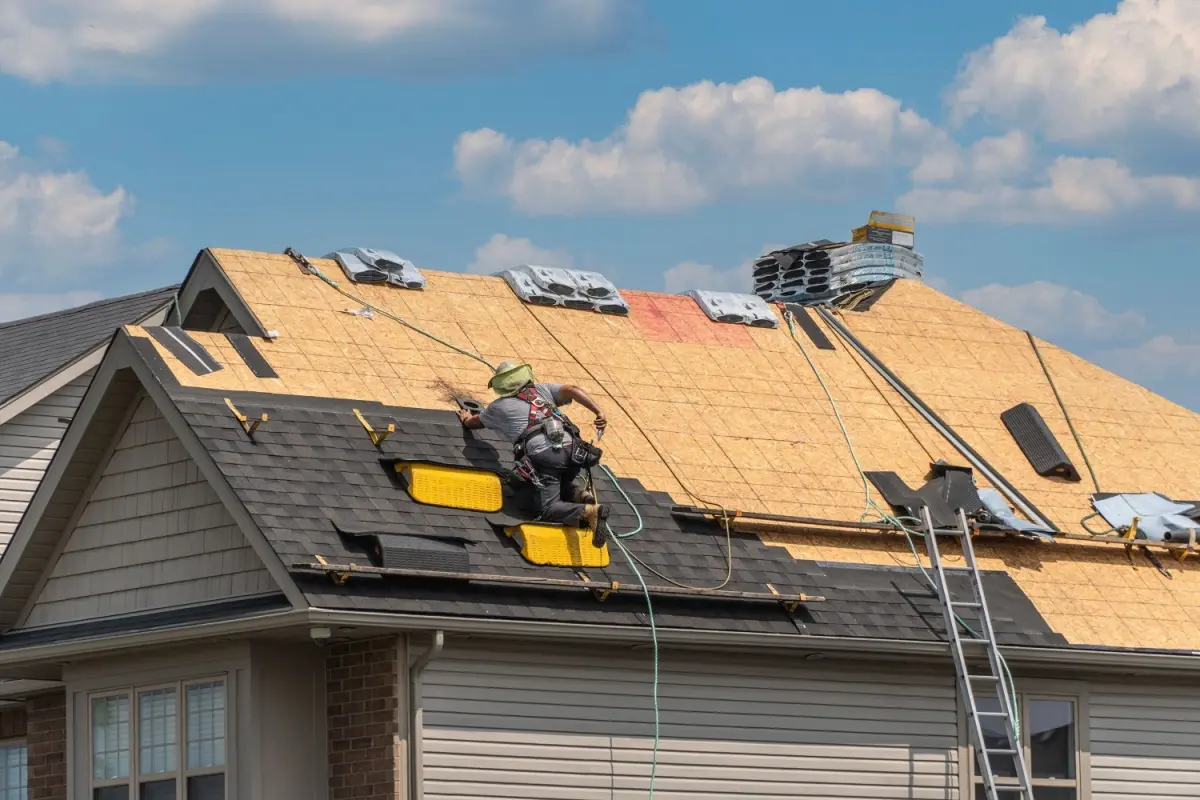
What affects the price? Mostly, it has to do with the roof’s size, how difficult it is to work on, and whether there are any issues beneath the existing shingles. A useful starting point is knowing the roof replacement cost and realizing that roofers price by roof surface area rather than home square footage.
| Roof Area (in square feet) | Roofing Squares | Estimated Total Cost (Installed) |
| 1,000 | 10 | $3,500–$8,500 |
| 1,500 | 15 | $5,250–$12,750 |
| 2,000 | 20 | $7,000–$17,000 |
| 2,500 | 25 | $8,750–$21,250 |
| 3,000 | 30 | $10,500–$25,500 |
Again, these ranges assume a replacement on a standard, accessible roof.
Shingle type is a major variable within asphalt roofing.
| Shingle Type | Typical Installed Cost (per square foot) | Estimated Cost for 2,000 Square Feet | Best For | Watch Out |
| 3-Tab Asphalt | $3.50–$5.50 | $7,000–$11,000 | Lowest upfront cost | Shorter lifespan, flatter look |
| Architectural | $4.00–$8.50 | $8,000–$17,000 | Better value and curb appeal | Costs more than 3-tab |
| Luxury or Designer | $7.00–$16.00 | $14,000–$32,000 | Premium appearance, heavier profile | May approach the cost of other materials |
3-tab shingles are the cheapest entry point in asphalt roofing. For a homeowner on a tight budget, replacing a roof before selling, or in a mild climate with limited severe weather exposure, can make sense.
For someone planning to stay in the home long term, the shorter lifespan tends to offset the upfront savings.
Architectural shingles cost more than 3-tab, but they are what most contractors recommend. The dimensional profile looks better, wind and impact performance is stronger, and the lifespan is longer. For most full replacements, the cost difference over 3-tab is modest, and most homeowners find architectural shingles worth it long term.
Luxury shingles are a curb appeal and performance upgrade. They mimic the look of slate or wood shake at a fraction of the material cost, and the heavier profile adds visual depth. They are not the most budget-friendly choice, and at the top of their range, they start to overlap with metal or tile roofing, which is worth factoring in before committing.
It is not unusual for one shingle quote to be much higher or lower than another, even when dealing with similar contractors. Here are some logical reasons why that may happen.
Roofers price by roof surface area, measured in squares, where one square equals 100 square feet. That number is not the same as the home’s square footage because pitch, overhangs, and roof shape all affect how much surface area the crew is actually covering.
Removing old shingles adds labor and disposal costs. Most local codes cap roofs at two layers, and shingles that are curling or moisture-damaged are not candidates for another layer.
A full tear-off costs more upfront but gives the crew a clear view of the decking, which is key when there’s the possibility of hidden damage.
A steep roof changes the pace of the entire job. Safety setup takes longer, and features like dormers or skylights add flashing and cutting work on top of that.
A complete shingle replacement covers more than the visible surface. A well-specified roof estimate includes underlayment, ice and water shield in vulnerable areas, drip edge, and flashing. Quotes that omit these items often result in surprise charges once work begins.
Labor rates vary by market, and permit requirements and disposal fees vary by municipality. Storm-prone regions may also require specific products or fastening systems.
| Additional Cost | When It Matters |
| Old shingle removal | More layers mean more labor and disposal costs |
| Decking repair | Rotten or soft sheathing is often found only after the tear-off |
| Flashing replacement | Needed around chimneys, walls, skylights, and vents |
| Ice and water shield | Used in valleys, eaves, and cold-climate applications |
| Drip edge and starter shingles | Edge details that affect water control and wind resistance |
| Ventilation updates | Poor ventilation shortens roof’s life from the inside |
| Permit fees | Vary by city or county and are not always included in the base quote |
| Warranty upgrades | Extended coverage for both materials and labor adds cost but protects longer |
| Situation | Likely Best Option | Why |
| A few missing shingles after a storm | Repair | Damage is localized |
| Small leak near flashing | Inspect first | May be a flashing issue, not a full roof failure |
| Widespread curling or cracking | Replacement | Shingles are failing across the roof |
| Heavy granule loss or bald spots | Replacement | The roof is losing protection |
| One existing layer in good condition | Overlay may be possible | Still requires code, condition, and warranty review |
| Two existing layers | Full tear-off | Most areas require removal before another layer |
An overlay can save money upfront, but it adds weight, limits the crew’s view of the decking, and can affect warranty coverage. Those are the reasons most contractors recommend full tear-off over an overlay.
Two quotes for the same roof can differ by thousands of dollars based on scope alone. Before comparing numbers, confirm that each estimate covers the same items:
Scope differences explain most of the gap between competing bids, so comparing quotes line by line matters more than comparing the bottom number. A roofing contractor who itemizes everything upfront makes that process much easier, which is why it’s important to understand how to choose a roofing contractor before making a decision
Asphalt shingles are often the most affordable starting point for a roof replacement. The right choice also depends on what your roof can support and how it is designed.
If durability is a priority, compare the long-term cost of a metal roof. Tile and slate are heavier, more expensive options, but they may suit certain homes better than shingles.
For low-slope sections, flat roof replacement may be a better place to start, since shingles usually are not the right fit for that surface.
The quote that wins on price is not always the one that wins on value. A complete shingle system covers underlayment, flashing, ventilation, and proper tear-off. A quote that skips those details tends to make up the difference in change orders once work begins.
A roofing square equals 100 square feet of roof surface. Shingle replacement typically runs $350 to $850 per square installed, though luxury shingles or a complex roofline can push that above the upper end of the range.
Roofing repair makes sense when damage is localized and the rest of the roof is sound. Replacement is the better call when shingles are curling, cracking, or leaking in multiple places, or when the roof is close to the end of its expected lifespan.
Asphalt shingles typically last 15 to 30 years, depending on shingle type. Basic 3-tab shingles tend to have the shortest lifespan, while architectural and luxury shingles last longer when installed and maintained correctly.
Sometimes, but only when local code allows it and the existing layer is sound. It is not appropriate when shingles are curled or hiding deck damage, since a full tear-off gives the crew visibility into what is underneath.
A new shingle roof can improve resale appeal and remove a significant objection during inspection. It is unlikely to return every dollar spent, but it makes the home easier to sell and reduces the chance of buyers negotiating on condition.
A shingle roof replacement can cost around $7,000 to $17,000 for a standard 2,000-square-foot asphalt-shingle roof, but simpler jobs may cost less, and complex or luxury-shingle projects can exceed $20,000.