If they cost the same, more people would likely choose metal roofing over asphalt shingles. Metal roofing has a reputation for lasting longer and requiring less maintenance, but its upfront quote is usually higher. However, the gap may be modest when comparing exposed-fastener metal with premium shingles and much larger for standing-seam, copper, or zinc roofing.
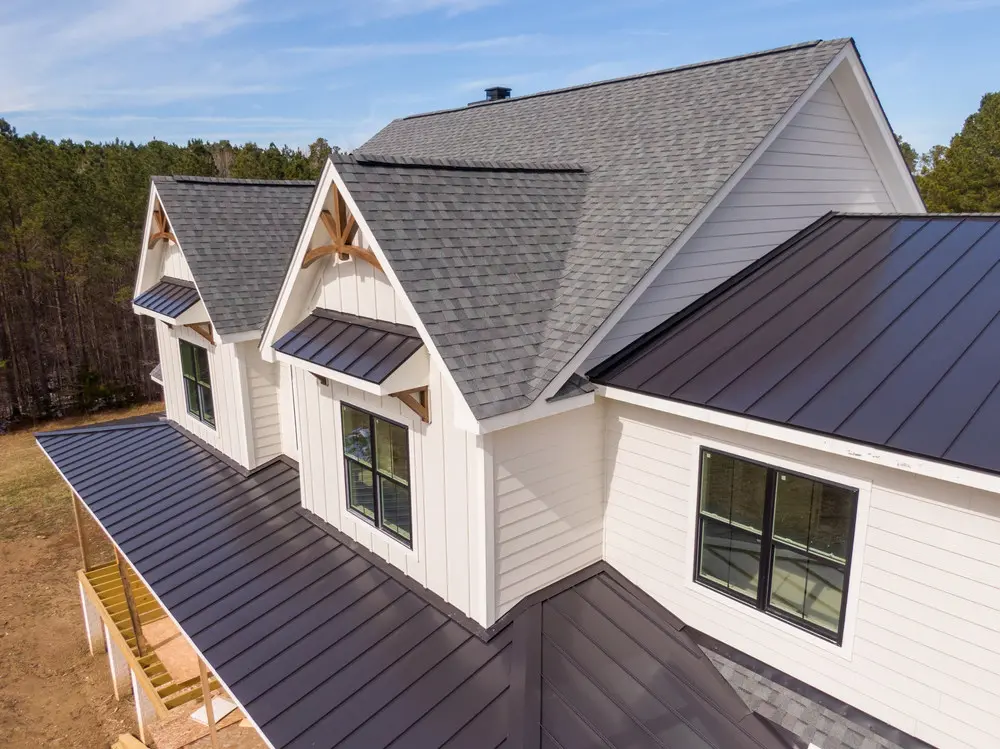
This article breaks down where that gap comes from, when it narrows, and whether the math ever works in metal’s favor.
Metal roofing and shingles both come in a wide price range. Corrugated metal may cost close to architectural shingles, while standing-seam metal can be much more expensive. The table shows broad installed pricing ranges for roof replacement; tear-off, deck repairs, permits, and unusual details can push a quote outside them. See Renovate’s roof replacement cost guide for broader project context.
| Roofing Option | Installed Cost per Square Foot | Estimated Cost for a 2,000-Square-Foot Roof |
| 3-Tab Asphalt Shingles | $3–$7 | $6,000–$14,000 |
| Architectural Asphalt Shingles | $4–$9 | $8,000–$18,000 |
| Luxury Asphalt Shingles | $7–$16 | $14,000–$32,000 |
| Corrugated or Exposed-Fastener Metal | $4–$14 | $8,000–$28,000 |
| Metal Shingles | $7–$22 | $14,000–$44,000 |
| Standing-Seam Metal | $7–$30 | $14,000–$60,000 |
| Copper or Zinc | $20–$35 | $40,000–$70,000 |
Roofing is priced by roof surface area, not the home’s interior square footage. For a consistent early comparison, the table uses $4 to $9 per square foot for asphalt shingles and $7 to $30 for common metal systems, excluding specialty copper and zinc. Actual quotes depend on the exact product and project scope.
| Roof Area | Asphalt Shingles ($4–$9 per Sq. Ft.) | Metal Roof ($7–$30 per Sq. Ft.) |
| 1,500 Sq. Ft. | $6,000–$13,500 | $10,500–$45,000 |
| 2,000 Sq. Ft. | $8,000–$18,000 | $14,000–$60,000 |
| 2,500 Sq. Ft. | $10,000–$22,500 | $17,500–$75,000 |
| 3,000 Sq. Ft. | $12,000–$27,000 | $21,000–$90,000 |
A metal roof’s higher upfront cost is easier to justify when the ownership timeline is long enough to use its service life. For homeowners planning to sell within 10 years, shingles often make more financial sense. Over 20 to 40 years, metal may become competitive if it avoids another shingle replacement and the particular system performs as expected.
For example, if shingles cost $14,000 and metal costs $28,000, the additional $14,000 is the amount metal must justify over time. A longer ownership period gives avoided replacement, reduced repairs, and any verified energy or insurance savings more time to narrow the gap.
There may be more to the price difference than you’d think at first. Here are some of the most meaningful factors.
A basic shingle roof usually costs less than an architectural or luxury shingle roof. Metal works the same way. Corrugated metal is usually the cheaper metal option, while standing seam, copper, and zinc cost much more.
So the fairest comparison is not metal vs. shingles. It is the exact metal roof you are pricing against the exact shingle roof you would choose instead.
Metal roofing, particularly standing seam, requires more specialized labor than a standard shingle installation. The work takes longer due to panel alignment and seaming.
A simple roof with a moderate pitch and open access is generally less expensive to cover. Steep roofs require more safety measures and labor, while very low slopes can rule out asphalt shingles and require a compatible metal or membrane system. Corners, penetrations, and difficult access add more work.
That can raise the cost of any roof, but it can matter more with metal roofs. Metal has to be measured, cut, joined, and finished carefully around each part of the roof.
Both options typically involve removing the old roof and disposing of materials. If the decking underneath is damaged, it needs to be replaced before anything new goes on. Ask each contractor whether tear-off, disposal, and a decking repair allowance are included in the quote or priced separately.
The roof covering is only one part of the system. The layers underneath, the attic airflow, and the insulation all affect how well the roof performs over time.
Metal and shingles may require different underlayments, depending on the product, climate, and the manufacturer’s instructions. And while a new roof can help with efficiency, the material alone will not fix high energy bills. Poor attic insulation or ventilation can still make the home harder to heat and cool.
Local requirements can change what a roof needs beyond the material itself. A home near the coast, in a wildfire zone, or in an area with heavy snow or strong storms may need a roofing system built to meet stricter standards.
Before comparing metal and shingles by cost alone, ask what your local code and climate require, and make sure both quotes include the same level of protection.
Metal is not maintenance-free, but it typically needs less attention over time than an aging shingle roof. The bigger risk with metal is poor installation, which creates expensive problems from the start.
| Category | Asphalt Shingles | Metal Roof |
| Common Issues | Missing shingles, granule loss, cracked shingles, and leaks | Loose fasteners, seam issues, dents, coating wear, and flashing problems |
| Repair Frequency | May increase as the roof ages | Often less frequent when the system is installed and maintained well |
| Repair Cost Pattern | Localized repairs are often simpler and less expensive | Repairs may require a metal-roofing specialist and custom panels or flashing |
| Main Risk | Small damage can escalate to leaks or deck damage | Poor installation can create costly long-term problems |
The more you learn about the practical benefits of metal roofs, the more tempting they become.
Reflective metal roofing can reduce cooling costs in hot, sunny climates, but savings depend on the specific product, attic ventilation, and insulation. The energy argument for metal is real in the right conditions, but should not be treated as a guaranteed offset.
Some insurers offer lower premiums for impact-resistant or fire-resistant roofing, and certain metal products qualify. Discounts are not automatic and vary by insurer, state, and product rating. Confirm directly with the insurer before factoring a discount into the financial comparison.
A metal roof may appeal to buyers who value durability, but resale ROI is not the same as lifetime cost. The 2025 Cost vs. Value report estimated that asphalt shingle replacement recouped about 68% of cost nationally, compared with about 50% for metal. Those modeled figures vary by market and do not capture the value of a longer service life.
Financing depends on the household budget, credit, and available products; not the roofing material. If either project is financed, interest and fees increase the total cost. Because metal usually requires a larger amount, the same APR and term would normally produce more total interest than a smaller shingle project.
If financing is part of the plan, compare the APR, fees, loan term, monthly payment, and total repayment—not only whether the payment fits the budget. You can explore roof financing options before committing to a contractor.
A quote that does not break out every line item makes it impossible to know what you are actually comparing. Confirm that each quote covers the same scope: roof size, exact material and system, tear-off and disposal, decking repair allowance, underlayment, flashing, ventilation, permits, cleanup, and warranty for labor and materials.
When two quotes look very different, differences in scope, material, warranty, labor, overhead, or contractor availability may explain part of the gap. This is reason enough to vet contractors carefully before making your final choice.
Look at these ways to save before choosing the cheaper option, but make sure you understand the risks.
Upfront, shingles. Over the decades, it depends. A homeowner who sells before another roof replacement is needed may never realize the financial benefits of metal. Someone who stays 30 to 40 years may justify the higher price if the metal system avoids a replacement and produces lower maintenance or other verified savings.
Usually no. Asphalt shingles typically cost less to install. Metal can become more financially sound over a longer ownership period. Still, it rarely costs less at the point of installation unless comparing a basic metal panel against a premium shingle product.
Generally, yes, though the size of the gap depends on which systems are being compared. A basic corrugated metal roof may overlap with high-end architectural shingles. Standing seam metal typically costs considerably more than any shingle option.
It can for homeowners who plan to stay long-term, but the result is not automatic. A properly selected and installed metal roof may avoid a future replacement and require fewer repairs. For a shorter ownership timeline, the higher upfront price is harder to recover.
Possibly. Some insurers offer discounts for impact- or fire-resistant roofing, and certain metal products qualify. Discounts depend on the insurer, the state, the product rating, and how the installation is documented. Confirm with the insurer before treating a discount as part of the budget.
It can in the right conditions. Reflective metal roofing may reduce cooling costs in hot climates when paired with proper attic insulation and ventilation. A metal roof alone does not guarantee lower energy bills without the right supporting conditions.
The 2025 Cost vs. Value report estimated that asphalt shingle replacement recouped about 68% of cost nationally, compared with about 50% for metal. Actual resale value depends on the market and home, and these percentages do not measure whether metal saves money over its full service life.
Long-term, metal can come out ahead by avoiding a second replacement cycle and potentially reducing energy and insurance costs, but the timeline has to support it.
No dependable universal labor percentage applies to every roof. Shingle and metal quotes may bundle labor, materials, overhead, disposal, and warranties differently, while complex metal work often requires specialized crews. Compare the total installed cost and the same scope rather than relying on a generic labor percentage.