For about 40 square feet of countertop space, homeowners may spend somewhere between $1,100 and $6,600 for the countertop and professional installation. Removing the old surface, plumbing work, cabinet repairs, and custom fabrication can add to the total.
The material you choose has the biggest effect on the total. But it is not the only one. Fabrication, countertop area, edge details, sink and cooktop cutouts, and the condition of the cabinets all shape the final estimate.
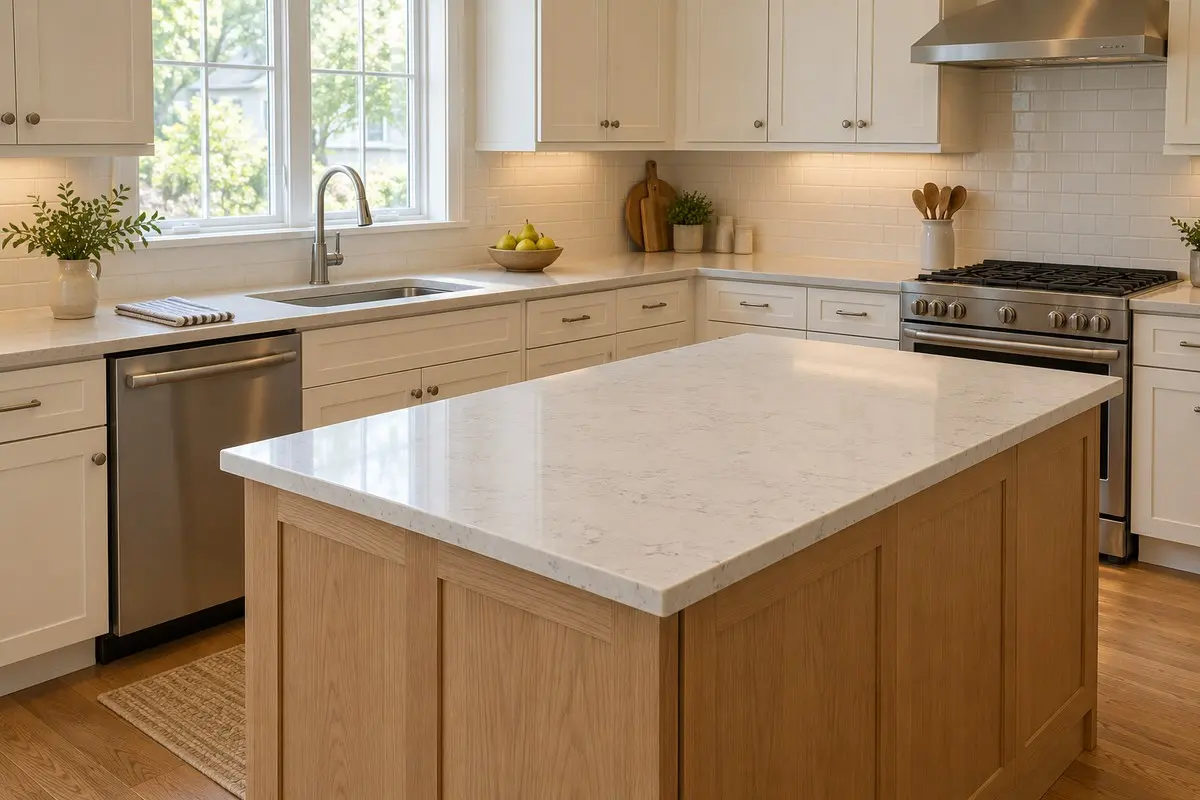
Two kitchens with the same amount of counter space can still have different costs. An island that needs another slab, extra seams, or several cutouts can make one layout more expensive to fabricate.
For a kitchen with 40 square feet of countertop space, the $1,100 to $6,600 range covers the countertop and professional installation. Replacement work can add other charges, particularly when the old surface has to be removed, plumbing needs to be disconnected and reconnected, or the cabinets need repairs before installation.
This is why replacing countertops can cost more than installing them on cabinets that are already level and ready for the new surface. The condition of the existing kitchen can affect how much work is needed before installation begins.
If you are updating more than the counters, the overall kitchen remodeling cost can help put the countertop expense into a larger project budget.
Here is one example of what a 40-square-foot countertop replacement could cost. This is an illustrative example, not a national average. It assumes a standard quartz installation, the existing sink and faucet stay in the same location, the cabinets do not need repairs, and no premium edges or other custom features are added.
Add those costs together: $4,000 + $400 + $550 = $4,950
Actual quotes can vary. Some installers may bundle certain services into the installed price, while others list them separately.
What you choose for the countertop can change the total quite a bit. The table below compares installed costs, so each range includes both the countertop and professional installation.
| Material | Typical Installed Cost per Square Foot | Main Cost or Maintenance Consideration |
|---|---|---|
| Laminate | $20–$65 | Lower upfront cost, but heat and scratches can damage the surface |
| Butcher block | $50–$100 | Wood species, thickness, finish, and moisture protection affect price |
| Solid surface | $35–$105 | Custom shaping and integrated sinks can raise fabrication costs |
| Quartz | $50–$165 | Pattern, brand, thickness, and fabrication affect price |
| Granite | $45–$165 | Slab selection, seams, patterns, and stone-specific care affect cost |
| Marble | $60–$170 | Premium slabs and detailed veining can raise material and fabrication costs |
| Concrete | $65–$135 | Custom casting, color, finish, and edge work drive the price |
| Porcelain | $70–$120 | Large-format slabs need specialized cutting and handling |
These ranges generally represent countertop material, ordinary fabrication, and professional installation. Standard edge treatment may be included depending on the supplier.
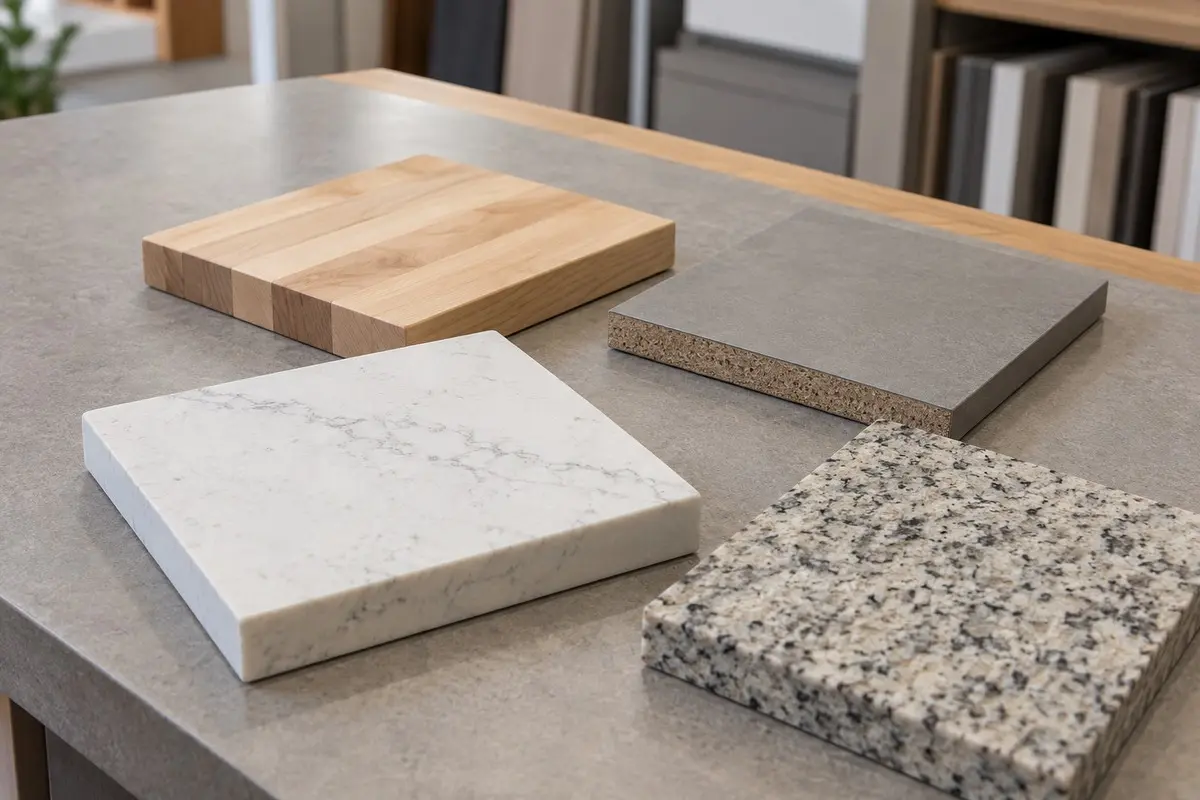
Removal, plumbing, premium edges, unusual cutouts, waterfall panels, backsplashes, and cabinet repairs may be separate. These are broad planning ranges; premium materials and more complicated projects can cost more.
Laminate is usually one of the less expensive countertop choices. Price can change with the quality of the material, the edge style, and whether it is prefabricated or made to fit.
It is easy to live with day to day, but hot pans, knives, and water around the seams can leave damage.
Butcher block can vary quite a bit in price depending on the type of wood used. Maple and birch often cost less, while thicker pieces and certain finishes add to the total.
Scratches are often easier to deal with because the surface can be sanded. Water is the bigger issue, especially near the sink.
Solid surface works well when you want a smooth finish or a countertop shaped around an unusual layout. Integrated sinks are also possible.
The material can be repaired if lightly scratched, but high heat may cause damage. More complicated shaping usually means more fabrication work and a higher price.
Quartz is popular because it is nonporous and comes in many colors and patterns. Some styles closely resemble marble or other natural stone.
Basic options cost less, while premium patterns, thicker slabs, custom edges, and added fabrication raise the price. Trivets are still a good idea around hot cookware.
Granite pricing can vary a lot from one slab to another. Color, pattern, thickness, finish, and availability all come into play.
A layout that needs more seams or an extra slab will usually cost more. Granite handles heat well, though care needs vary depending on the stone. Some granite benefits from sealing, while other slabs may not need it, so homeowners should follow the supplier’s recommendation rather than assume it needs yearly sealing.
Marble tends to be one of the more expensive choices, especially when the slab has unusual coloring or dramatic veining.
It also shows wear more easily. Acidic foods can etch the surface, and some spills may stain if they are not cleaned quickly.
Concrete is usually made for the space rather than bought as a standard slab. That customization is a big part of the price.
Special colors, aggregates, edge details, and unusual shapes can bring the total up.
Porcelain countertops use large-format slabs, not standard floor or wall tile.
They handle heat well and are available in many stone-look finishes. The challenge is installation. Large slabs can be brittle before they are set in place, so cutting and handling require the right tools and experience.
Basic on-site installation labor for stone countertops may run around $15 to $25 per square foot. Measuring, cutting, and finishing the slab may be charged separately. The material, layout, and local labor rates can affect the price.
What counts as labor can vary from one quote to another. It may include measuring or templating the space, laying out and cutting the countertop, finishing a basic edge, making standard sink or faucet cutouts, fitting the pieces, and securing the countertop in place. Some installers also include setup and cleanup.
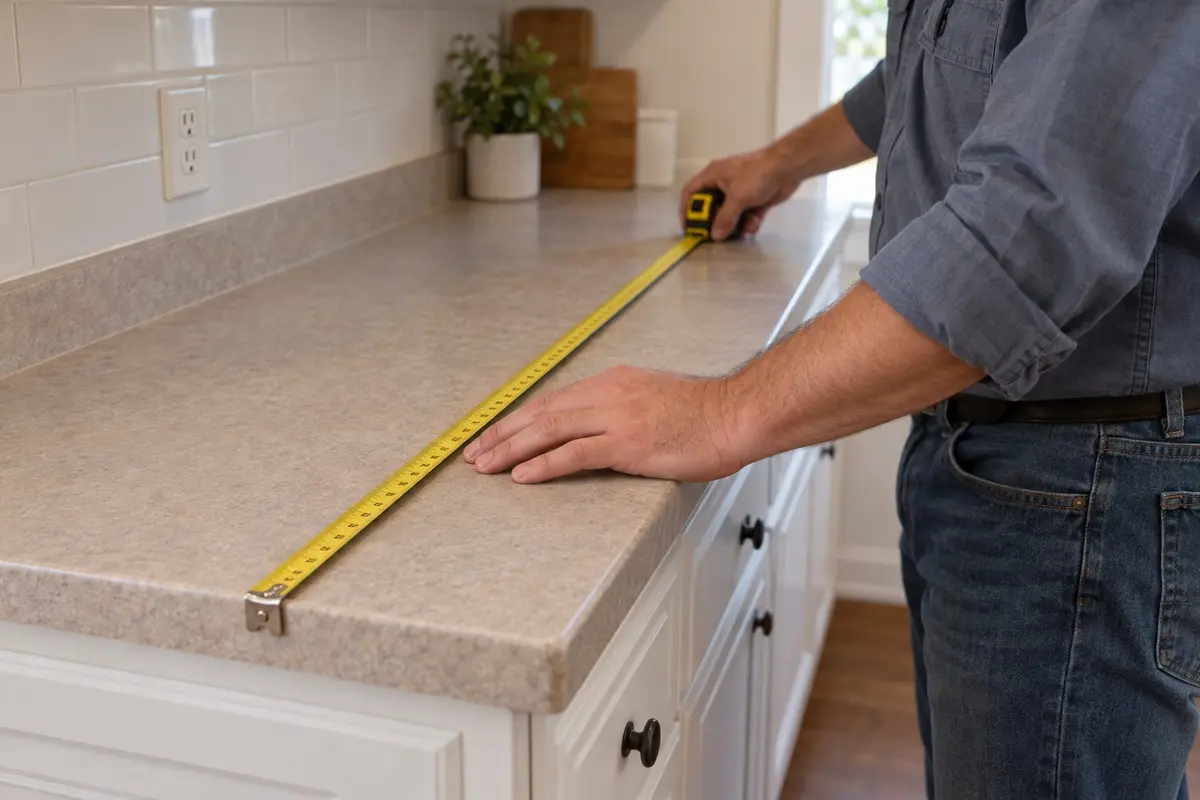
Before comparing quotes, check what is already included. Do not add a separate labor allowance to a quote that already includes installation.
Square footage matters, but countertop pricing is also shaped by how much fabrication and site work the project requires.
Countertop contractors measure countertop surface area, not kitchen floor area.
A kitchen with a large island, breakfast bar, or long perimeter may require much more material than its floor size suggests. Long runs, corners, seams, and slab dimensions also affect how efficiently a fabricator can use each slab.
This is why a relatively small section of countertop can sometimes have a bigger effect on the quote than expected: the fabricator may need another slab to complete the layout.
Two countertops made from the same material can have very different prices. Quartz and natural stone, for example, come in different grades, patterns, finishes, and thicknesses.
Rare natural patterns or more elaborate engineered designs may cost more. Thicker surfaces and detailed fabrication can also increase the quote.
A basic eased or straight edge may be included in the installed price. More detailed profiles can add fabrication charges.
Waterfall panels require additional material and precise fabrication because the countertop continues vertically down the side of an island or cabinet.
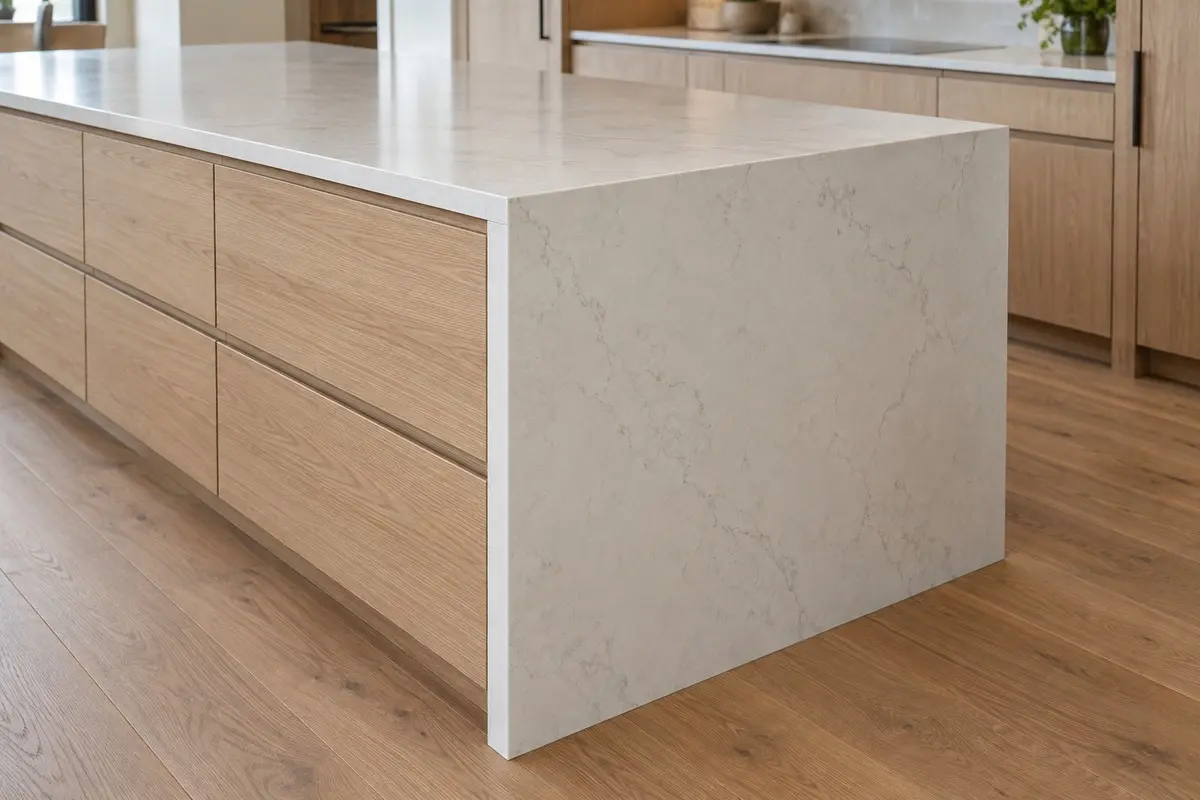
Sink and cooktop cutouts can also cost extra. Keep in mind that cutting the opening is not the same as installing or reconnecting the fixture. A plumber may still be needed for the sink, faucet, disposal, or water lines.
The harder it is to get the countertop into the kitchen, the more labor the job may take. Stairs, narrow doors, tight turns, or a long walk from the truck can all slow the crew down. Local labor rates also vary, so the same installation may cost more in one area than another.
Not every countertop project will include these costs. Some installers bundle certain services into their quote, so check what is already covered before adding any of the expenses below.
| Expense | Typical Additional Cost | When It Applies |
|---|---|---|
| Countertop removal and haul-away | $8–$13 per sq. ft. | Covers removing the existing countertop and hauling away when the service is not included in the installation quote |
| Plumbing disconnect and reconnect | About $550 | Covers disconnecting existing sink plumbing before countertop work and reconnecting it afterward |
| New sink and faucet installation | Sink: about $200–$350; faucet: $97–$369, for basic installation only | When replacing fixtures. Budget separately for the sink and faucet themselves, and check whether plumbing reconnection is included. |
| Tile backsplash installation | About $700–$1,000 per project | Larger areas, more expensive tile, and removal of the old backsplash can increase the cost. A slab backsplash needs its own quote. |
| Cabinet leveling or repairs | Varies; request a quote after inspection | When cabinets are uneven, damaged, or need reinforcement before the new countertop is installed. |
These costs should not automatically be added together. For example, a new sink installation may already include standard plumbing reconnection, while another contractor may price that work separately. Ask for an itemized quote so you can see what is included.
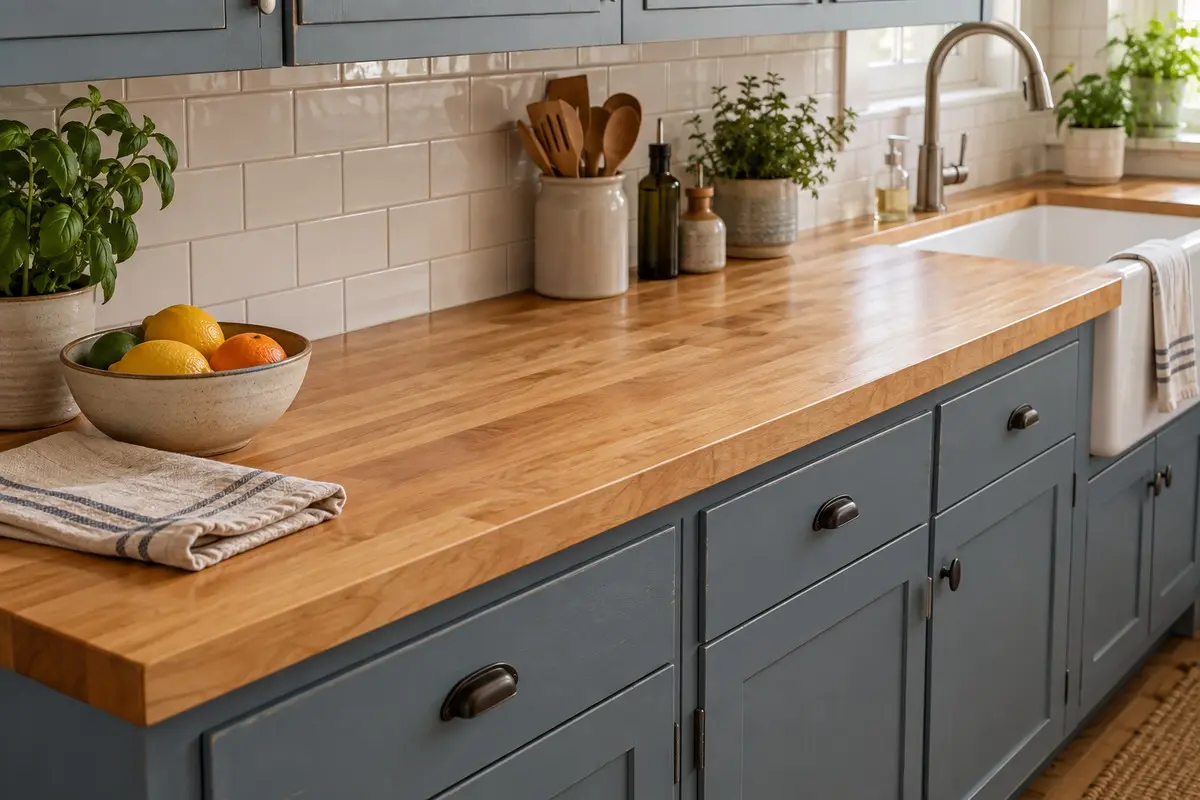
Good value depends on more than the purchase price. Upkeep, visible wear, and whether damage can be repaired also matter.
| Material | May Suit Homeowners Who… | Main Tradeoff |
|---|---|---|
| Laminate | Want to keep the upfront cost lower | Easy to clean, but deep scratches, chips, or water damage can be difficult to repair |
| Quartz | Prefer less routine maintenance | Does not need sealing, but costs more upfront and needs protection from high heat |
| Solid surface | Care about repairability | Light scratches can often be sanded or refinished, although the surface may show wear |
| Granite | Want natural stone without heavy routine upkeep | Care needs vary by the slab, and some granite benefits from sealing |
| Marble | Prioritize the look of natural stone | Acidic spills can leave dull marks that do not wash away and may need professional refinishing. |
| Butcher block | Do not mind some upkeep and want a repairable surface | Scratches can often be sanded out, but water needs to be cleaned up quickly |
There is no single option that offers better value for every kitchen. A homeowner who wants less upkeep may lean toward quartz, while someone focused on the starting price may prefer laminate. If repairability matters more, butcher block or solid surface may make more sense.
A few project decisions can help control the cost without cutting corners on installation.
Choose a standard edge rather than a heavily fabricated profile. Also, keep existing sink, faucet, and cooktop locations where they still work well. Moving fixtures can bring plumbing or electrical work into the project.
If your cabinets are level, secure, and in good condition, keeping them can help avoid a much larger renovation cost. Before templating, ask the installer to check for sagging, water damage, or weak areas that may need repair.
Remnants may also work with a small island, desk, bar, or short countertop section. Ask fabricators what suitable pieces they have available.
Most of all, compare itemized quotes for the same scope. One $4,000 estimate may include removal, cutouts, and plumbing coordination, while another $3,500 estimate leaves those items out.
DIY preparation, such as clearing cabinets and moving small items, may reduce the crew’s setup work if the contractor agrees. Cutting stone slabs or moving heavy counters is better left to installers with the right equipment.
If the project still costs more than you want to pay upfront, home improvement financing can help spread the expenses over time. Just keep in mind that financing changes how you pay for the work, not the actual cost of the countertop project.
Start with contractors or fabricators who regularly work with the material you selected. Installing laminate, fabricating porcelain slabs, and handling heavy natural stone require different tools and experience.
Ask for proof of insurance and confirm whether local licensing rules apply to the work. Check recent references and examples of similar countertop installations. You should also ask whether the contractor offers a workmanship warranty and what it covers.
The written estimate should clearly show both the cost and scope of the project. Look for separate pricing, where applicable, for the countertop material, templating and fabrication, edge work and cutouts, delivery, installation, and removal of the old surface.
It should also explain whether plumbing, cabinet repairs, disposal, or other site work is included or charged separately. Check the payment schedule, expected project timeline, and any workmanship warranty as well.
When comparing estimates, make sure each contractor is pricing the same work. A lower quote may leave out services that another contractor has already included.
You can also submit a request through Renovate, which may be able to connect you with a kitchen remodeling contractor for your countertop project.
Laminate is usually one of the lowest-cost professionally installed countertop options, with typical installed prices starting around $20 per square foot. Price depends on the product, edge design, layout, and fabrication. Choosing laminate does not eliminate possible charges for old-countertop removal, plumbing, or cabinet repairs.
Not always. Their installed price ranges overlap, so either material can cost less depending on the slab, brand, thickness, edge style, and fabrication. Compare quotes with the same scope so you are not looking at a material-only price for one and a fully installed price for the other.
Often, yes. If the cabinets are still solid and sitting level, there may be no reason to replace them. The installer will usually check their condition before taking final measurements. Any damage, sagging, or weak areas should be fixed first, especially if the new countertop is heavier than the old one.
The on-site installation itself usually takes about one to three days, depending on the kitchen size, material, and layout. The full process takes longer because measuring or templating, fabrication, and scheduling happen before installation day.
New countertops can make a kitchen look more current and appealing to potential buyers, but there is no guaranteed return on the investment. The result depends on the material, workmanship, condition of the rest of the kitchen, and local housing market.