Pool heater installation typically costs $2,500 to $5,000, although projects can range from about $1,000 for a small electric resistance system to $9,500 for a large or complex solar installation. Published national averages generally fall between $3,000 and $3,500. Heater type, pool size, climate, utility access, labor, and permit requirements determine the final price.
For most homeowners, a realistic planning range is $2,500 to $5,000, with many standard installations landing near $3,000 to $3,500. A straightforward replacement that uses the existing fuel source and utility connections may cost less, while a solar installation or a project requiring new gas, electrical, or plumbing work may cost considerably more.
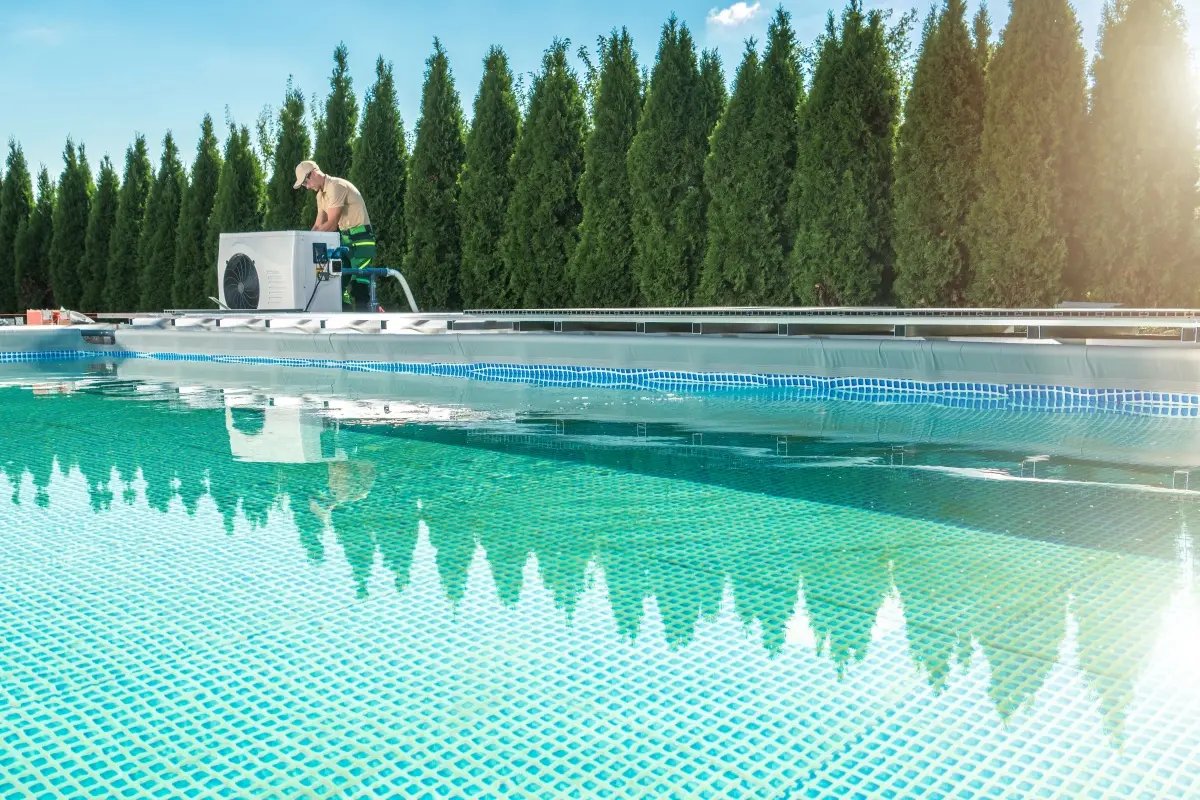
How We Estimated Costs: Renovate reviewed current national project cost data and compared these figures with federal energy guidance. Actual prices vary by location, equipment capacity, utility rates, and site conditions.
These factors have a lot to do with how much you’ll pay for a pool heater installation.
Pool size matters, but contractors do not size every heater from water volume alone. They also consider the pool’s surface area, the desired temperature increase, local weather, wind exposure, and how quickly you want the water to warm. Larger pools, colder conditions, and faster heat-up goals generally require more Btu output and increase both equipment and operating costs.
Your local weather often decides which system makes the most financial sense. Homeowners in mild regions can capitalize on the energy efficiency of heat pumps or solar systems, while those in cooler climates usually rely on the rapid heating capabilities of gas.
The state of your current equipment pad determines your budget. If you already have an adequate gas line, a 240-volt electrical circuit, and properly sized plumbing right next to your filter, labor is straightforward. However, if a contractor needs to trench through your landscaping, upgrade your electrical panel, or pour a larger concrete pad, installation costs will rise.
Because installing a heater often involves tapping into high-voltage electricity or combustible gas lines, most municipalities require permits and inspections.
Labor costs increase when the installer must coordinate an electrician, plumber, or gas fitter, or when the equipment pad is far from the electrical panel, gas meter, or existing pool plumbing. Long utility runs, trenching, limited access, and higher regional labor rates can add hundreds or thousands of dollars to the project.
Here is how the four main heating systems stack up in upfront pricing, speed, and long-term value:
| Heater Type | Total Installed Cost | Monthly Operating Cost | Heating Speed | Lifespan |
| Natural gas or propane | $1,500–$6,000 | Natural gas: $200–$500 Propane: $250–$1,000 | Fast | 5–10 years |
| Electric heat pump | $2,500–$6,500 | $50–$200 | Slow to moderate | 10–15 years |
| Solar pool heater | $2,500–$7,000; complex systems may reach $9,500 | $0–$25 | Slow | 15–20 years or longer |
| Electric resistance | $1,000–$6,000 | $175–$600 | Moderate | 5–10 years |
Installed and operating costs are planning ranges. Pool size, climate, water temperature, local energy rates, run time, and use of a pool cover can move the final cost well outside these figures.
Gas heaters are the speed leaders, which makes them especially useful for attached spas, weekend swimming, and quick temperature changes. The equipment can cost less than a comparable heat pump, but a new gas line, larger meter, propane tank, or other utility work can erase that upfront advantage. Gas also tends to be more expensive for continuous heating.
Because electric resistance heaters draw a massive amount of electricity, they are financially impractical for regular pools. However, their compact size makes them a budget-friendly fit for small plunge pools or spas. You just need to confirm your equipment pad already has the electrical capacity required to run them.
Heat pumps offer excellent long-term value for swimmers in mild or warm climates. Because they require a dedicated electrical circuit, the installation price depends partly on whether the existing panel or subpanel can handle the load. Their heating capacity and efficiency decline as outdoor temperatures fall, particularly around the 45- to 50-degree range, although minimum operating temperatures vary by model.
Solar carries the widest price swing because every setup is custom. Your total depends on the panel count, roof-mounting complexity, and the plumbing distance to the equipment pad. While the upfront hardware and labor investment is steep, the heat itself is free. This gives solar the absolute lowest operating cost of any system.
Adding a heater to an existing pool typically costs $1,500 to $6,000. Retrofitting costs more than a new build installation because a contractor must adapt to your current layout.
Beyond the cost of the heater itself, your budget will go toward:
Pool type alone does not determine heater cost. Pool size, surface area, heater capacity, utility access, and installation complexity usually have a greater effect.
Inground pools are often larger and may need higher-output equipment, longer plumbing runs, or underground utility work. Those factors can make the project more expensive, although a small inground pool with convenient utility connections may cost less.
Above-ground pools are often less expensive to heat because they generally hold less water and can use smaller equipment. Larger permanent above-ground pools may cost more than this range.
Evaporation is usually the primary source of heat loss in pools, regardless of construction type. A properly fitted cover can substantially reduce heater run time and monthly operating costs.
Depending on the current condition of your equipment pad, you may need to budget for a few upgrades before a new heater can be safely installed:
| Infrastructure Upgrade | Approximate Cost | What It May Cover |
| Gas line work | $600–$3,200 | New gas piping, trenching, and propane connection work |
| Electrical upgrades | $600–$2,400 | A dedicated 240V circuit, breaker work, wiring, or subpanel changes |
| Plumbing work | $250–$750 | PVC adjustments, heater connections, bypass valves, or flow rerouting |
| Equipment pad | $350–$1,200 | Pouring, expanding, or leveling the base so the heater has proper clearance |
| Permits and inspections | $100–$600 | Local approval for gas, electrical, plumbing, or high-voltage work |
| Smart controls | $400–$2,000 | Connecting the heater to an existing automation system or pool control app |
| Pool cover | $50–$2,200 | A basic solar blanket or fitted manual cover that reduces evaporation and heat loss |
Replacing an existing pool heater typically costs between $1,500 and $6,000. Sticking with your current fuel source and BTU output keeps your budget at the lower end of this range, as the contractor can utilize your existing setup.
Even a same-fuel, similarly sized replacement may require new PVC fittings or minor equipment-pad changes because connection heights and cabinet dimensions vary by model.
Expect your monthly heating bills to range anywhere from $0 to $600, depending heavily on the type of energy your system consumes:
These figures are broad planning ranges rather than forecasts. Climate, pool size, local utility rates, desired temperature, hours of operation, and the use of a cover can substantially affect monthly costs.
Cost-effectiveness depends on local utility rates, climate, available sunlight, how often you swim, and how quickly you want the water to warm. The lowest-cost system to install is not always the least expensive system to own.
Because a pool heater is a high-ticket item, value comes down entirely to your lifestyle and habits. If your family avoids the pool because the water is consistently too cold, a heater can help you get more use from an investment you have already made.
It easily justifies the price tag if you want to extend your swimming season into fall, or if you regularly host gatherings and swim after the sun goes down.
Conversely, a heater is not worth the investment if your pool goes unused even during peak summer months. If the thought of adding $150 to $300 to your monthly utility bill means you will likely leave the unit turned off to save money, do not pay for the installation. In that case, buying a heavy-duty solar cover is a budget-friendly first step.
Hiring a general handyperson won’t cut it for this kind of project. Because these installations involve the dangerous intersection of water, high-voltage electricity, and combustible gas lines, knowing exactly how to choose a pool contractor is essential to protecting your investment.
Verify the contractor’s license and insurance, experience with the heater type, and ability to coordinate any required electrical, plumbing, or gas work. Licensing requirements vary by state and by the type of utility connection involved.
A reputable professional must evaluate your equipment pad in person before providing a final quote. They need to physically verify that your current plumbing layout has space for bypass valves, that your pool pump produces sufficient flow to prevent the heater from short-cycling, and that your home’s gas meter or electrical panel can handle the increased load.
Additionally, ask the contractor directly if they are an authorized installer for your specific equipment brand. Allowing an uncertified crew to pipe in a new heater can instantly void the manufacturer’s warranty, leaving you completely unprotected if the system fails down the line.
Ask whether the installer meets the manufacturer’s installation requirements for the specific model. Warranty rules vary: some brands require professional installation, proof of installation, product registration, or purchase through an authorized seller. Get both the manufacturer’s coverage and the contractor’s labor warranty in writing before work begins.
Before hiring a contractor, ask if they offer financing for pool heater installation. This can help make the project more affordable.
A heat pump is better for regular swimming in mild weather because it usually costs less to run. A gas heater is better for fast heating, spas, weekend use, or colder climates. The better choice depends on whether you value speed or a lower monthly cost.
Yes, you can add a heater to most existing pools. The main question is whether the equipment area already has the right gas, electrical, and plumbing connections. If it does not, utility upgrades can add hundreds or thousands to the project.
Pool heating costs usually range from $0 to more than $600 per month—solar costs the least to run. Heat pumps often cost $50 to $200 per month. Gas and propane heaters can cost much more with frequent use.
The right heater size depends on the heater type, pool surface area and volume, local weather, desired water temperature, and target heat-up time. A larger pool, colder conditions, or a faster heat-up goal will require more heating capacity. Have the contractor size the unit for your current pool conditions rather than automatically matching the old heater.
A pool heater can make a pool more appealing, especially in areas with cooler seasons. It may help resale value, but the stronger benefit is usability. Buyers may value a pool more when it feels comfortable for a longer part of the year.
No, a pool heater does not need to run at all times. Many homeowners run it only before swimming or during cooler months. Heat pumps often run longer to maintain temperature, while gas heaters are commonly used for quick heating.
Gas and electric resistance heaters often last 5 to 10 years. Heat pumps usually last 10 to 15 years. Solar pool heating systems can last 15 to 20 years or more with basic maintenance and occasional service.
Yes. Pool heaters can freeze when water is left inside the unit during freezing temperatures. In colder climates, the heater should be drained and winterized before the first hard freeze, usually as part of closing the pool for the season.