The average above-ground pool installation cost is about $1,600 to $7,500 for a standard hard-sided pool with professional installation. Premium materials, difficult site work, electrical work, or fencing can push the project to $8,000 to $15,000 or more, while a substantial deck can bring the total above $25,000.
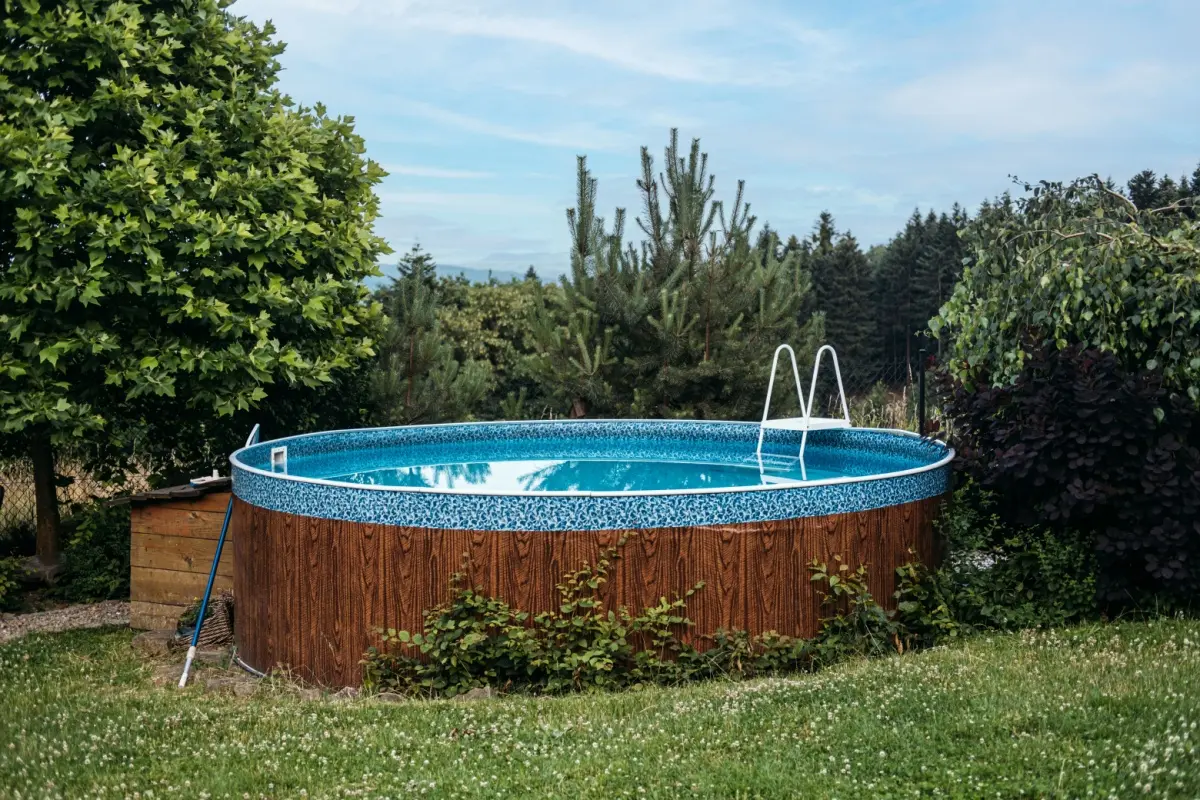
The pool sets the starting price, but the yard often decides where the final quote lands. Although some kits are marketed for DIY installation, this guide focuses on contractor-installed projects.
For budgeting, separate the pool price from the installed price. A pool kit can look affordable on its own, but the number that matters is the total after labor and site preparation.
| Cost Category | Typical Cost Range | What It Means |
|---|---|---|
| Pool kit only | $800–$5,000 | The pool package before installation; included equipment varies. |
| Basic installation labor | $800–$3,000 | Assembly and basic equipment setup on a reasonably prepared site. |
| Standard installed project | $1,600–$7,500 | A hard-sided pool without a substantial deck or major site complications. |
| Premium pool or difficult site | $8,000–$15,000+ | Premium materials, extensive site work, upgraded equipment or complex access, before a substantial deck. |
Unless noted otherwise, installed prices assume a standard hard-sided round pool, basic pump and filter equipment, professional assembly and routine site preparation. Major grading, drainage, electrical work, permits, fencing, water and decking are additional.
Prices are planning estimates, not contractor quotes. Regional labor rates, permit requirements, installer availability and a short peak season can affect the final price.
The same pool can produce very different quotes from one yard to the next.
Larger pools require more materials, base preparation and crew time. Round pools are usually simpler to install, while oval pools often need extra side supports and more usable space.
Steel-wall pools are usually the most affordable. Resin, aluminum and hybrid systems cost more but may improve corrosion resistance in exposed parts. Ask which components are actually steel, resin or aluminum, since a “resin” pool may still have a steel wall or metal hardware.
The installer clears vegetation and debris, then checks the ground for level and drainage. Installers should generally cut down high spots so the structural perimeter rests on firm, undisturbed soil rather than build up the low side with loose soil or sand. A thin sand layer or pool pad may protect the liner when the manufacturer allows it, but it should not replace a stable base.
Freight, local labor rates and site access all affect the quote. Many jurisdictions require permits for pools capable of containing water more than 24 inches deep, but local rules, fees, setbacks, barrier requirements, and inspections vary.
Ask whether the estimate includes a qualified electrician for any required ground-fault protection, grounding, bonding, trenching, or equipment disconnects. Narrow gates, stairs, fences, septic areas, or a distant pool location can add labor.
Pool terminology varies, so compare the wall, frame, rails, and fasteners, as well as the warranty terms. Add about $800 to $3,000 for basic professional installation to the kit prices below.
| Pool Type | Typical Kit Cost | Best Fit | What to Watch |
|---|---|---|---|
| Steel-wall or all-steel | $800–$3,500 | Lower upfront cost | Rust and coating damage |
| Resin or resin-heavy | $900–$5,000 | Corrosion-resistant exposed parts | Sun fading, cold cracking, and hidden metal |
| Aluminum | $1,000–$4,500; premium systems may exceed $10,000 | Premium construction | Higher price, dents, and oxidation |
| Hybrid | Varies; often within the resin range | Balance of steel and resin | Care requirements for both materials |
For a professional project, confirm that the product is a permanent hard-sided steel-wall pool rather than a seasonal tubular-frame model. Steel is sturdy and budget-friendly, but damaged coatings can lead to corrosion.
Resin components do not rust, but many resin-heavy pools still contain steel walls, fasteners or other hardware. Resin can also fade or become brittle after years of sun and freezing weather.
Aluminum resists corrosion and is lightweight, but premium systems cost more and can dent. Fasteners and other components still need inspection.
Hybrid pools often pair a steel wall with resin rails or uprights. Ask which parts carry the warranty and whether the model is approved for the planned chlorine or saltwater system.
A quality hard-sided pool often lasts seven to 20 years. Installation, drainage, climate, water chemistry, and maintenance can matter as much as the material.
National cost guides and current dealer listings more consistently report kit or package prices by size, so the table separates the pool from labor. Package contents and brands vary.
| Round Pool Diameter (ft.) | Typical Kit or Package Cost |
|---|---|
| 12 | $800–$1,600 |
| 15 | $800–$2,100 |
| 18 | $1,000–$2,700 |
| 21 | $1,400–$4,000 |
| 24 | $1,500–$4,000 |
| 27 | $1,800–$5,000 |
| 30 | $2,000–$6,000 |
Basic professional installation typically adds $800 to $3,000. Premium materials, grading, electrical work, permits, water, fencing and decking are separate.
An above-ground pool with a professionally built deck often costs $6,000 to $30,000 or more. Deck area, height, stairs, railings and material matter more than labels such as “partial” or “full surround.”
| Approximate Deck Area (sq. ft.) | Typical Deck-Only Cost |
|---|---|
| 100 | $2,500–$6,000 |
| 200 | $5,000–$12,000 |
| 300 | $7,500–$18,000 |
| 400 | $10,000–$24,000 |
Pressure-treated wood generally falls toward the lower end, while composite boards, premium railings, tall stairs, difficult footings, and full-surround designs cost more. If the pool will connect with an older deck, have a contractor determine whether deck repair is needed first.
A small entry platform or one-sided deck usually costs less than a full surround. Connecting the pool area to an existing house deck may require additional structural review, footings, and permitting.
The deck should have its own code-compliant support system unless the pool manufacturer approves another design. Its footings, stairs, guards, gates, and access points must meet local rules. The U.S. Consumer Product Safety Commission recommends a barrier at least 48 inches high and explains how above-ground walls, ladders, and steps may form part of the barrier; local rules can be stricter.
Ask the contractor to list these items separately so you can compare quotes on the same scope.
| Additional Item | Typical Planning Range | Budget Note |
|---|---|---|
| Significant grading or land clearing | $1,000–$3,500 | Routine preparation may already be included. |
| Pool permit | $100–$300 | Deck, fence, and electrical permits may be separate. |
| Ladder or entry steps | $100–$700 | Check whether a basic ladder is included. |
| Pool fence | $1,500–$10,000+ | Length, material, gates, and local rules drive the pool fence installation cost. |
| Basic seasonal or winter cover | $30–$300 | A basic cover is not automatically a safety barrier. |
| Initial water fill | $25–$300 with municipal water; $100–$1,500+ by delivery | Pool volume, local rates, and delivery minimums drive the price. |
| Electrical hookup | Quoted separately | Distance, panel capacity, trenching, and code requirements determine the scope. |
Also budget for freight, starter chemicals, winterization supplies, drainage work, and landscaping restoration. Homeowners combining the pool with planting or hardscaping may also compare landscape financing options.
Confirm that each upgrade is compatible with the pool and its warranty before ordering equipment.
| Upgrade | Typical Added Cost | Planning Note |
|---|---|---|
| Pool heater, installed | $1,300–$4,200 | Adds ongoing energy costs. |
| Saltwater conversion | $600–$2,200 | Confirm all metal parts and equipment are salt-compatible. |
| Robotic cleaner | $200–$1,200 | Usually a product purchase. |
| Pool lighting | $30–$120 for accessory lights; $500–$1,700 per hardwired light | Not every model supports hardwired lighting. |
| Expanded decking | $25–$60 per sq. ft. | Height, stairs, railings and material affect the total. |
| Water features or smart controls | Custom quote | Compatibility and electrical scope vary widely. |
Safety enclosures and upgraded barriers vary widely in price. Ask for a separate quote based on the enclosure type, perimeter, gates and local rules. Do not treat a basic seasonal cover as a substitute for a required barrier.
Owning an above-ground pool means keeping the water balanced, running the pump, and preparing the pool for the season. Homeowners who handle routine care themselves often budget about $500 to $1,200 per year for chemicals, testing, electricity, water, and supplies, before heater energy, professional service, and major repairs or replacements.
| Service or Expense | Typical Cost |
|---|---|
| Recurring professional service | $80–$150 per month |
| Professional opening and closing | $300–$650 combined per season |
| Professional liner replacement | $700–$3,000 for many pools; large or repair-heavy projects may reach $5,000 |
| Common equipment repairs | $300–$700 for many above-ground repairs |
Liners often need replacement after roughly six to 10 years. When comparing long-term pool maintenance costs, also plan for eventual pool pump replacement, pool heater replacement, and pool liner installation, along with pool leak detection costs.
An above-ground pool requires a smaller upfront budget than an in-ground build, but the tradeoff shows up in longevity, depth, and design flexibility. A substantial deck can make the project several times more expensive than the pool alone, while an in-ground pool often costs roughly $35,000 to $120,000 or more.
The pool itself often takes one to three days to assemble once the site is ready. Permits, grading, electrical work, fencing, or a deck can extend the overall project. Above-ground pools also offer fewer depth and shape options, and liners, walls, and frames need periodic care.
They are best suited to homeowners who want backyard recreation at a lower upfront cost, have an appropriate site, accept that service life often falls between seven and 20 years, and value enjoyment more than resale return.
An above-ground pool is usually a lifestyle purchase rather than a reliable way to increase appraised value. A well-maintained pool with an attractive, code-compliant deck may appeal to buyers in a warm climate or pool-friendly neighborhood, while other buyers may view the maintenance as a drawback. Homeowners may also want to budget for future above-ground pool removal costs.
Condition and integration matter. Budget around the enjoyment you expect rather than assuming the full installation cost will be recovered at resale.
The best way to control the budget is to make decisions before the installer prices the job.
To choose the right pool contractor, look beyond the quoted price.
A project that combines the pool, deck, fencing, and landscaping may need a different budget than the pool alone. Homeowners can compare swimming pool loans with broader home remodeling financing.
A small soft-sided or seasonal pool is usually the cheapest overall, but it generally falls outside a permanent, professionally installed project. For a more durable setup, a small round steel-walled pool is usually the lowest-cost professionally installed option.
A 24-foot round above-ground pool typically costs about $2,500 to $7,000 for the pool and professional installation on a reasonably prepared site. Grading, electrical work, water, fencing, or a deck can raise the total.
Requirements depend on local rules. Many jurisdictions require permits for pools capable of containing water more than 24 inches deep, and separate approvals may apply to electrical work, a deck, or a barrier. Ask the contractor to confirm permits and inspections before work begins.
The pool itself often takes one to three days once the site is ready. Grading, permits, electrical work, fencing, a deck, or weather can extend the overall timeline.
Routine owner-managed care often costs about $500 to $1,200 per year before heater energy, professional service, and major repairs or replacements. Professional service commonly adds $80 to $150 per month during the service season, while opening and closing can add $300 to $650 combined. Periodic liner or equipment replacement is an additional cost.